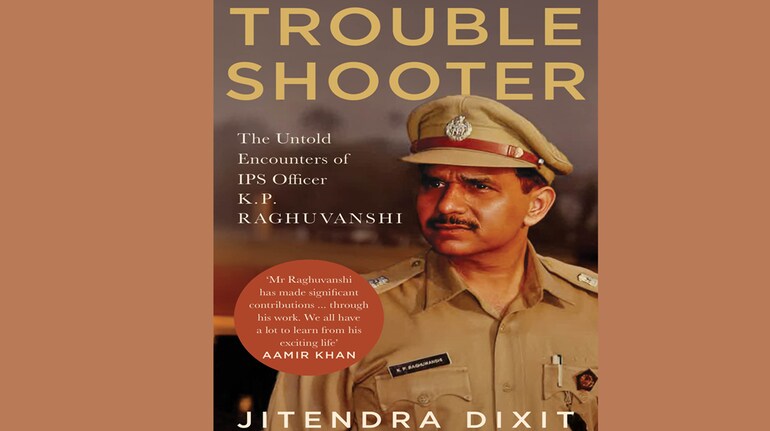

Excerpted with permission from the publisher Troubleshooter: The Untold Encounters of IPS Officer K. P. Raghuvanshi, Jitendra Dixit, published by PAN, an imprint of Pan Macmillan India.
******
In November 2005, Commissioner Roy called Krishipal for an evening meeting at his office. Senior officers from the crime branch were also present. Roy revealed that finally,
after a long legal battle, the Portuguese government had agreed to repatriate the infamous gangster Abu Salem. Out of the nine cases registered against him in various cities of India, three were related to Mumbai. He was one of the conspirators in the 12 March 1993 serial blasts in Mumbai which led to terror charges being files against him.
The others were murder cases – of Ajit Dewani, who was the secretary of actress Manisha Koirala, and a builder named Pradeep Jain. The CBI was the prosecuting agency on the serial bombings case, but the prosecuting agencies for the killings of Dewani and Jain were yet to be fixed. Since Salem had been booked under TADA in the Jain murder case, the commissioner suggested that the ATS would be the right agency to handle the case. Krishipal readily agreed. At last, the ATS was going to handle a case worth its brief.
Abu Salem, whose real name was Abdul Qayyum Ansari, hailed from Azamgarh in Uttar Pradesh. He had first arrived in Mumbai in search of employment but found a different calling instead. While switching between different jobs, he got in touch with Dawood Ibrahim’s brother, Anees Ibrahim. Soon he was inducted into the D-Company and rapidly climbed the ranks due to his ability to recruit hitmen from UP. He became the representative of the gang in Bollywood. He extorted money, organized filmi shows in Dubai where actors and singers were summoned to dance and sing and settled disputes among the film fraternity. One of the most sensational crimes he orchestrated was the murder of T-Series baron Gulshan Kumar in broad daylight, outside a temple in Mumbai.
During his interactions with Bollywood personalities, Salem was introduced to actress Monica Bedi in Dubai. Salem and Bedi soon started living together. The author of this book got the opportunity to visit Monica Bedi’s parental home in Norway in November 2005. Her father Premkumar Bedi told the author that Salem had visited them once and introduced himself as Sanjay. In 1997, Salem separated from the D-Company and started running his own gang. He and Bedi began shuttling across the world, while he ran his operation over the phone.
Killings and extortion calls from Salem to film personalities and builders became frequent. In 2002, Interpol issued a Red Corner Notice for him at the behest of Mumbai Police. Such a notice is an alert and request by Interpol to law enforcement agencies worldwide, to detain an accused wanted for serious crimes. Ultimately, Salem was apprehended in Portugal alongside Monica Bedi in September of that year.
Salem vigorously contested his extradition to India. However, his legal battle ended in defeat as the court in Lisbon ruled in favour of handing him over to Indian authorities, albeit subject to certain conditions. These included safeguards against capital punishment, a maximum prison sentence not exceeding twenty-five years and prosecution solely for the eight cases that had been presented before the court. In November 2005, Salem was extradited to India, marking a significant victory for law enforcement in their relentless pursuit of justice. After the CBI remand in the Mumbai blast case ended, the ATS took over Salem’s remand in the Pradeep Jain murder case. Salem had demanded a part of the builder’s property at the behest of Anees Ibrahim. Over the telephone, Jain abused Ibrahim. An enraged Ibrahim then ordered Salem to kill him. On 7 March 1995, Jain was gunned down at his office in Andheri. Salem was finally being prosecuted for the case a decade later. Krishipal realized that this would not be an easy task – his team would be required to trace witnesses from ten years ago and convince them to testify in court against a formidable gang leader. Fortunately for the ATS, the brother of the deceased, Sunil Jain, was standing his ground and supporting their case against Salem.
The menacing reputation of Salem cast a palpable shadow over the ATS officers tasked with investigating his case. One senior officer confided in Krishipal that the sub-inspectors had experienced noticeable intimidation during Salem’s interrogation. Apparently they were so unnerved by his presence that they couldn’t even muster the courage to meet his gaze while questioning him. The interrogation room where Salem was brought in for questioning was adjacent to Krishipal’s own cabin. One fateful day, as Krishipal was settling into his office, he caught a glimpse of the interrogation room since its door was slightly ajar. What he witnessed left him incensed. Salem sat on the floor while the interrogating officer, though positioned directly in front of him, refused to meet his eyes. Instead their gaze was focused on the wall throughout the interrogation. This stark display of apprehension only confirmed Krishipal’s concerns. He retreated into his cabin and later called upon the officer to give them a piece of his mind.
‘Tell me, how much has this bastard vomited?’
‘Sir, he is too smart. He is speaking about the other cases for which he is not being prosecuted but not about our case.’
As Krishipal was about to reprimand the officer, his peon entered the room and informed him that the brother of one of Salem’s victims wanted to meet him. With Krishipal’s permission, the timid-looking, slim man of middling height was allowed in. He pleaded, ‘Sir, I beg you to let me see the face of that man who killed my brother. I know you will do your best to get him punished but seeing him just once will give me peace and a sense of closure.’ Since the man had to appear as the prosecution’s witness in court, Krishipal couldn’t refuse his request. Krishipal’s instruction, two constables brought Salem into the room and stood in the corner. The victim’s brother lost his cool after seeing Salem and pounced towards him, shouting, ‘Madarchod! Kayar! Begunaah aadmi ko maar kar don banta hai?’ (Motherfucker! Coward! You claim to be a don by killing innocents?) He was about to slap Salem, but the constables overpowered him with great difficulty. The victim’s brother then took off his shoes to strike Salem but was held back by the constables before he could do so. He continued to shout expletives while being pushed out of the ATS’s office.
Once Salem had been escorted out of the cabin, a solemn atmosphere settled within the room. Krishipal’s gaze shifted towards the officer seated before him. ‘A common man could summon the courage to confront a notorious criminal yet police officers shrink away from meeting the gaze of those they interrogate,’ he remarked in a tone of sober reproach. ‘It is a shameful state of affairs.’
The officer understood who the remark was directed towards and looked towards the floor, ashamed. His point made, Krishipal asked the officer to sit beside him and take notes. ‘Now I will interrogate Abu Salem,’ he said. Krishipal was struck by the stark disparity between Salem’s appearance and the fearsome reputation that preceded him. Contrary to expectations, Salem possessed the demeanour of a Hindi film hero; soft-spoken in a way that belied his notorious image. Yet there was an unmistakable aura of confidence about him, devoid of remorse, as he faced Krishipal.
In response to Krishipal’s inquiries, Salem offered a candid account of his journey from Azamgarh to Mumbai in the early eighties, recounting his humble beginnings in menial jobs before he delved into the underworld. With remarkable transparency, he detailed his ascent within the ranks of the D-Company, pulling back the curtain on his dominance in Bollywood and the profound influence he wielded over the industry’s elite. Salem didn’t shy away from revealing his associations with prominent Bollywood figures, boasting of friendships with several A-list stars, including one of the esteemed ‘Khans’ of the film fraternity. He confidently claimed that this Khan would respond to his messages within a mere twenty-four hours, underscoring the depth of their relationship. Salem made everyone in the room laugh when he narrated his encounter with film star Sanjay Dutt. According to him, Anees Ibrahim had smuggled a consignment of weapons into Mumbai and asked Salem to deliver a few guns to Dutt. ‘Vo ek-ek rifle ko utha kar aise dekh raha tha jaise ki log ganna khareedte hain.’ (He was examining each and every rifle, just like people examine sugarcanes before buying them.) A special TADA court later convicted Dutt under the Arms Act, 1959 for illegal possession of firearms and sentenced him to six years of imprisonment. During his interrogation, Salem disclosed the names of actresses whom he had helped get jobs in the film industry. He also revealed those film personalities whom he had targeted for extortion.
Among his victims was Rakesh Roshan, a prominent Hindi film producer. Roshan had been injured by shooters hired by Salem days after the release of his movie Kaho Na ... Pyaar Hai (2000), his son Hrithik’s debut. Salem claimed that he had extorted a large amount of money from Roshan. Based on Salem’s confession, Krishipal thought of contacting his victims to ascertain the veracity of his claims and check whether fresh cases could be filed against him. Accordingly, many film personalities were asked to give statements to the ATS, but they were too scared to cooperate.
Rakesh Roshan reluctantly agreed to meet Krishipal under the condition that he would only talk inside his vanity van. Perhaps he didn’t want to be seen interacting with a cop. Krishipal drove to the set of Roshan’s upcoming movie in Film City and was directed to the vanity van, where Roshan was already waiting for him. When Krishipal asked Roshan to narrate how Salem had harassed him, he pleaded with folded hands, ‘Sir, a long time has passed. I don’t want any turbulence in my life. I don’t want to pursue the matter.’ Krishipal returned empty-handed, realizing that although Salem was behind bars and would remain there for many years, his terror was still pervasive in the film industry. He spoke to Monica Bedi too, who told him that Salem was very violent and often used to beat her. She admitted that proximity with Salem had destroyed her career in the film industry and soured her relationship with her family.
On 12 January 2006, when the ATS produced Salem before the special court to extend his custody, he created a sensation by alleging torture. He told Judge P. V. Bavkar, ‘Sahab, in logon ne mujhe belt se maara. Peet-peet kar confession likhwaya.’ (Sir, these people hit me with a belt and beat me until I wrote a confession.) Salem alleged that the ATS officers had mentally tortured him and subjected him to ‘third degree’ – coercive, unlawful – methods of interrogation. He complained of dizziness and requested a chair in the witness box to sit on during the hearing. Ujjwal Nikam, the special public prosecutor, contested Salem’s allegations and called him a ‘cunning wolf’ who had been tutored to lie. Salem’s claims of coercion and torture were widely reported by the media, forcing Krishipal to issue a statement. In it, he called Salem a compulsive liar and his allegations, an afterthought. ‘The ATS is committed to professionalism and upkeep of human rights of all accused in its custody,’ the statement clarified.
The Abu Salem case catapulted the ATS into the spotlight, a stark departure from its previous obscurity. Ironically, the notorious criminal they had apprehended helped the organization gain recognition. There was renewed sense of purpose and morale among the ATS officers, who had previously lamented the lack of substantive work. The case not only restored faith in the organization but also attracted informants to its ranks, leading to a surge in actionable intelligence regarding various criminal activities such as counterfeit currency operations, arms smuggling and narcotics trafficking. Operating within a vast domain, the ATS’s responsibilities encompassed a wide array of tasks, ranging from gathering intel and conducting counter-terrorism operations to investigating cases of terror financing and narco-terrorism. This multifaceted approach emphasized the agency’s pivotal role in safeguarding national security and combatting threats posed by terrorism and organized crime.
A colleague of Krishipal’s once told him in jest, ‘Abu Salem ne toh ATS ka udghatan kar diya.’ (Abu Salem has inaugurated the ATS.) All the publicity and praise was not in vain – while at the ATS, Krishipal ensured that a watertight case was made against Salem. He convinced relevant witnesses to depose fearlessly before the trial court and expose the truth. Holding frequent discussions with the prosecutors, he kept himself updated about the progress of the trial. Another decade later, in February 2015, Abu Salem was convicted and sentenced to life in prison for the Jain murder case.
**********
Jitendra Dixit, Troubleshooter: The Untold Encounters of IPS Officer K. P. Raghuvanshi, PAN, an imprint of Pan Macmillan India, 2025. Pb. Pp.352
Over the course of his thirty-five-year-long stint in the Indian Police Service, Krishipal ‘K. P.’ Raghuvanshi came to be known as the quintessential ‘Troubleshooter’, confronting the most perilous situations with courage. His extraordinary career, meticulously detailed by award-winning journalist Jitendra Dixit, reveals the untold saga of an intrepid police officer who navigated the most treacherous landscapes to tackle terrorism, organized crime, insurgency and political manoeuvring.
Raghuvanshi’s profound impact includes charting innovative strategies against Naxalism in the dense, dangerous forests of Gadchiroli, investigating crime syndicates like D-Company in Mumbai and fighting terrorism. His legacy is defined by visionary leadership and strategic foresight in establishing specialized units that became the bulwark against some of India’s gravest threats. He founded the elite C-60 unit to combat Naxalism; led the creation of the Special Task Force (STF) to implement the Srikrishna Commission Report; set up the Anti-Terrorism Squad (ATS) in Mumbai and dealt with the horrific 26/11 terror attacks.
Action-packed and thrilling, this is the story of one of India’s most influential yet unsung law enforcers.
Jitendra Dixit is a Mumbai-based journalist with a career spanning nearly three decades, specialising in crime, conflict, and political reportage. He was part of the founding team of Star News in 2003 and served as Editor – West at ABP Network India until 2023. He is currently the Executive Editor at NDTV in Mumbai.
Jitendra began his television career with Aaj Tak in 1999 and has reported on major national and international events including the Gujarat riots (2002), the Mumbai serial blasts trials (2007), the 26/11 terrorist attacks (2008), the Japan tsunami (2011), and the Kedarnath tragedy (2013). In 2015, he received the prestigious RedInk Award for his documentary on the Kashmir elections.
He is also the author of several books exploring Mumbai’s contemporary history, crime, and politics.
Discover the latest Business News, Sensex, and Nifty updates. Obtain Personal Finance insights, tax queries, and expert opinions on Moneycontrol or download the Moneycontrol App to stay updated!
Find the best of Al News in one place, specially curated for you every weekend.
Stay on top of the latest tech trends and biggest startup news.