
Book Extract
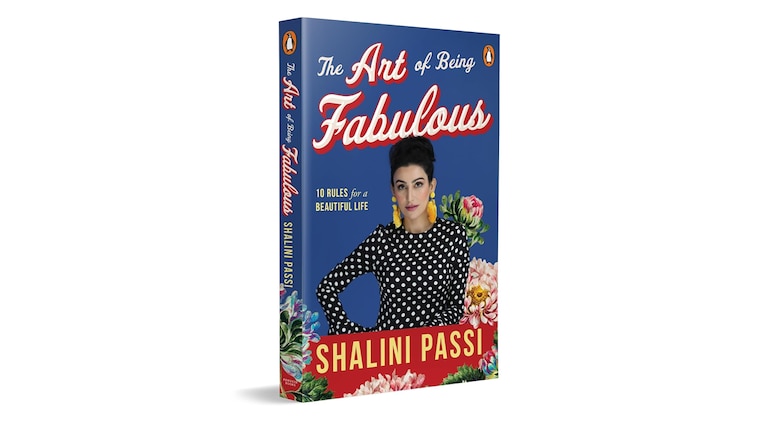
Excerpted with permission from the publisher The Art of Being Fabulous: 10 Rules for a Beautiful Mind & Life, Shalini Passi, published by Penguin eBury Press, an imprint of Penguin Random House India.
******
I must have been all of twelve. I remember standing in a school corridor with paint-stained fingers, sketchbook in hand, having an animated conversation with my art teacher. In that moment, I felt... timeless, perhaps. I could not have known then that this quiet joy of creating would become my life’s calling.
Creativity was never just a hobby for me. It felt like the very basis of my existence. My father painted quietly in his spare hours, even though he never called himself an artist. I remember watching his fingers intently as they glided across the canvas with confidence. There was a sense of immersion, of joy in him that left a strong imprint on me. Creativity, in fact, was never presented to me as something separate from life; it was life itself.
When I entered senior school, I was fortunate to study under Bishamber Khanna, a great artist and enamellist, whom I have spoken of before. He would invite me to join sessions with older students, saying, “Come, I’m demonstrating a new technique today—you should be there.” He encouraged me to paint the same subject over and over—not to replicate it, but to truly understand it. For me, to be able to see beyond the surface. He also taught me how the same subject could be rendered in different media. I recall how he would say, “Even a white sheet of paper, when folded, reveals a hundred shades.” It taught me that nothing is ever as flat or simple as it seems. Beauty reveals itself in layers, in angles, in shadows—if you are paying attention.
Those lessons shaped more than my art; they shaped my way of being. I learnt that to create anything meaningful, you must observe deeply and feel even more deeply. Frequent encounters with artists like B.C. Sanyal and Manjit Bawa, who were friends of my teacher and often visited our art room, deepened that understanding. Just being in their presence, listening to their stories, watching them engage with art so intuitively left a lasting impression. Being around them taught me that art is not just what you make, it is how you radiate your intention.
The Artist Within
There have been times in my adult life when I disappeared into the act of making. Sans phones, sans noise—just my canvas, brush and sheer obsession.
At one point, painting consumed me with an urgency that felt almost primal. I set up a studio at home and began creating for hours—sometimes ten, twelve, even fourteen hours a day. I would wake up in the middle of the night with a vision and start sketching. Sometimes I would find myself staring at a blank canvas long after everyone else had gone to bed, my heart full.
For a while, it was intoxicating. I would lose myself in imagined scenes and paint them: I thought of a rainy afternoon in New York, snowfall in Gulmarg, the golden haze of sunset over Banaras, the sharp morning light across Rashtrapati Bhawan. I recall how, having worked non-stop for nearly ten months, my right leg went numb from the intensity of it all.
Eventually, I brought this deeply personal body of work together in an exhibition titled Through My Eyes, held at the India Habitat Centre. The show was inaugurated by the late Smt. Sheila Dikshit, then chief minister of Delhi, who graciously lit the ceremonial lamp. I sold every painting, keeping only one for myself. All the proceeds from the exhibition went to the Prime Minister’s Relief Fund. Perhaps that is why the work carried so much energy, for it had been created for a cause larger than me. When the intention is pure, the art automatically becomes its own kind of catharsis.
But somewhere along the way, I also felt that I was burning myself out. Art, for me, has never been just about technique; it is about feeling, about energy. And what I was tapping into wasn’t always light. There’s a reason so many artists describe creativity as a kind of wound. Most people get hurt and move on. But artists? We tend to return to the ache. We keep scratching, keep digging—not to wallow, but to understand it, and then transform it into something beautiful on canvas. Think of poets who often tend to return to unrequited love, or filmmakers who craft entire worlds out of longing and loss. Artists often create not to escape the wound, but to make sense of it. It means going inward, peeling back layers, sitting with what hurts.
I knew that if I lived in that space too long, I would begin to disappear into it. That was when I decided I no longer wanted to make art from emptiness—not as a daily practice, and certainly not at the cost of my well-being. These days, when I paint or photograph, it is to showcase heritage, to document architecture. I find myself returning to landscapes, to old buildings, to quiet moments. I still create but I protect my energy in the process.
Where Beauty Takes Shape
I have always needed my surroundings to speak to me. That is why when we built our home in Delhi, I approached it the way I approach art—intuitively, emotionally, even obsessively. I needed it to be a living archive of beauty, art, energy and emotion. It had to be a space where structure, art and design could live and breathe.
I took on the project with gusto, with the help of trained professionals, of course. I was involved in every aspect—from architectural planning and structural layout to visiting factories to source materials. I would attend site meetings during the day, review design plans, and spend nights sketching ideas or finalizing mood boards. Then there were constant calls with vendors across time zones, sometimes well past midnight. I immersed myself in the disciplines of architecture, lighting, landscaping, material sourcing and interiors. I learnt how to balance scale, rhythm and flow, not by following trends, but by following my intuition.
For me, building our home wasn’t just about aesthetics; it was also about integrity. Every object, every curve, every finish had to speak. I wanted a powerful architecture to hold space for powerful art. I wanted walls that could breathe with artistic works, staircases that wouldn’t interrupt a line of sight, and light that would let a sculpture or canvas speak for itself. One day, when I am older and my memory begins to fade, I want every corner to whisper its story to me. That was the kind of home I dreamed of—not just beautiful, but unforgettable. I had a vision in my head, and I was determined to bring it to life.
The process took nearly five years. By the time the house was completed, it had taught me more than I could have imagined. Alongside the feminine energy of aesthetics, the process also introduced me to the masculine energy of execution. But the intensity took its toll. I developed stomach ulcers from the stress. My sleep cycles were erratic. I was physically exhausted, but creatively alive.
What mattered most was that the home became exactly what I had envisioned—not just a place to live, but a quiet statement. A space that could hold art, beauty and life in a single, intentional breath. It was a matter of great pride that our home became the first Indian home to be featured in Wallpaper magazine, because of how closely art and interiors were intertwined. People from all over the world came to visit. I had designers and architects drawing inspiration. At the time, most interiors leaned towards minimalism. Our home shifted the conversation and suddenly, eclectic became a buzzword.
I recall how I also received offers to start an interior design firm. I even took up a project or two, but quickly realized I am not a seller. I am a creator. I found it hard to translate my vision for someone else. So I let that chapter close. Of course, I still help friends do up their homes. But my own house remains the fullest expression of me—a space of art, energy and intention.
All of this is not to say that I didn’t encounter my share of sceptics along the way. A friend, for instance, on visiting the house, remarked, “All of Greater Kailash in Delhi was built by housewives.” I didn’t quite know, at first, if it was meant as a compliment or as condescension. Was he looking down on housewives at large? Or on me? Either way, I chose not to react. It is my firm belief that not every action deserves a reaction. Not all people will understand your strength, and that is perfectly fine.
……………
Championing Women Artists
I have always believed that women see the world differently. We tend to create from contradiction—from strength and softness, from logic and intuition. Nowhere is that more visible than in art. When I began collecting, I found myself instinctively drawn to the work of women artists. Not out of tokenism or agenda, but because their pieces stirred something in me. At the risk of generalizing, I would like to say that I see a certain rawness, resilience and refusal to simplify the world.
Zarina Hashmi’s minimalist work, for instance, speaks to me like poetry—full of silence and longing. Sheba Chhachhi’s visual narratives, layered with memory and the feminine gaze, stay in my thoughts for days. Bharti Kher’s bindi works—both intimate and monumental—feel like meditation. Anita Dube’s explorations of the unsettling realities of our times have a pull I cannot turn away from. These aren’t just works I admire; they are conversations I return to time and again.
I tend to draw strength from the work of women artists. When I see a woman taking risks with material or form, I see courage and fabulosity, and I want to do my bit to honour that.
Because when women artists thrive, culture shifts, narratives tend to shift.
Making Art Socially Happen
Not long after that seed-planting conversation with my guru in 2018—when he urged me to dedicate my life to service—I found myself asking: how do I serve through what I know best, through what moves me most deeply?
The answer came intuitively. I wanted to build something that could spotlight creativity, nurture emerging voices and dissolve the walls that so often make art feel elite or exclusionary.
That’s when I launched SPAF—the Shalini Passi Art Foundation—as an institutional commitment to nurturing the arts in deeper, quieter ways. The foundation offered a platform for artists to nurture multiple art forms, and among other things, supported exhibitions that challenge convention, discussions that spark dialogue, workshops that open up processes. But soon I realized something. With my name in the foundation’s, SPAF carried a certain formality. I wanted to create something more fluid.
That’s how MASH was born. If SPAF was the anchor, MASH became the wave—exploring the intersections of art, architecture, craft, design and fashion in an accessible, ever-evolving format. I was clear from the start: I didn’t want to open yet another gallery. That would have been the easier route. What I envisioned was a not-for-profit space driven not by sales but by impact. A space where the return is not revenue, but resonance. A wave rippling outward—nurturing, uplifting, sparking something larger than itself.
I wanted a living, breathing, digital platform that made art feel alive, inclusive, conversational. Whether you are a twenty-something artist just out of college or someone flipping through Instagram in a quiet moment of the day, MASH is meant to stir something inside you. To make you pause, feel, connect.
It wasn’t just about showcasing beauty. It was also about sparking dialogue and expanding the idea of what creativity could look like in everyday. From spotlighting emerging artists through monthly features to championing experimental voices across digital platforms, MASH became a way to amplify creative energy across disciplines. Our social channels also became living archives that curate updates on exhibitions, landmark auctions, cultural happenings from around the world.
The joy of discovering an artist is unlike anything else. It feels almost sacred. I still remember the first time I encountered the artist Narayan Biswas’s work. There was a quiet power in it that stopped me in my tracks. His debut solo exhibition Aitijhya became more than just a show—it was a soulful excavation of India’s architectural and cultural memory. Inspired by the pol—traditional clusters of homes where different castes and classes coexisted—his sculptural forms spoke volumes. Layering references to religion, politics and economy, he crafted towering structures that felt at once ancient and urgent. Each piece merged monumental fragments into a cohesive whole, creating a visual language that mirrored the complexity of our social fabric.
At MASH, we also nurture cross-disciplinary dialogues that push creative boundaries. One of our most joyful experiments in breaking silos was the Fashion Wears Art initiative. Curated as part of the Fashion Design Council of India (FDCI) x Lakmé Fashion Week, the project invited iconic Indian fashion designers and contemporary artists to come together—not to blend, but to spark something new.
We paired visionaries like J.J. Valaya with Waswo X Waswo, Rajesh Pratap Singh with Mithu Sen, Rohit Gandhi & Rahul Khanna with Vibha Galhotra, Varun Bahl with A. Ramachandran, Namrata Joshipura with Sudarshan Shetty, and Gautam Kalra with Siddharth Singh Bokolia—reimagining the runway as a moving gallery.
This coalescence between art and fashion was symbolic of a dynamic, transformative space, offering a platform for artists and designers to push the envelope of creativity, challenge conventions and create unique, culturally significant works.
What unfolded wasn’t just fashion, and it wasn’t just art. It was—how do I describe it?—alchemy. It reaffirmed something I have always believed: when disciplines meet, something transcendent takes shape. Fashion Wears Art also echoed the cultural zeitgeist of our times, weaving together the imagery of contemporary art and fashion into a shared landscape.
Of course, we also envisaged the MASH Ball in support of UNICEF India—where art, glamour and giving converged. It was my way of turning a black-tie evening into something soulful. We raised funds for UNICEF’s art-based therapy and early childhood development programs. But beyond the funds, what mattered was the message, that art can heal, elevate and transform lives—not just in theory, but tangibly.
MASH truly is my love letter to visibility, to belief, to the fierce, fabulous creativity that’s just waiting to be witnessed.
**********
Shalini Passi, The Art of Being Fabulous: 10 Rules for a Beautiful Mind & Life, Penguin eBury Press, an imprint of Penguin Random House India, 2026. Pb. Pp. 224
In her memoir The Art of Being Fabulous Shalini Passi speaks of the celebration of living beautifully and with dignity. Blending style and soulful philosophy, she distills a lifetime of art, fashion and spiritual wisdom into ten rules for a life lived on your own terms. From couture and creativity to karma and courage, Shalini reveals how it isn’t always about perfection, it’s about presence, purpose and power. With a mix of grace and grit, she invites readers to embrace individuality and nurture inner strength. For a memoir that also straddles the self-help style of writing, The Art of Being Fabulous is introspective and instructive.
Shalini Passi is a Delhi-based art collector, artist and philanthropist. A member of the Advisory Board of Khoj Studios since 2012 and a longstanding Patron of the Kochi-Muziris Biennale, she is one of India’s most distinctive voices in contemporary art patronage. Her collection spans leading Indian and international artists including Bharti Kher, Anita Dube, Sheba Chhachhi, Zarina Hashmi, Atul Dodiya, Jeff Koons, Damien Hirst, M.F. Husain, Manjit Bawa and Ram Kumar.
Her passion for art and design extends beyond the canvas—her Delhi home, featured in Wallpaper, Architectural Digest and Larry’s List, is a living gallery that juxtaposes modernist masters with contemporary design by Ron Arad, Vladimir Kagan and Hervé Van der Straeten. Through her foundation, Shalini champions emerging artists and arts education across India. She frequently speaks at leading art and design forums, including the India Art Fair and India Design ID.
She starred in Fabulous Lives vs Bollywood Wives (2024), the third season of the popular Netflix reality show The Fabulous Lives of Bollywood Lives.
Discover the latest Business News, Sensex, and Nifty updates. Obtain Personal Finance insights, tax queries, and expert opinions on Moneycontrol or download the Moneycontrol App to stay updated!
Find the best of Al News in one place, specially curated for you every weekend.
Stay on top of the latest tech trends and biggest startup news.