






Book Extract
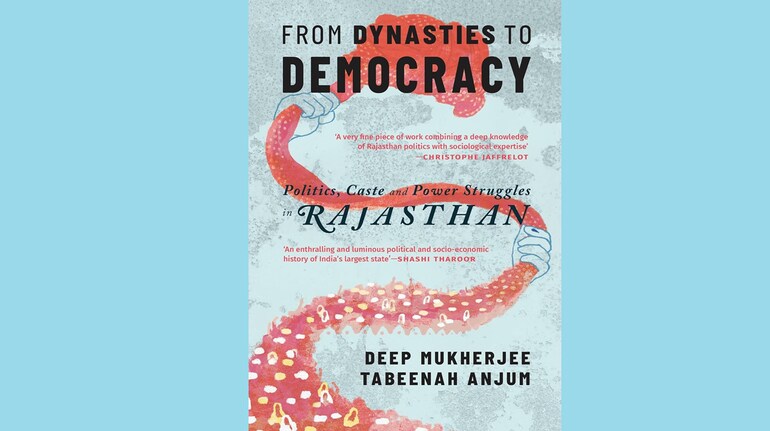
Excerpted with permission from the publisher From Dynasties to Democracy: Politics, Caste and Power Struggles in Rajasthan, Deep Mukherjee & Tabeenah Anjum, published by Pan Macmillan India.
********
Pushback from the Upper Castes
In April 2018, Hindaun, the largest town of the Karauli district in eastern Rajasthan, was hit by one of the worst caste conflicts in the history of Rajasthan. The houses of two Dalit politicians – sitting BJP MLA Rajkumari Jatav and former MLA from the Congress, Bharosi Lal Jatav – had been set on fire by a mob of upper caste protesters. While the residents themselves had made a hasty retreat when the mob had entered their houses and vandalized their property before setting fire to the houses, the impunity of the act was shocking. The two charred houses were left abandoned in the curfewed city with several policemen patrolling the streets.
The immediate trigger for the upper caste backlash was the nationwide protests by Dalit outfits on 2 April 2018 in the wake of the Supreme Court’s decision to change certain provisions of the SC/ST (Prevention of Atrocities Act), one of which enabled the accused in such cases to apply for anticipatory bail. Dalit outfits saw this as a clear dilution of the purpose of the law, which had been instituted to safeguard the weaker sections from atrocities. The 2 April protests shook Rajasthan as well, stretching from the eastern districts of Karauli, Alwar, Sawai Madhopur and Jaipur to the westernmost districts of Barmer and Jaisalmer, situated along the state borders. Worried that the Supreme Court’s decision would empower the perpetrators of SC/ST atrocities, the protesters from Dalit and tribal communities went on a rampage, obstructing railway tracks and roads, while the police in the then BJP-ruled state scrambled to get the situation under control.
However, a counter-mobilization by the upper castes took the streets by storm soon after. The Karni Sena – a self-styled outfit positioned as protectors of the Rajput community – clashed with Dalit groups in the desert district of Barmer. The air, resonant with chants of ‘Jai Bhim!’, now rang with the counter-sloganeering from the Rajput side yelling ‘Jai Bhawani!’. Lives were lost during these clashes, including that of twenty-seven-year-old Pawan Kumar Jatav, a Dalit man who had dreams of becoming a lecturer someday. He was killed in the police firing in Alwar’s Khairthal and his father Jallaram Jatav alleged that the firing was deliberate. His son had been visiting Khairthal to meet his brother-in-law.
The upper caste fury eventually reached Jatav Basti in Hindaun, 160 kilometres from Khairthal, where Dalits were threatening to convert to Islam. It was here that the upper caste mobs burned down the houses of the aforementioned Dalit politicians. According to Ashwini Jatav, a resident of the basti, upper caste men went around checking people’s identity cards to make sure they were Dalits before assaulting them, not even sparing the women.
Such backlash has become much more frequent in Rajasthan during recent years, when caste outfits such as the Karni Sena and the Brahmin Mahasabha – each with several factions led by self-styled heads – have started voicing concerns over the ‘victimization’ of upper castes. Much before the BJP government at the centre introduced the 10 per cent reservation for economically weaker sections (EWS), people such as Pandit Suresh Mishra, Congress leader and president of the Sarv Brahmin Mahasabha who later switched to the BJP before the 2023 assembly elections, had been making demands for such a quota in Rajasthan. In a viral video, former president of the Shree Rashtriya Rajput Karni Sena, Sukhdev Singh Gogamedi, was heard saying, ‘If anybody frames you in a false case of SC/ST Act, go to the administration and give them proof of your innocence. If they still don’t listen, cut off both the legs of the person who has filed the case.’ The crowd had cheered wildly in response. Gogamedi, who would later be shot dead in 2023 allegedly by assailants with links to organized criminal gangs, had a habit of issuing such sermons over social media.
The horrific scenes in Hindaun in the aftermath of the 2 April protests were proof of how Dalit leaders – whether they were from the Congress or the BJP – would not be spared in case of conflict. The BJP was already under fire from Rajput outfits over other issues, including the controversies stirred up by Padmaavat and the Anandpal Singh encounter, and so it refrained from outrightly condemning this fresh violent outbreak by upper caste protesters.
*
According to the 2011 census, the SC and ST communities form a collective 31.31 per cent of the population. While thirty-four assembly seats are reserved for the SCs, there are twenty-five constituencies reserved for STs. Despite the two communities being a decisive force for nearly sixty assembly seats, cases of Dalit and tribal atrocities have only increased, reflecting how deeply entrenched the caste fault lines are in the formerly feudal state. In recent years, however, Rajasthan has seen greater disillusionment with the established political order among the Dalit youth, evident in the rise of outfits such as the Bhim Army.
Anil Kumar Dhenwal, who was the Rajasthan state in-charge of the Bhim Army in 2022 remarked at how after being let down repeatedly by major parties such as the Congress and BJP, Dalit youth naturally gravitated towards the Bhim Army. With members and volunteers in all districts using all possible media available, including social media and WhatsApp groups, the outfit started highlighting cases of Dalit atrocities ignored by mainstream media.
Ambedkarite movements in the state have been fuelled by the anger of Dalit youngsters who are allied with neither the Congress nor the BJP. Over the years, the statue of Manu mentioned at the beginning of this chapter has also become a symbol for rallying Dalit voices. Time and again, groups representing oppressed communities from across the country have called for the removal of the statue. In 2018, two Dalit women from Maharashtra’s Aurangabad were arrested along with an associate for smearing the statue with black paint.
Apart from the rise of outfits such as the Bhim Army, marginalized communities have also continued to express their grouse against the system electorally, through the power of the ballot. Dalit anger was palpable in the results of the 2018 assembly elections, when the BJP’s tally suffered the most in SC/ST-dominated areas which had seen violence during the 2 April protests. The BJP could win only twenty of the fifty-nine reserved seats in the state. In 2023, as the Gehlot-led Congress government tenure had been seeing many cases of Dalit atrocities and had faced immense backlash from the community as a result, their hopes to get elected were dashed by the loss of the reserved seats they had secured in the previous elections. They could win in only twenty of the fifty-nine reserved constituencies – meeting the same fate as the BJP five years back.
**********
Deep Mukherjee & Tabeenah Anjum, From Dynasties to Democracy: Politics, Caste and Power Struggles in Rajasthan, Pan Macmillan India, 2025. Pb. Pp. 311
A compelling unveiling of the transformation of Rajasthan from a feudal society into a vibrant democracy
Rajasthan, India’s largest state, is often imagined as a land of sweeping deserts, majestic forts and colourful traditions. Yet, beneath this picturesque surface lies a complex reality shaped by centuries-old feudal systems, deep-seated social divisions, the lingering influence of royal families and a volatile political landscape.
In this insightful narrative, journalists Tabeenah Anjum and Deep Mukherjee offer a comprehensive look at Rajasthan’s political evolution from a feudal state ruled by kings and jagirdars to a dynamic electoral democracy. They delve beyond common perceptions to chart Rajasthan’s political journey from its formation in 1949 to the 2024 Lok Sabha elections and beyond. They meticulously examine crucial historical moments – the rise of kisan sabhas and praja mandals, caste violence and Dalit agitations, Adivasi self-assertion and episodes of unrest, riots and lynchings. Extensive firsthand reporting and rigorous archival research illuminate the power struggles between the BJP and the Congress, the pervasive influence of the RSS, persistent infighting within political parties and the formidable challenges faced by prominent leaders like Bhairon Singh Shekhawat, Baldev Ram Mirdha, Ashok Gehlot, Sachin Pilot, Vasundhara Raje and others.
Scholarly and lucid, this account fills a crucial gap in our understanding of Rajasthan’s political history.
Deep Mukherjee is a senior journalist, presently associated with The Wire as an assistant editor. He has long served as the Rajasthan correspondent for The Indian Express and has also worked with Hindustan Times and DNA. He covers issues of national importance, pertaining primarily to politics, human rights, gender, atrocities against marginalized communities, impact of government policies and schemes, labour and farmer suicides. A UNICEF Development Journalism Fellowship awardee, Deep has highlighted the plight of child labourers working in the lac bangle industry in Jaipur and stone quarries of Rajasthan through his investigative reportage. He constantly strives to illuminate those perspectives that usually remain confined to the periphery or get lost in the din of the mainstream, especially oppressed voices and the daily struggles of the underprivileged. His work is aimed at mapping the political and administrative history of various communities through the narrativization and contextualization of individual experiences.
Aside from his journalistic endeavours, Deep occasionally writes for literary journals and opinion pieces for news outlets and loves to travel.
Tabeenah Anjum is a journalist with over fifteen years of experience across print and multimedia outfits. She reports on politics, gender, human rights, migrant rights and issues impacting marginalized communities from Rajasthan and neighbouring states.
Presently, she writes for Outlook magazine and contributes long-form reportage for The Quint, Article 14, Times of India Plus, The Gaon Connection, BBC, Countercurrents,Caravan and Telegraph. She was the bureau incharge of Deccan Herald in Rajasthan until 2020 and continues to write opinion pieces for the newspaper. A passionate photographer, she is the recipient of the National Award in Photography (2015) conferred by the Ministry of Information and Broadcasting, Government of India, and the Maharaja Sawai Ram Singh II Award (2017) for excellence in journalism and photography. Her photographs have been exhibited in India, Nepal and South Australia. She has also published research papers on the media in reputed international journals, including a chapter on ‘Journalism of Tolerance: Reporting About Refugees and Immigrants’ in Xenophobia in the Media (2024), published by Routledge. She has served as the co-course director of the Basics of Visual Storytelling course at Film and Television Institute of India, Pune, since 2019 and conducts visual storytelling workshops across India and abroad.
She has a master’s in journalism from University of Rajasthan and has completed her PhD in 2016. Anjum has been teaching as an adjunct professor at Haridev Joshi University of Journalism, Jaipur, since 2022. She also taught at the University of South Australia, Adelaide, in 2019 and the University of Sakarya, Turkey, in 2022.
Born and raised in Kashmir, Anjum is currently based in Rajasthan, where her journey in journalism first took root and inspired this book, her non-fiction debut.
Discover the latest Business News, Sensex, and Nifty updates. Obtain Personal Finance insights, tax queries, and expert opinions on Moneycontrol or download the Moneycontrol App to stay updated!
Find the best of Al News in one place, specially curated for you every weekend.
Stay on top of the latest tech trends and biggest startup news.




