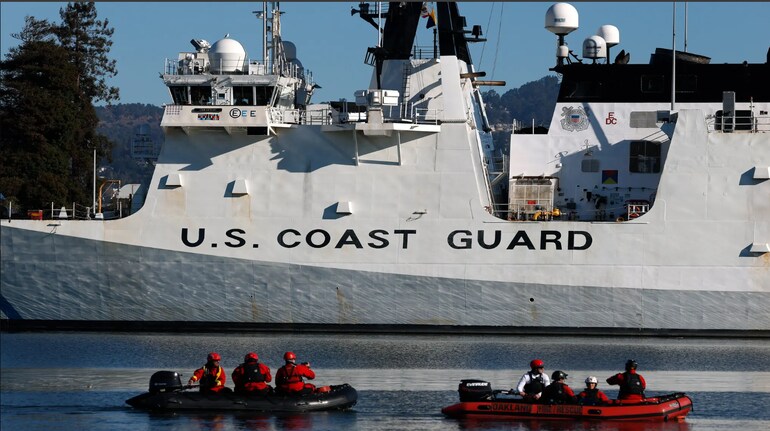
The US Coast Guard, normally seen as one of the quieter branches of the armed forces, found itself at the centre of a national debate after releasing a revised harassment policy that appeared to soften its stance on hate symbols. A directive signed earlier this month reclassified swastikas and nooses—previously listed outright as prohibited hate symbols—as “potentially divisive,” drawing immediate criticism from civil rights groups. The Southern Poverty Law Center called the move an embarrassment, and lawmakers demanded an explanation for why the service was adjusting definitions that had long been clear, the New York Times reported.
A fast, messy series of clarifications
The backlash prompted the Coast Guard to issue a late-evening memo asserting that hateful symbols would still be barred from public display. But that update left an obvious gap: what about private spaces? For nearly 48 hours, that question went unanswered. It took a further statement from the Department of Homeland Security—the Coast Guard’s parent agency—before officials publicly confirmed that displaying such symbols in private quarters would also violate standards. The rapid shift from one position to another created uncertainty inside the service as well as outside it, especially since the controversial directive is set to take effect on December 15.
What the previous rules looked like
For years, Coast Guard policy mirrored Pentagon guidance by treating racist, extremist and hateful behaviour as serious violations of military law. The Uniform Code of Military Justice applies to Coast Guard members, and past incidents—such as extremist violence in the ranks during the 1990s—had prompted the armed forces to adopt strict rules around conduct, symbolism and group associations. A 2023 instruction reaffirmed these protections, listing a broad set of characteristics shielded from harassment, including race, religion, national origin, gender identity and political affiliation.
How the new directive changed the landscape
The latest document made notable changes even beyond the controversy around symbols. It removed “gender identity” and “political affiliation” from the list of protected categories—an adjustment the Coast Guard traced directly to a White House executive order issued early in President Trump’s term banning what it called “gender ideology” across the federal workforce. The directive also eliminated the term “hate incident,” which previously appeared in Coast Guard policy. Instead, it introduced a threshold requiring proof that a symbol displayed publicly disrupted discipline, morale or cohesion before triggering disciplinary action. Critics argued that such a standard would make it harder to hold offenders accountable.
Questions the service has not answered
Officials have offered no explanation for removing the “hate incident” designation, nor for the new distinction between public and private displays. They have also not addressed why the policy appeared to weaken earlier limits on bullying and hazing. These gaps became more glaring after the Defense Department recently reversed restrictions on instructors using physical force or profanity in basic training, signalling a broader shift across the armed forces. The Coast Guard has now said bullying and hazing remain prohibited, but the directive itself has not yet been amended.
Internal tensions and political pressures
The timing of the Coast Guard’s changes has put them squarely within the broader political debate over how the federal government handles issues of identity, extremism and expression. With the White House pushing agencies to align with its directives on gender identity and free expression, the Coast Guard appears to be navigating between legal obligations under military law and new expectations from civilian leadership. That tension is reflected in the rapid policy whiplash: a directive softens language, public criticism follows, leaders issue clarifications, and DHS steps in with firmer language.
Uncertainty ahead of the new policy’s launch
As of now, the directive is still set to take effect in mid-December, but it is unclear whether the Coast Guard will revise the text before then. The latest statements make clear that hateful or violent symbols will remain banned in all settings, and that bullying and hazing are not being reinstated. But service members remain unsure how the written instruction will be interpreted when disciplinary cases arise. For a branch that relies heavily on trust, teamwork and close-quarters operations, the next few weeks may determine whether the confusion surrounding the policy has lasting consequences—or is quietly resolved before the new rules go into effect.
Discover the latest Business News, Sensex, and Nifty updates. Obtain Personal Finance insights, tax queries, and expert opinions on Moneycontrol or download the Moneycontrol App to stay updated!
Find the best of Al News in one place, specially curated for you every weekend.
Stay on top of the latest tech trends and biggest startup news.