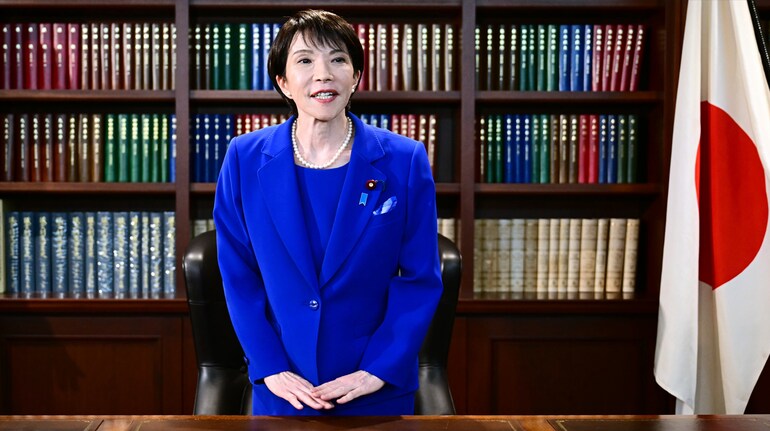
In October 2024, Sanae Takaichi shattered Japan’s political glass ceiling to become the nation’s first female prime minister. At 64, the veteran Liberal Democratic Party (LDP) politician rose to the top office following the resignation of Shigeru Ishiba, who stepped down after a series of electoral setbacks and declining public support for the long-ruling party.
Just months into her tenure, Takaichi has announced a snap election. But why has she taken this gamble, and will it pay off?
LDP’s rocky road to leadership
As reported by The Guardian, the LDP’s fortunes were in decline early last year. Ishiba, an unpopular prime minister, had lost ground in two elections, while the party’s approval ratings were falling amid a slush-fund scandal. Factions within the LDP were seeking new leadership.
The party faced a choice between Shinjiro Koizumi, son of a former prime minister, and Takaichi. In a surprise decision, the LDP chose Takaichi. She then defeated Yoshihiko Noda of the Constitutional Democratic Party of Japan in the Lower House to become prime minister.
Even as Takaichi, a protégé of former Prime Minister Shinzo Abe, accepted the applause and bowed deeply, scepticism remained over her ability to manage the top job.
High-profile diplomacy and bold policies
Since assuming office, Takaichi has experienced both successes and controversies. She hosted visits from US President Donald Trump, who gave her a “complete and total endorsement” and invited her to the White House, as well as Chinese President Xi Jinping and South Korean President Lee Jae Myung.
She also sparked tension with China by outlining Japan’s possible response to a Beijing attack on Taiwan. Domestically, her decision to suspend the eight per cent sales tax on food—fulfilling an election promise to help households cope with rising prices—prompted investor concern. The Financial Times notes that Japanese bonds fell and the yen weakened, raising questions over how Japan could replace the $30 billion (around Rs 2.49 lakh crore) in lost annual revenue. Experts caution that the Bank of Japan may have limited ability to intervene if markets sink.
Youth appeal and social media savvy
Despite these challenges, Takaichi remains popular. According to CNN, polls show her approval ratings over 50 per cent overall, and up to 80 per cent among young people in their 20s.
Takaichi, who draws inspiration from Britain’s Margaret Thatcher, uses social media effectively, with 2.6 million followers on X. She has become a fashion icon, with fans seeking the $900 (around Rs 74,700) black leather bag she carries and the pink pen she uses. Short, slogan-heavy clips often go viral, including a recent K-pop duet with South Korean President Lee.
Two 20-year-old students told CNN that Takaichi’s smile first drew them in. “It makes me feel closer to her,” one said, noting she uses the same pink pen as Takaichi. Another added: “Compared to the previous prime minister, you see a lot of posts on social media showing how hard she’s working. I see young people starting to get interested in politics because of that.”
Yuiko Fujita, associate professor at Tokyo University, told Nikkei Asia: “Until now, politics has been dominated by senior male figures. The fact that the prime minister is now a woman, someone with a different background from what people are accustomed to, creates a feeling that something is shifting.”
Concerns over Taiwan and economic leadership
Some observers have raised concerns over her comments regarding a potential Chinese invasion of Taiwan. Hajime Kidera, professor at Meiji University’s School of Political Science and Economics, told CNN: “The effects of Takaichi’s comments … haven’t fully appeared yet. But as they do, more people may begin questioning whether Japan’s economy can really be entrusted to her leadership.”
Snap election explained
Takaichi called the snap election because she holds only a razor-thin majority in parliament, insufficient to implement her agenda. When announcing the vote last month, she said the Japanese people must decide whether she is “fit to run the country.”
The prime minister appears to be leveraging her popularity to expand the LDP’s parliamentary numbers and gain more room to manoeuvre.
Election outlook and challenges
Polls indicate that Takaichi’s LDP and its coalition partner, the Japan Innovation Party (Ishin), could win as many as 300 of the 465 seats in the Lower House.
However, youth turnout remains uncertain. In the October general election before Takaichi became prime minister, only 36 per cent of voters aged 21–24 participated in Tokyo, compared with 71 per cent of those aged 70–74.
“Prices are so high,” Tokyo housewife Tomomi Kawamura told The Guardian. “I want something done about that.”
The far-right Sanseito party, fielding a record 190 candidates, could gain up to 15 seats. Having won Upper House seats last year, Sanseito’s anti-foreigner stance and ties to US President Donald Trump’s MAGA movement have helped shift Japan’s political discourse to the right, a trend seen in other advanced democracies.
The mid-winter election will also contend with severe weather. Snow is forecast in parts of northern and western Japan, with rare flurries possible in Tokyo, which could hinder voter turnout. Japanese elections, traditionally dominated by the LDP, see turnout lower than most other advanced democracies, averaging around 55 per cent.
(With inputs from agencies)
Discover the latest Business News, Sensex, and Nifty updates. Obtain Personal Finance insights, tax queries, and expert opinions on Moneycontrol or download the Moneycontrol App to stay updated!
Find the best of Al News in one place, specially curated for you every weekend.
Stay on top of the latest tech trends and biggest startup news.