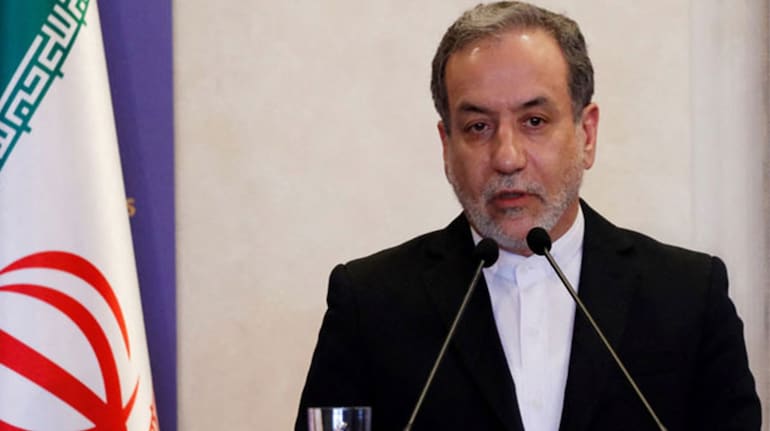
Amid the escalating conflict in West Asia, Iranian Foreign Minister Abbas Araghchi said on Saturday that the Strait of Hormuz remains open to most countries but is closed to vessels linked to the United States and Israel following recent airstrikes on Iran’s key oil hub at Kharg Island.
“As a matter of fact, the Strait of Hormuz is open,” FM Abbas Araghchi said.
“It is only closed to the tankers and ships belong[ing] to our enemies, to those who are attacking us and their allies. Others are free to pass,” he told MS NOW, as cited by New York Post. “And I can say that the Strait is not closed, but it is only closed to American, Israeli, you know, ships and tankers, and not to others.”
The remarks came a day after US forces carried out strikes targeting military facilities on Kharg Island, a crucial hub for Iran’s oil exports. The conflict began on February 28 when the United States and Israel launched coordinated attacks on Iran that killed the country’s Supreme Leader Ali Khamenei.
Tehran later responded with strikes on Gulf nations hosting US military bases, disrupting aviation operations and pushing global energy markets into uncertainty. Araghchi also said some ships were avoiding the route because of security concerns rather than restrictions imposed by Iran.
“Of course, many of them prefer not to because of their security concerns. This has nothing to do with us," he said.
According to the UK Maritime Trade Operations, at least sixteen vessels operating in and around the Gulf and the Strait of Hormuz have been attacked since the war began.
Meanwhile, Donald Trump has called on global allies to deploy warships to protect shipping through the strait. In a post on Truth Social, the US president urged countries including China, France, Japan, South Korea and the United Kingdom to help secure the key maritime route and ensure uninterrupted global energy supplies.
The Strait of Hormuz, a narrow waterway between Iran and Oman, is one of the world’s most strategic oil transit routes. Roughly 13 million barrels of oil pass through it each day, about 31% of global oil shipments, meaning any disruption could sharply affect global energy markets.
Recent tensions have already led to hundreds of vessels becoming stranded in the region, including several Indian ships, as maritime traffic slows due to security fears and ongoing military activity.
Discover the latest Business News, Sensex, and Nifty updates. Obtain Personal Finance insights, tax queries, and expert opinions on Moneycontrol or download the Moneycontrol App to stay updated!
Find the best of Al News in one place, specially curated for you every weekend.
Stay on top of the latest tech trends and biggest startup news.