
As the Greenland crisis deepens, a growing number of Danes are openly debating whether Copenhagen should deploy its most potent leverage: Novo Nordisk’s dominance as the primary supplier of insulin and GLP‑1 drugs to the U.S. market.
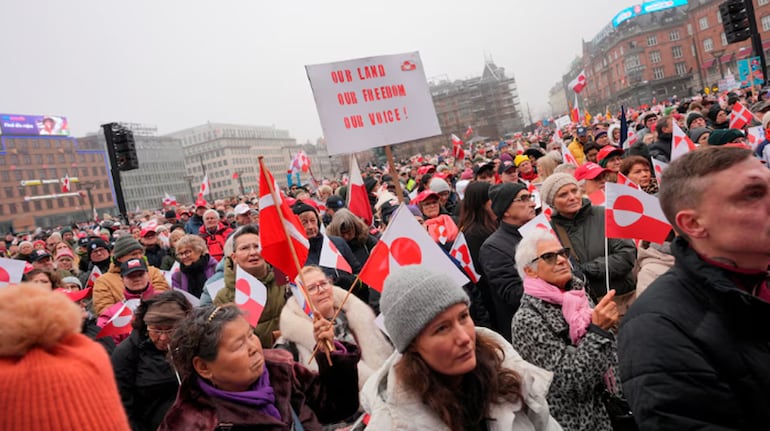
With Washington threatening 25 percent tariffs to pressure Denmark into selling Greenland, Prime Minister Mette Frederiksen has already summoned senior business leaders—including Novo Nordisk’s CEO—for consultations. EU leaders have condemned the U.S. move as destabilizing, triggering emergency talks and discussions about activating the bloc’s anti‑coercion tool. Protests have erupted in Nuuk and Copenhagen, and European troops have deployed to Greenland for Danish‑led Arctic training exercises.
Denmark cannot match U.S. military power. But it does control a chokepoint the US cannot easily replace. Roughly 30–50 percent by volume—come from Denmark. That makes the U.S. effectively dependent on Danish production for a continuous, non‑substitutable supply. Millions of Americans need insulin every day, with no margin for interruption. Any shock from tariffs, supply‑chain disruption, or price spikes wouldn’t merely inconvenience patients. It risks clinical harm and a domestic political crisis in the US.
Other manufacturers—Eli Lilly, Sanofi, and India’s Biocon—can help on the margins, but none can instantly replace Denmark’s scale.
The GLP‑1 choke point
An outright insulin squeeze would be seen as a life‑and‑death escalation. But GLP‑1 drugs—Ozempic, Wegovy and other semaglutide‑based therapies—offer Denmark a subtler but still powerful lever. Novo controls around 55 percent of the global anti‑obesity market, and the U.S. is its biggest consumer market.
A GLP‑1 supply squeeze would be devastating for U.S. insurers, pharmacy chains and consumers already grappling with shortages. Unlike insulin, these drugs aren’t immediately life‑saving, so Copenhagen could, in theory, apply pressure without triggering the same moral blowback. Even a mild throttling would unleash lobbying from U.S. healthcare giants such as UnitedHealth, CVS and major PBMs.
Meanwhile, Novo Nordisk has become so central to Denmark’s economy that its market value now often exceeds the country’s annual GDP. Critics call it “Novo‑dependence,” but in a trade conflict, it functions as a state‑aligned strategic asset.
Complicating the standoff further, the U.S. has already announced a 100% tariff on branded and patented medicines, though enforcement is delayed for companies investing in U.S. manufacturing. That provision has accelerated Novo’s push into its large Clayton, North Carolina plant, which still depends on proprietary European‑sourced active ingredients.
The Greenland tariffs would come on top of these drug tariffs—raising the stakes for both countries.

Discover the latest Business News, Sensex, and Nifty updates. Obtain Personal Finance insights, tax queries, and expert opinions on Moneycontrol or download the Moneycontrol App to stay updated!
Find the best of Al News in one place, specially curated for you every weekend.
Stay on top of the latest tech trends and biggest startup news.