






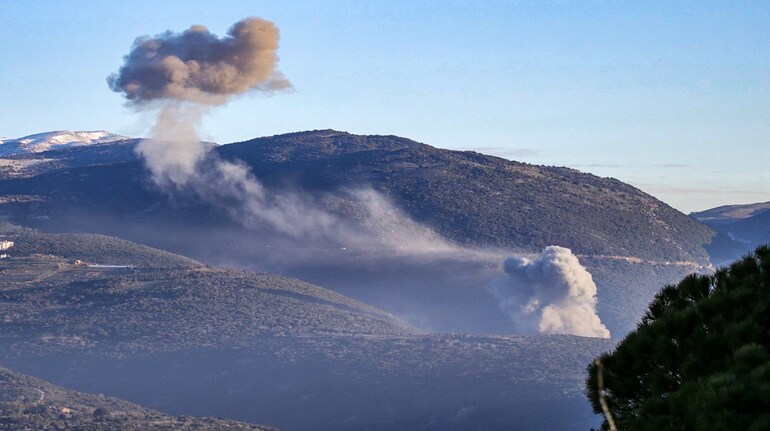

Israel, on Saturday, announced carrying out "preventive" airstrikes on targets inside Iran, in an operation that involved the U.S. Explosions were reported across several Iranian cities, including Tehran, Isfahan, Qom, Karaj, and Kermanshah.
Fars News reported three large blasts in central Tehran, suggesting that multiple missiles struck the capital. Iranian state television showed thick smoke rising in several districts. The Associated Press noted that at least one strike occurred near the office of Iran’s Supreme Leader, Ali Khamenei. Reports from other cities indicate that explosions were heard across Isfahan, Qom, Karaj, and Kermanshah.
This now raises fears of a wider conflict in the oil-rich Middle East.
Meanwhile, Israeli Defence Minister Israel Katz has declared a nationwide state of emergency. The Israel Defense Forces (IDF) sounded sirens across the country and warned that retaliatory drone and missile attacks were expected. Citizens were advised to remain near bomb shelters, and non-essential activities, including schools and social gatherings, were suspended.
Israel has also closed its airspace to civilian traffic. The Ministry of Transport said it would notify passengers at least 24 hours before flights could resume and asked residents to stay away from airports.
The latest developments mark a sharp escalation in hostilities between the two long-standing adversaries.
As tensions continue to flare up, attention, once again, turns to how the two militaries compare in terms of manpower, equipment, technology, spending and global standing.
Manpower: Iran’s scale vs Israel’s reserve model
Iran maintains one of the largest standing forces in the region, with roughly 610,000 active-duty personnel, supported by 350,000 reservists and an estimated 220,000 paramilitary members. This gives Tehran a substantial numerical advantage in overall troop strength.
Israel’s active force is significantly smaller at about 170,000 personnel. However, it relies heavily on a robust reserve system comprising approximately 465,000 reservists, alongside 35,000 paramilitary forces. Israel’s doctrine is built around rapid mobilisation, high readiness levels and integration between active and reserve components.
Air power: Qualitative edge vs numerical depth
Air superiority plays a central role in Israel’s military strategy. Israel operates more than 600 aircraft, including roughly 240 fighter jets and nearly 50 attack helicopters. It also maintains a fleet of special-mission aircraft that enhance surveillance, intelligence gathering and electronic warfare capabilities. Dedicated strike aircraft provide precision capability and tactical flexibility.
Iran fields more than 550 aircraft, including close to 190 fighters and a larger number of transport planes. However, it operates far fewer attack helicopters and specialised mission platforms. Much of Iran’s fleet includes ageing airframes, though it compensates through missile development and drone programs.
Land forces: Armour and artillery balance
On land, Iran possesses a pronounced advantage in conventional numbers. It operates between 1,700 and 2,000 tanks and nearly 66,000 armoured vehicles. It also fields over 1,500 mobile rocket launchers, providing significant area-saturation firepower.
Israel deploys approximately 1,300 tanks and about 36,000 armoured vehicles. While smaller in scale, its ground forces emphasise mobility, advanced targeting systems and precision-guided artillery. Israel maintains hundreds of self-propelled artillery units, giving it responsive firepower tailored for rapid manoeuvre warfare rather than large-scale attrition.
Naval capabilities: Numbers versus deterrence
At sea, Iran commands the larger fleet by vessel count, including frigates, submarines and patrol vessels suited for operations in the Gulf and asymmetric maritime warfare. Its naval doctrine focuses heavily on regional dominance and unconventional tactics.
Israel’s navy is comparatively small and does not operate frigates. It maintains five submarines and a number of advanced corvettes and patrol vessels equipped with missile systems. The emphasis is on strategic deterrence and coastal defence rather than fleet expansion. Neither country operates aircraft carriers.
Defence budgets and financial resilience
Spending capacity marks a key divergence.
Israel’s defence budget stands at roughly $30.5 billion annually, about double Iran’s estimated $15.45 billion. This financial advantage enables Israel to procure advanced platforms, invest in research and development, and sustain technological superiority.
Israel also holds significantly larger foreign exchange reserves, strengthening its capacity to finance extended military operations. Iran, constrained by international sanctions, has focused on indigenous weapons production and missile development to offset funding limitations.
Global ranking and conventional strength
According to the 2026 assessment by Global Firepower, Israel ranks 15th among 145 countries with a PowerIndex score of 0.2707, while Iran ranks 16th with a score of 0.3199. The index evaluates conventional military potential across more than 60 indicators, with lower scores indicating stronger capability.
An important strategic factor lies beyond bilateral comparison.
Israel maintains a close partnership with the U.S., which is ranked first globally in conventional military strength. In any broader escalation, external support could significantly influence operational outcomes.
As per initial reports coming in, U.S. President Donald Trump has deployed additional forces, including a second aircraft carrier, to Israeli waters, despite ongoing nuclear and diplomatic talks with Tehran. US officials maintain that dialogue remains open, but the deployment underscores the heightened risk of broader conflict.
The Iranian government, soon after, shut down its airspace following the strikes, restricting travel and complicating regional air traffic.

Discover the latest Business News, Sensex, and Nifty updates. Obtain Personal Finance insights, tax queries, and expert opinions on Moneycontrol or download the Moneycontrol App to stay updated!
Find the best of Al News in one place, specially curated for you every weekend.
Stay on top of the latest tech trends and biggest startup news.





