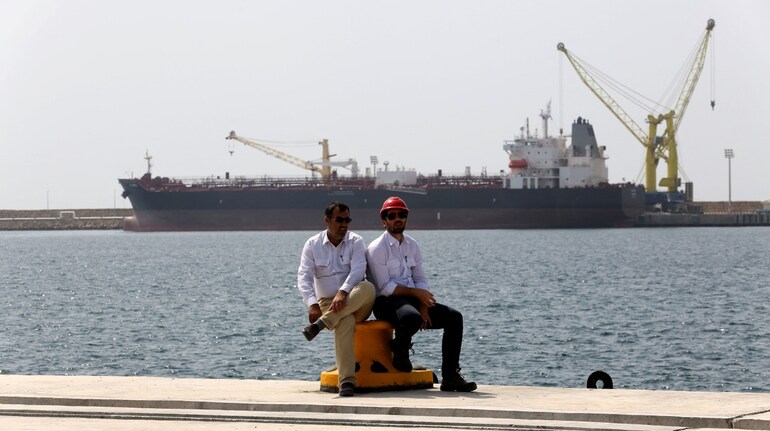

India’s strategic foothold in Iran is facing renewed uncertainty as widespread unrest across the country threatens to disrupt operations at the Chabahar Port, a project New Delhi considers vital to its long-term regional outreach. Intelligence sources cited by CNN-News18 say the protests, now reported in more than 100 Iranian cities, have triggered fresh concerns in India about the safety, reliability and continuity of work at the port.
According to these inputs, nationwide strikes, intermittent internet shutdowns and supply-chain disruptions linked to the unrest could slow cargo movement and delay ongoing infrastructure development at Chabahar. India has invested close to $500 million in the project, which it sees as a strategic alternative route that bypasses Pakistan and opens access to Afghanistan, Central Asia, Russia and parts of Europe. CNN-News18 reported that officials in New Delhi are increasingly worried that prolonged instability could undermine these objectives.
Top intelligence sources told CNN-News18 that Chabahar sits at the heart of India’s continental connectivity push and its Connect Central Asia Policy. The port is a key pillar of the International North-South Transport Corridor or INSTC, a 7,200-kilometre multimodal network linking Indian ports to Iran, the Caspian Sea, Russia and onward to Europe. Officials note that the corridor cuts transit time by nearly 40 per cent and reduces costs by around 30 per cent compared to the traditional Suez Canal route, bringing shipping times down from 25 to 30 days. Any sustained disruption inside Iran, however, risks eroding these gains.
Particular concern surrounds the Chabahar–Zahedan railway line, a crucial link for integrating the port with the broader INSTC network. Intelligence inputs accessed by CNN-News18 warn that labour unrest, funding constraints or prolonged protests could stall progress on the rail project, weakening the overall efficiency of the corridor. Sources also indicate that even lower-ranking cadres of Iran’s Islamic Revolutionary Guard Corps are feeling the impact of the country’s economic crisis, a factor that could affect labour morale and local security conditions around key infrastructure.
Beyond logistics, there are deeper strategic anxieties for India. Intelligence officials told CNN-News18 that instability in Iran could create space for China to expand its influence, as Beijing has often moved quickly to capitalise on uncertainty elsewhere. Chabahar is widely seen in New Delhi as a counterbalance to China’s presence at the Gwadar Port in Pakistan, located about 170 kilometres away and a central component of Beijing’s Belt and Road Initiative.
From an Indian perspective, Chabahar is not only a trade gateway but also a strategic vantage point. Intelligence sources emphasise that the port helps India keep an eye on Chinese naval and commercial activity in the Arabian Sea and the wider Indian Ocean, pushing back against Beijing’s so-called “string of pearls” strategy. With China reportedly planning to scale up Gwadar’s capacity to 400 million tonnes by 2030, any prolonged disruption at Chabahar could tilt the regional balance.
Senior officials cited by CNN-News18 said New Delhi is closely tracking developments on the ground, aware that regime instability in Iran now poses a direct challenge to one of India’s most important overseas strategic investments. While no immediate decisions have been announced, the situation has added a new layer of uncertainty to India’s plans in the region and reinforced concerns about the vulnerability of critical connectivity projects to political upheaval.
Discover the latest Business News, Sensex, and Nifty updates. Obtain Personal Finance insights, tax queries, and expert opinions on Moneycontrol or download the Moneycontrol App to stay updated!
Find the best of Al News in one place, specially curated for you every weekend.
Stay on top of the latest tech trends and biggest startup news.