






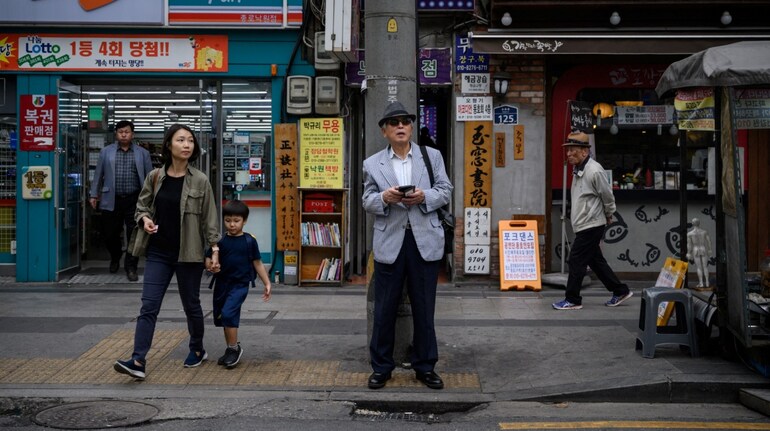

South Korea has recorded its sharpest rise in births in nearly 20 years, offering a rare moment of optimism for a country battling a prolonged population crisis. Provisional data released on February 25 by the Ministry of Data and Statistics shows that 254,500 babies were born in 2025, marking the largest annual increase since 2007.
The 6.8 per cent jump in births was the second straight yearly rise and the fourth-highest increase since the government began compiling comparable data in 1970, according to Korea JoongAng Daily.
Birth rates tick up, population still shrinking
After years of decline, South Korea has now seen its birth rate rise for two consecutive years. The country’s fertility rate increased to 0.80 in 2025, up from 0.75 in 2024 and 0.72 in 2023, Newsweek reported.
This marks the first time the fertility rate has returned to the 0.8 range since 2021. However, the demographic challenge remains severe. Deaths continued to outnumber births last year, with the population shrinking by 108,900 people.
Despite the recent improvement, South Korea remains the only member of the Organisation for Economic Cooperation and Development with a fertility rate below 1.0.
'Echo boomers' drive the rebound
Analysts attribute much of the recent rise to younger millennials known as “echo boomers”. This cohort includes people born between 1991 and 1995, when births briefly rebounded after the government ended its family planning policy.
During that five-year period, nearly 3.6 million children were born in South Korea. These individuals are now in their early 30s, the age bracket most likely to have children.
The term “echo boom” refers to the children of the country’s earlier baby boomer generation. In 2025, women in this group numbered around 1.7 million, a nine per cent increase from 2020, according to The Guardian.
Women aged 30 to 34 recorded 73.2 births per 1,000 women, far higher than the 21.3 births among women in their late 20s. The average age of mothers rose to 33.8 last year, up 0.2 years from the previous year.
Births to women aged 35 or older accounted for 37.3 per cent of all deliveries, an increase of 1.4 percentage points. This means more than three out of every 10 babies born in 2025 were to mothers in this age group.
Marriages, policy shifts and workplace support
Beyond demographic timing, experts point to a surge in post-pandemic marriages and changing attitudes towards parenting as key contributors to the rise.
Births within two years of marriage have increased sharply, according to The Independent. South Korea recorded 240,000 marriages last year, up 8.1 per cent from 2024.
Kang Hyun-young, an official overseeing birthrate policy at the ministry, told Aju Press:
“The increase in marriages over the past three years provides a foundation. But whether the trend continues depends on demographic structure and ongoing social changes.”
The government has spent heavily on pro-natalist policies such as baby allowances, expanded parental leave and childcare subsidies. Some companies now offer incentives of up to 100 million won per birth. Housing subsidies may have also played a role.
Individual testimonies suggest workplace reforms are beginning to influence personal decisions.
“It wasn’t an easy decision to step back from work, but I always thought I would have a child if I got married,” Kang, 40, who had her first baby last year and is on parental leave, told Korea JoongAng Daily.
“Because I have many friends who gave birth in their late 30s, I wasn’t afraid of being an older mother. The fact that my husband can take parental leave for up to three years also played a big role in my decision to have a baby.”
In February last year, the government extended shared parental leave to a maximum of three years per parent.
“I waited until my life felt more settled before having children, so I ended up pregnant in my late 30s, but I definitely feel like there are more people around me who want to have children. And for us, it happened naturally,” Lee Soo Min, who is expecting her second child after six years of marriage, told Korea JoongAng Daily.
“I can take a total of six years of parental leave, and my husband has already used one year. The system has improved compared to before, so the burden of parenting feels lighter.”
Government surveys show that the share of respondents who want to have children after marriage rose by 3.1 per cent between 2022 and 2024.
Temporary rebound or lasting shift
Demographers remain cautious about the durability of the trend. While births may continue to rise in the short term as marriages increase, experts warn that the momentum could fade later in the decade.
“Because the increase in marriages has accumulated over three years, we can expect births to rise as well,” Park Hyun-jung, head of the population trend division at the Ministry of Data and Statistics, told Korea JoongAng Daily. “But we will have to watch how things unfold.”
Smaller cohorts born after 1996 are expected to enter their 30s from 2027, which could slow the rebound. Structural problems also persist. High housing prices, soaring private education costs, workplace stigma against parents and weak youth employment continue to deter family formation, according to The Guardian.
Compounding these challenges, the infrastructure supporting childbirth has continued to shrink, raising questions about whether South Korea’s recent demographic uptick can be sustained.
Discover the latest Business News, Sensex, and Nifty updates. Obtain Personal Finance insights, tax queries, and expert opinions on Moneycontrol or download the Moneycontrol App to stay updated!
Find the best of Al News in one place, specially curated for you every weekend.
Stay on top of the latest tech trends and biggest startup news.





