






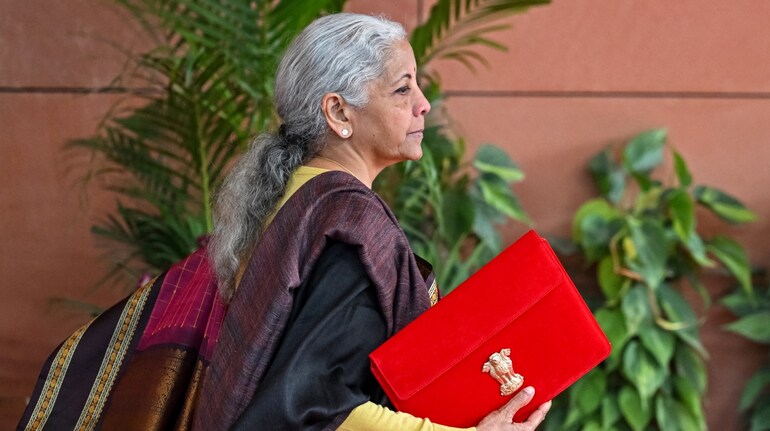

India’s Union Budget 2026–27 makes one message unmistakably clear. Fiscal policy is now being written with geopolitics in mind. Presented by Nirmala Sitharaman, the Budget reflects a world where supply chains are weaponised, borders are contested and economic dependence carries strategic risk. What emerges is not just a spending plan, but a security and power projection document shaped by tensions with China, persistent hostility from Pakistan and growing instability in India’s eastern neighbourhood, particularly Bangladesh.
At the core of the Budget lies a sharpened interpretation of Aatmanirbharta. Self-reliance is no longer framed as inward-looking protectionism, but as insulation against hostile chokepoints and unreliable partners. From rare earths and defence manufacturing to semiconductors, logistics and digital infrastructure, New Delhi is explicitly positioning itself to reduce exposure to adversarial states while exploiting global realignments to its advantage.
Rare earth corridors take aim at China’s chokehold
The proposal to establish dedicated rare earth corridors across Tamil Nadu, Kerala, Andhra Pradesh and Odisha is among the most overtly geopolitical announcements in the Budget. Rare earth elements are critical for electric vehicles, renewable energy systems, missiles, satellites and advanced electronics. China dominates global processing and refining, a leverage it has repeatedly demonstrated through export controls.
India, despite holding substantial monazite-rich reserves, remained dependent due to regulatory bottlenecks and limited refining capacity. The corridor model seeks to reverse this by integrating mining, processing and downstream manufacturing within India. The intent is clear. New Delhi wants to break free from Chinese dominance and present itself as a reliable alternative as countries de-risk their supply chains away from Beijing.
The timing is deliberate. With China using trade and technology as tools of coercion, India’s move directly challenges Beijing’s strategic monopoly in materials that underpin future warfare and clean energy.
Defence spending rises amid pressure from Pakistan and China
The defence outlay for 2026–27 has been raised to nearly Rs 7.8 lakh crore, marking a double-digit increase and reinforcing India’s shift toward hard deterrence. Capital expenditure for modernisation has jumped sharply, reflecting lessons from Operation Sindoor and the reality of a two-front challenge from Pakistan and China.
Pakistan’s persistent reliance on asymmetric warfare and China’s growing military assertiveness along the Line of Actual Control have forced New Delhi to prioritise air defence, naval platforms, drones and next-generation systems. Customs duty exemptions on aircraft components and inputs for maintenance, repair and overhaul further signal a push to localise defence manufacturing under Aatmanirbhar Bharat.
This Budget leaves little doubt. India is preparing for sustained military competition, not episodic crises.
Semiconductor and AI push counters technological exclusion
The expanded India Semiconductor Mission 2.0 and investments in AI-linked digital infrastructure respond directly to the geopolitics of technology. The US-China tech war has exposed how chips and compute power can be weaponised. India’s response is to embed itself deeper into global value chains rather than remain a consumer.
By backing chip design, materials, equipment manufacturing and talent creation, New Delhi is ensuring that future disruptions do not leave it vulnerable to technology denial regimes dominated by China or its allies.
Chabahar pause reflects sanction reality, not retreat
The absence of a fresh allocation for Chabahar port has drawn attention, but it reflects pragmatism rather than abandonment. The project, long seen as India’s gateway to Afghanistan and Central Asia while bypassing Pakistan, now sits at the intersection of escalating US-Iran tensions.
With sanctions uncertainty rising again under Donald Trump, India has chosen to pause budgetary exposure while continuing diplomatic engagement. This calibrated approach avoids risking secondary sanctions while keeping the strategic option alive. By contrast, Pakistan remains entirely excluded from regional transit corridors due to its own obstructionist policies.
Neighbourhood aid recalibrated, Bangladesh loses priority
The Budget also quietly reprioritises neighbourhood assistance. Funding for Bangladesh has been scaled back amid growing political instability, anti-India rhetoric and Dhaka’s deepening alignment with China. For New Delhi, unconditional economic support without strategic reciprocity is no longer tenable.
Budget 2026 skips Chabahar Port funding as US-Iran tensions rise, Bangladesh aid reworked
This marks a shift from cheque-book diplomacy to interest-based engagement. Neighbours that undermine India’s security interests cannot expect preferential treatment.
NRI reforms respond to tightening immigration regimes
One of the most strategic yet understated aspects of the Budget is the relief extended to NRIs and overseas Indians. Investment limits under the Portfolio Investment Scheme have been doubled, and Tax Collected at Source on overseas education, medical expenses and tour packages has been sharply reduced.
These measures come as countries, especially the United States, tighten immigration and visa rules. By making it easier for the Indian diaspora to invest, remit and maintain economic ties, New Delhi is effectively insulating itself against global mobility restrictions. NRIs are being positioned as a stable source of long-term capital at a time when foreign portfolio flows are volatile.
Strategic signalling beyond economics
The decision to host the first Global Big Cat Summit under the International Big Cat Alliance may appear symbolic, but it reinforces India’s soft power leadership at a time when China and Pakistan struggle with credibility on environmental governance.
Similarly, tax holidays for global cloud service providers operating from Indian data centres underline India’s ambition to become a global digital hub rather than remain dependent on offshore infrastructure.
The bottom line
Budget 2026-27 is shaped by confrontation, competition and consequence. China’s economic coercion, Pakistan’s persistent hostility and Bangladesh’s political drift have all influenced New Delhi’s choices. Rather than reacting defensively, India is using fiscal policy to harden itself, attract capital, localise strategic industries and assert autonomy.
Discover the latest Business News, Sensex, and Nifty updates. Obtain Personal Finance insights, tax queries, and expert opinions on Moneycontrol or download the Moneycontrol App to stay updated!
Find the best of Al News in one place, specially curated for you every weekend.
Stay on top of the latest tech trends and biggest startup news.





