
The escalating conflict between Iran and Israel is beginning to cast a shadow over India’s peak summer outbound travel season, disrupting flights and holiday plans at a time when millions of Indian families typically travel overseas during school vacations.
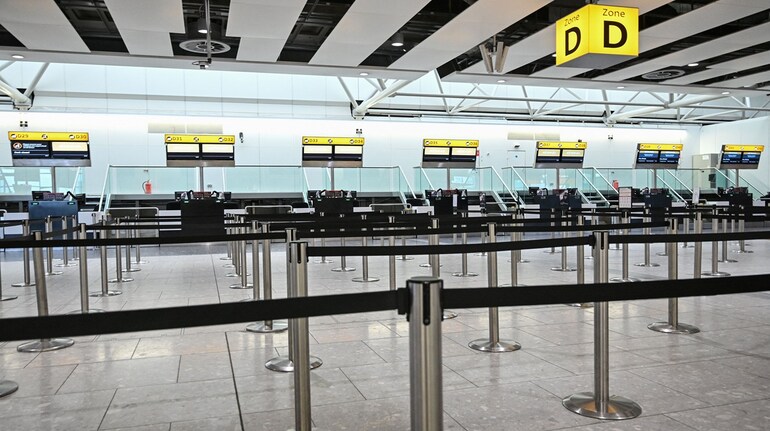
Airlines, including IndiGo and Air India, have suspended or rerouted several services to the Middle East as airspace closures and security concerns ripple across the region, affecting travellers heading not only to Gulf destinations but also those transiting through major hubs such as Dubai for onward journeys to Europe and the United States.
“What began as a holiday for many of our travellers has now been impacted by the rapidly evolving situation in parts of the Middle East,” said Hari Ganapathy, CEO and co-founder of travel platform Pickyourtrail.
As authorities continue to assess developments, some on-ground tourist activities in affected regions have also been halted. “Certain city tours and experiences, including visits to attractions such as Burj Khalifa, Ferrari World, and dhow cruises, have been temporarily suspended in the interest of safety,” he said.
At present, a significant number of travellers booked for near future travel to or via the Middle East refgion are opting to defer their travel plans, an MakeMyTrip spokesperson said. "We are supporting date changes in accordance with the policies communicated by the respective airlines."
The travel platform has also augmented capacity by 2.5 times to assist travellers during this period. In addition to enhanced human support, MakeMyTrip is leveraging Artificial Intelligence (AI) to ensure swift dissemination of information to travellers.
Summer travel season under pressure
The disruption comes during one of the busiest periods for India’s outbound travel market. According to industry estimates, the summer holiday window—driven largely by school vacations and family trips—accounts for a substantial share of international leisure travel from India.
“The summer season driven by school vacations and family travel typically contributes around 30–35 percent of annual leisure outbound traffic,” said Ravi Gosain, President of the Indian Association of Tour Operators (IATO).
Government data underscores the scale of the market. The Ministry of Tourism reported that 3.27 crore Indians travelled abroad in 2025, with leisure travel accounting for 43.5 percent of international trips, making it the largest driver of outbound tourism.
Last year, demand for overseas summer holidays was strong and online travel agencies and tour operators had reported a surge in bookings for curated packages, particularly to destinations such as Vietnam, Dubai and Bali, with some operators seeing 30–40 percent growth compared with 2024.
Dubai disruption hits global itineraries
The current tensions, however, are affecting a critical aviation hub for Indian travellers.
“Dubai is the nerve centre of connecting flights from India into Europe and the US. So anyone planning those trips is affected. It’s a massive disruption,” Ganapathy said.
According to him, several travellers have been stranded for days due to flight suspensions and airport delays. “Some people have been stuck for three to four days. Some are stranded at airports while others remain at hotels waiting for clarity on flights,” he said, adding that airlines continuing to suspend Middle East services means there is little immediate relief for affected travellers.
The Middle East is a key travel corridor for Indians. Among the top 20 countries visited by Indians in 2025 were the United Arab Emirates, Saudi Arabia, Thailand, the United States and Singapore, according to Tourism Ministry data.
Short-term impact expected
Travel industry executives say the geopolitical tensions could temporarily dampen outbound travel momentum during what is normally a peak booking period.
“Outbound travel typically starts rising around this time because of summer holidays, visa-friendly destinations and wedding or honeymoon travel,” said Govind Gaur, CEO of WanderOn. “Given the current situation in the Middle East, we are expecting a short-term impact on travel momentum.”
At the same time, some travellers are shifting plans toward destinations perceived as less volatile.
Ganapathy said Indian travellers are increasingly opting for alternatives such as Singapore, Japan, Vietnam, the Philippines, Bhutan, Sri Lanka, Maldives and Mauritius amid uncertainty in West Asia.
Travel industry is first casualty
Industry bodies say the travel sector is often among the first to feel the impact of geopolitical tensions.
“Any disruption anywhere, the first casualty is the travel sector,” said Rajiv Mehra, General Secretary of the Federation of Associations in Indian Tourism & Hospitality (FAITH). “This time it is much more serious because the region includes one of the world’s busiest aviation hubs—Dubai—and flights have been cancelled en masse.”
While industry executives expect travel demand to rebound once the situation stabilises, the ongoing tensions have already introduced uncertainty into what was shaping up to be another strong summer for India’s rapidly expanding outbound travel market.
Discover the latest Business News, Sensex, and Nifty updates. Obtain Personal Finance insights, tax queries, and expert opinions on Moneycontrol or download the Moneycontrol App to stay updated!
Find the best of Al News in one place, specially curated for you every weekend.
Stay on top of the latest tech trends and biggest startup news.