- My Alerts
- Go Ad-Free
-
My Account















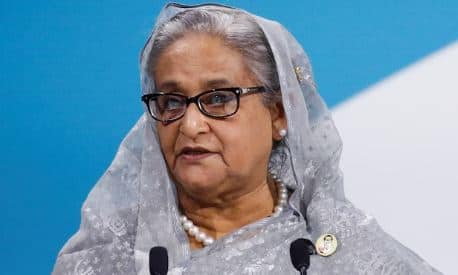
Sheikh Hasina
Sheikh Hasina (born September 28, 1947) is a seasoned Bangladeshi politician and the daughter of Bangladesh’s founding father, Sheikh Mujibur Rahman. She served as Prime Minister from 1996–2001 and
...Read more- Sheikh Hasina’s family in turmoil: Where are her children now and why is WHO probing her daughter Saima?
For the Hasina family, this period marks yet another cycle of exile, separation, and uncertainty -- a story that has repeated itself across generations in Bangladesh’s turbulent political history.
- Media gag, shutdowns, police crackdown: What's happening in Bangladesh after Sheikh Hasina's death verdict?
The ruling has set off widespread protests, clashes, and a nationwide shutdown, while authorities have issued strict warnings to the media and tightened security in major cities.
- Sheikh Hasina’s death sentence and Dhaka’s extradition demand: What options does India have now?
Soon after the verdict, Bangladesh’s ministries of home and foreign affairs issued statements urging India to send Hasina and Khan back immediately.
- Bangladesh's interim govt warns media against publishing statements of 'fugitive' Sheikh Hasina
Hasina, 78, was on Monday sentenced to death in absentia by Bangladesh's International Crimes Tribunal (ICT) for "crimes against humanity" over her government's brutal crackdown on student-led protests last year.
- Muhammad Yunus welcomes Sheikh Hasina death verdict, says 'no one is above the law'
The International Crimes Tribunal of Bangladesh (ICT-BD) delivered its judgment on Monday, finding the two guilty of crimes against humanity committed during the student-led uprising of 2024.
- UN regrets Bangladesh ex-PM Hasina death sentence, calls verdict important for victims
The UN welcomed the accountability in Sheikh Hasina’s sentencing for crimes against humanity, calling it important for victims, but expressed regret over the death penalty and stressed fair trial and due process.
- Sheikh Hasina’s death verdict: Where she is, what comes next and what India will do as Bangladesh demands extradition
Sheikh Hasina finds herself living under heavy security in New Delhi after being sentenced to death by Bangladesh’s International Crimes Tribunal (ICT) for crimes against humanity.
- Why was Sheikh Hasina sentenced to death and what happens next
Bangladesh’s ousted former prime minister Sheikh Hasina has been sentenced to death in absentia for crimes against humanity, with the tribunal accusing her of ordering lethal force during the 2024 student uprising.
- Bangladesh interim govt asks India to hand over Sheikh Hasina after tribunal awards death sentence
Hasina was tried in absentia by a special tribunal. Her state-appointed lawyer Mohammad Amir Hossain cannot even appeal because his clients are absent.
- Sheikh Hasina’s journey: Longest-serving PM to exile and a death sentence
Sheikh Hasina, Bangladesh’s longest-serving prime minister, rose from political dynasty to transformative leader before her dramatic ouster in 2024, now facing exile, criminal charges and a deepening political crisis shaping her turbulent legacy.
- Bangladesh on edge after Sheikh Hasina’s death sentence: Awami League calls shutdown, protests expected | Top Updates
The tribunal in Dhaka handed Hasina the death penalty on Monday for ordering a violent crackdown on student-led protests in July 2024 that toppled her government.
- Ex-Bangladesh slams Sheikh Hasina's death sentence: 'Everything is fake, conspiracy to avenge 1971'
Kamal also raised doubts about the nature of the evidence used in the trial, saying that much of it was digital and therefore unreliable.
- 'Fake, fabricated, one-day justice': Reactions pour in as Sheikh Hasina sentenced to death
Bangladesh’s ousted Prime Minister Sheikh Hasina was sentenced to death by a special tribunal, sparking outrage from her supporters and jubilation from opposition groups, highlighting deep political polarisation in the country.
- Sheikh Hasina reacts to death sentence verdict: 'Rigged, biased and politically motivated'
In their distasteful call for the death penalty, they reveal the brazen and murderous intent of extremist figures within the interim government to remove Bangladesh’s last elected prime minister, says former Bangladesh PM.
- Sheikh Hasina gets death penalty in Bangladesh: A complete timeline and how it puts India in a tight spot
Sheikh Hasina’s conviction has created a diplomatic challenge for New Delhi, where she has been residing since her ouster.
- Death sentence for Sheikh Hasina, found guilty on 3 counts: Top developments
Chief Prosecutor says Hasina was the 'mastermind and principal architect' behind the alleged atrocities committed during last year’s nationwide protests.
- 'Those in power want to eradicate...', says Bangladeshi ex-PM Sheikh Hasina as tribunal set to deliver verdict
Tensions in Bangladesh escalated sharply ahead of the special tribunal verdict expected on Monday in a case accusing Hasina of crimes against humanity related to last year’s July Uprising.
- Bangladesh on the boil: How Sheikh Hasina’s trial has plunged the country into unrest | Explained
The unrest comes as tensions continue to mount before the International Crimes Tribunal (ICT) announces the verdict date in the case against the ousted leader.
- Sheikh Hasina’s trial set for November 17: What the case is all about
Bangladesh braces for heightened unrest as the International Crimes Tribunal readies its November 17 verdict against ex-Prime Minister Sheikh Hasina, accused of crimes against humanity during last year’s deadly student uprising.
- Sheikh Hasina warns Bangladesh risks becoming ‘Pakistan-style hybrid regime’, urges India’s support
Sheikh Hasina also drew a sharp contrast between her government’s relationship with India and that of the current Yunus administration.



