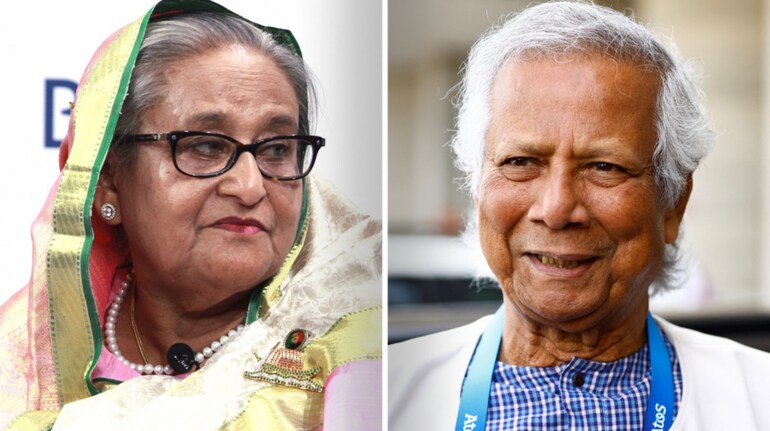
Bangladesh’s Chief Adviser Professor Muhammad Yunus has praised the special tribunal verdict sentencing former Prime Minister Sheikh Hasina and ex-Home Minister Asaduzzaman Khan Kamal to death, describing it as a defining moment for justice in the country.
The International Crimes Tribunal of Bangladesh (ICT-BD) delivered its judgment on Monday, finding the two guilty of crimes against humanity committed during the student-led uprising of 2024. Both Hasina and Kamal were tried in absentia, with the court declaring them fugitives.
Hasina, 78, fled Bangladesh on August 5 last year after mass protests brought down her 16-year rule. She has been living in India since then. Kamal is also believed to be residing there.
In a statement released shortly after the verdict, Yunus called the ruling a “powerful reminder” that justice applies equally to all.
“Today, the courts of Bangladesh have spoken with a clarity that resonates across the nation and beyond,” Yunus said. “The conviction and sentencing affirm a fundamental principle: no one, regardless of power, is above the law.”
Yunus took charge as the head of the interim government three days after Hasina fled Dhaka. Since assuming office, he has consistently emphasised the need to restore democratic values and rebuild public trust in institutions.
The tribunal found Hasina guilty of ordering deadly force against student protesters during the July–August 2024 uprising, in which a UN human rights office estimated that up to 1,400 people were killed.
Yunus said the verdict brought long-awaited recognition to the victims of the violence.
“The crimes at issue – the ordering of lethal force against young people and children whose only weapons were their voices – violated both our laws and the basic bond between government and citizens. These acts outraged Bangladeshis’ core values: dignity, resilience, and commitment to justice,” he said.
He added that the evidence presented in court included accounts of helicopters being used to fire on unarmed demonstrators.
According to the ruling, Hasina was sentenced to death for authorising the use of lethal force, making inflammatory remarks, and approving operations that led to the deaths of several students in Dhaka and nearby towns.
Yunus said the verdict served as an important acknowledgment of the victims’ suffering and reinforced the credibility of Bangladesh’s judiciary.
“The verdict acknowledges the suffering of thousands and confirms that Bangladesh’s justice system will hold perpetrators accountable,” he said.
While calling the judgment a “major step toward justice,” Yunus also highlighted the need to strengthen democratic institutions.
“I have every confidence that Bangladesh will meet the challenges ahead with courage and humility,” he said. “With commitment to the rule of law, human rights, and each person’s potential, justice will not merely survive in Bangladesh. It will prevail and sustain.”
Hasina, responding from exile in New Delhi, rejected the ruling, describing it as “biased and politically motivated.” She accused Yunus’s administration of running a “rigged tribunal” and claimed that the interim government had “no democratic mandate.”
The verdict, delivered amid tight security across Dhaka, marks one of the most significant moments in Bangladesh’s political history and has further deepened the divide between the exiled former leader and the new administration.
Discover the latest Business News, Sensex, and Nifty updates. Obtain Personal Finance insights, tax queries, and expert opinions on Moneycontrol or download the Moneycontrol App to stay updated!
Find the best of Al News in one place, specially curated for you every weekend.
Stay on top of the latest tech trends and biggest startup news.