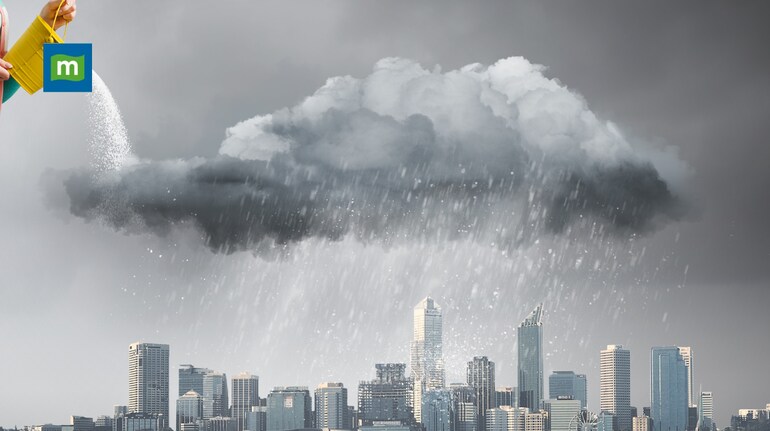
Delhi’s air pollution has reached alarming levels, with the Air Quality Index (AQI) in the ‘severe’ category. In response, Environment Minister Gopal Rai has proposed using cloud seeding to create artificial rain and bring temporary relief to the smog-laden city. But what is cloud seeding, and can it really help solve Delhi’s pollution crisis?
What is Cloud Seeding?
Cloud seeding is a weather modification technique where chemicals such as silver iodide, potassium iodide, or dry ice are dispersed into the atmosphere using aircraft or rockets. These particles attract moisture in the air, helping form larger water droplets that fall as rain. This process requires specific conditions, such as sufficient cloud cover and moisture levels, to work effectively.
There are two main methods of cloud seeding:
Can Artificial Rain Solve Delhi's Air Pollution Problem?
Artificial rain has the potential to reduce air pollution temporarily by washing out particulate matter from the atmosphere. This method has been successfully tested in states like Karnataka and Maharashtra and is commonly used in countries like China and the UAE to tackle drought or improve air quality.
However, experts warn that cloud seeding is not a permanent solution. Pollutants from vehicular emissions, industrial activities, and biomass burning will quickly return unless their sources are addressed. Moreover, cloud seeding depends heavily on meteorological conditions, which may not always be favorable, especially during Delhi’s winter months when the atmosphere is relatively stable.
Discover the latest Business News, Sensex, and Nifty updates. Obtain Personal Finance insights, tax queries, and expert opinions on Moneycontrol or download the Moneycontrol App to stay updated!
Find the best of Al News in one place, specially curated for you every weekend.
Stay on top of the latest tech trends and biggest startup news.