






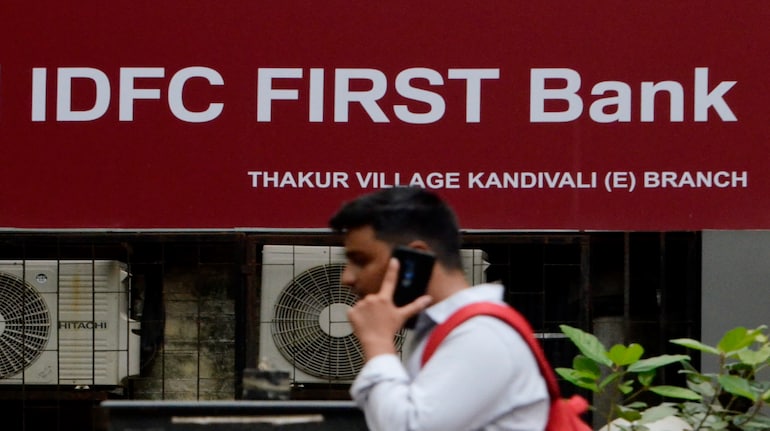

What would have begun as a routine day for IDFC Bank turned into a nightmare when the lender revealed over the weekend about a Rs 590 crore fraud that was uncovered in a specific bank branch in Chandigarh. The Haryana government was quick enough to de-empanel the bank, which led to an outflow of nearly Rs 200 crore.
AU Small Finance Bank faced a similar fate, too, with the state government moving to close its account with the lender. Following these incidents, the Reserve Bank of India clarified that there is no broader threat to the banking system. But behind these incidents lies a more disturbing factor - the fraught relationship between government departments and private banks.
This also points towards the success rate that private banks have had towards dealing with government businesses. IDFC First Bank is not the first bank to fall prey to fraud. Behemoths such as HDFC Bank, ICICI Bank and Axis have also borne the brunt of such incidents.
In the case of IDFC First Bank, while the deposits of the Haryana government only occupied a miniscule 0.5% of its total bank deposits, the reputational damage caused by this incident will take months to repair if these performance issues are not rectified immediately, experts say.
“What you've seen with the IDFC issue, it is a face loss for both the government and the bank. There's a question on your processes and systems. The organisation gets pulled up for having weaker systems, protocols and checks and balances in place,” a former banker with a multi-national bank said.
Embracing with caution
Private banks were historically not allowed to participate in government business. In February 2021, the federal government lifted an embargo on private banks to participate in government businesses, to create a level-playing field for government transactions. This meant that business operations that were only linked to public sector banks could now be associated with private sector banks too.
For private banks, this was a structural opportunity for them to increase their Current Account and Savings Account (CASA) ratio. Simply put, this was an easy way for private banks to access a bulk volume of low-cost and stable deposits, thereby increasing their own CASA ratios. It also gave them access to a wider range of customers and was able leverage their technology to serve them.
CASA is a metric for banks to measure the total funds that the bank holds in both accounts. A high CASA ratio is usually a sign that the bank can fund loans without high-yielding and expensive deposits.
What was once exclusive to public sector banks suddenly became a source of competition to the private sector. But five years down the line, the relationship between government departments and private banks has not panned out as expected.
In June 2025, the Odisha government de-empanelled HDFC Bank, ICICI Bank, and Axis Bank due to poor performance in executing some of the government’s flagship schemes over the last two financial years. The orders were then reversed in July 2025.
Another incident in June that same year involved the Punjab state government de-empanelling HDFC Bank and instructing all departments to cease government transactions with it due to non-cooperation and failure to execute time-bound transactions.
Probably, the most prominent one will be back in March 2020, when the Maharashtra government ordered that it would close all of its accounts associated with private and cooperative banks, and move its funds to public banks only. More than Rs 1,110 crore belonging to three civic bodies were stuck in the bank.
This move came right after the crisis at Yes Bank, where the RBI imposed a moratorium on the then-beleaguered lender, restricting withdrawals only upto Rs 5,000 to prevent further bank ruin.
When large public funds are involved, even the most isolated instances can warrant a policy rethink. While the opening of government business to private banks has improved cash management for the latter, trust becomes an important factor, which public banks have a slight edge over.
“Even today, in most of the places, they love private sector companies, but when it comes to financial services like banking or insurance, there is still a premium that an SBI or LIC commands. Because the logic is that, in a private sector where companies may not honour my claim, I trust SBI or LIC to honour my claim,” the former banker said.
More guardrails needed
Incidents like these point out the obvious: the guardrails to prevent such frauds have to be strengthened. With the advent of artificial intelligence and with other specific technologies for fraud detection, private banks must exercise higher caution and create more guardrails for high-value transactions, an expert said.
“We are dealing with an ever-changing sector which comes out with new tools, new technologies and therefore, new ways of defrauding people. With this evolving technology, it does take time to totally secure your platforms or environment, and some people work overnight to find loopholes,” a banking analyst said.
While IDFC First Bank itself has not received any communication from other state governments, there will now be heightened caution about any government-related business with private banks, analysts from Axis Securities said in a research report.
The Haryana government has already taken strict measures stating that administrative secretaries can approve account openings with public banks. In the case of opening a private bank account, it must be duly justified.
IDFC First Bank has said that it will take explicit measures for signature verification and customer confirmation. Furthermore, it has appointed KPMG as its forensic external auditor, and it will be a few weeks until the investigation is over.
However, it remains to be seen how the broader sector itself will take this as a lesson in fraud detection and risk management. Even if no other states immediately follow the Haryana government’s actions, government departments are likely to exercise far greater caution in allocating deposits to private banks.
Discover the latest Business News, Sensex, and Nifty updates. Obtain Personal Finance insights, tax queries, and expert opinions on Moneycontrol or download the Moneycontrol App to stay updated!
Find the best of Al News in one place, specially curated for you every weekend.
Stay on top of the latest tech trends and biggest startup news.





