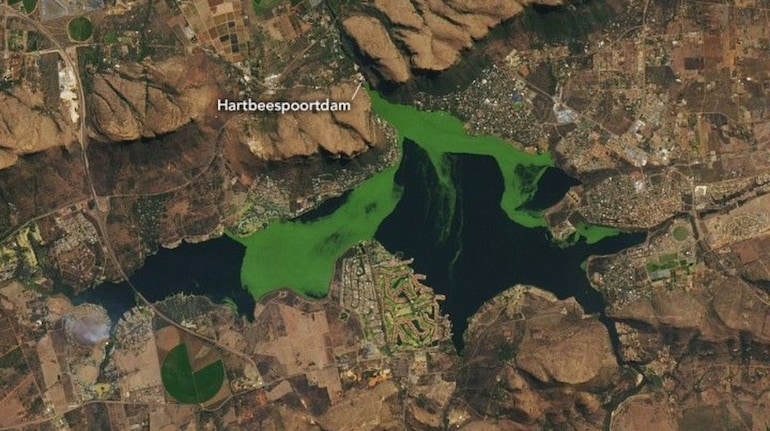

NASA Satellite images are revealing spectacular green swirls across a South African reservoir. These patterns are caused by algae blooms. They have appeared repeatedly over the past year. The swirls are more than a visual curiosity. This provides scientists with vital clues about water quality, ecosystem health and environmental changes in freshwater systems.
What Has Been Found?
NASA’s Earth Observatory has observed dense patches of bright green algae in Hartbeespoort Dam. The blooms grow, drift, and fade across the reservoir over time. The algae include cyanobacteria, or blue-green algae, which thrive in nutrient-rich water. These blooms form swirling patterns visible even from space.
Where and Who Discovered This?
The Hartbeespoort Dam is located in North West Province, South Africa. NASA scientists discovered these blooms using satellite imagery from Landsat and Sentinel‑2 missions. By analysing images from June 2022 to July 2023, researchers tracked the formation, movement and dissipation of algae blooms over months.
How Satellites Reveal Hidden Patterns?
Satellites detect chlorophyll‑a, a pigment in algae that gives water its bright green colour. This allows researchers to estimate bloom size, density and location. These observations provide a global perspective on water quality, helping scientists see patterns invisible to ground-based observers.
Scientists warn that nutrient runoff from farms, rivers and golf courses fuels these blooms. Warm temperatures further accelerate algae growth, making seasonal monitoring essential.
Is This Harmful for Humans and Animals?
Large algae blooms can reduce oxygen in water, creating dead zones where fish cannot survive. In 2023, a mass fish kill in the dam was linked to such conditions. Some cyanobacteria produce toxins that affect humans, pets and livestock. Contact, ingestion, or inhalation can cause skin irritation, gastrointestinal problems and many more serious health risks.
What Did Scientists Say on This?
NASA recommends ongoing satellite monitoring and water management strategies to limit nutrient pollution. Solutions include controlling agricultural runoff, regulating fertilizer use and maintaining reservoir water quality.
Researchers emphasise that observing blooms from space allows early warning systems, helping authorities reduce environmental and public health risks before events escalate.
What future preparation NASA is onto?
New and forthcoming NASA missions promise to advance space-based water quality monitoring. The next Landsat satellite is expected to measure wavelengths specifically designed to detect HABs. NASA’s PACE (Plankton, Aerosol, Cloud, ocean Ecosystem) mission which was launched in 2024 will collect data in hundreds of precise wavelength bands in the visible spectrum.
Discover the latest Business News, Sensex, and Nifty updates. Obtain Personal Finance insights, tax queries, and expert opinions on Moneycontrol or download the Moneycontrol App to stay updated!
Find the best of Al News in one place, specially curated for you every weekend.
Stay on top of the latest tech trends and biggest startup news.