








Birdwatchers and nature lovers have been amazed by a tiny and mysterious bird. With golden feather tufts and fluffy plumage, it looks like a baby dragon. Known as the great eared nightjar, this nocturnal creature lives quietly in forests. Its evolution has crafted a bird perfectly adapted for camouflage and nocturnal life.
Studying it reveals how natural selection balances survival, hunting and reproduction. This remarkable “dragon bird” is both an ecological marvel and a scientific curiosity.
What Is the Tiny “Dragon Bird”?
In the forests of South and Southeast Asia lives a marvel. The great eared nightjar has captivated scientists and nature lovers alike. Its golden feather tufts resemble the horns of a miniature dragon.
Fluffy plumage gives it an almost otherworldly appearance at night. Despite this magical look, it is a real bird, fully evolved. The species measures roughly twelve to sixteen inches in length.
What Does It Eat and When?
The great eared nightjar is active only after sunset. It hunts flying insects like moths, beetles and even small flies. Some species skim water surfaces to catch prey mid-flight or drink. It uses silent wings and keen vision to locate moving targets. Dusk and dawn are prime hunting hours in tropical forests. Its diet helps maintain ecological balance in insect populations efficiently.
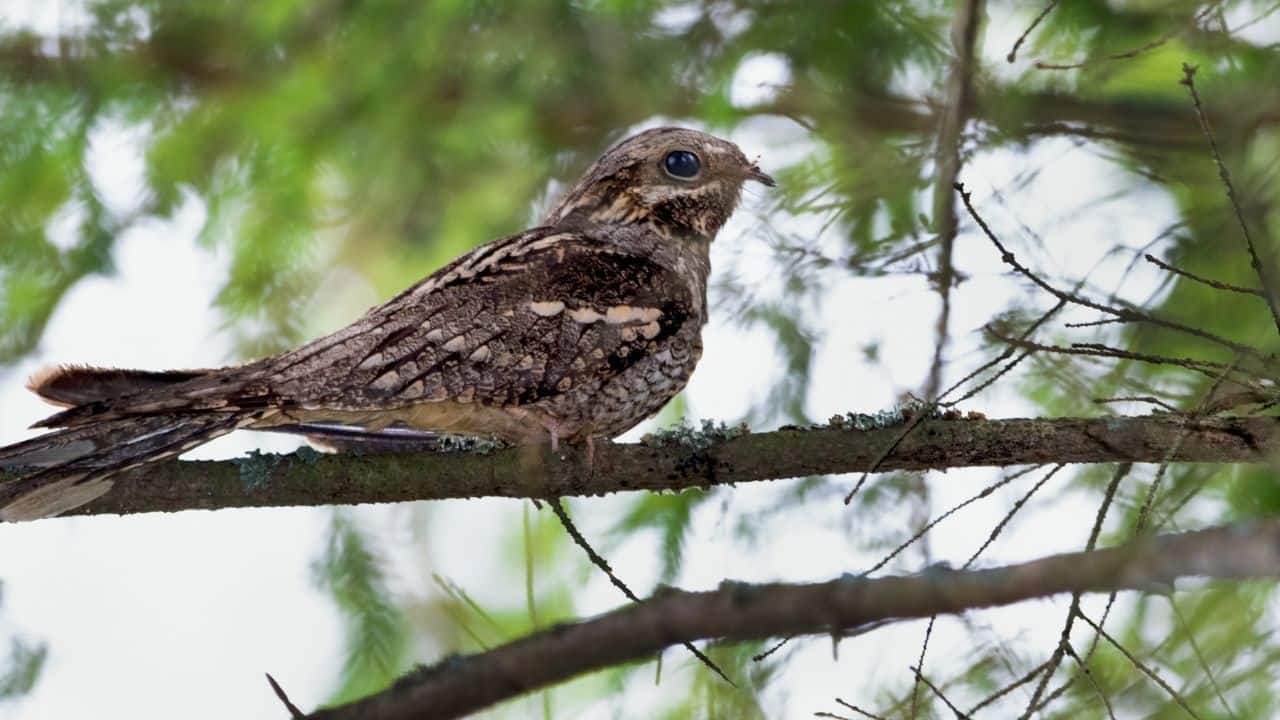 The great eared nightjar is active only after sunset. (Image: Canva)
Where is this Bird Found?
The great eared nightjar inhabits dense forests across South and Southeast Asia. It is commonly seen in India, Sri Lanka and parts of Indonesia. Populations also exist in Malaysia, Thailand and other tropical lowland woodlands. It prefers areas with thick leaf litter and scattered tree cover. Its camouflage and nocturnal habits keep it hidden from predators and humans.
How Does It Reproduce?
Unlike many birds, it builds no conventional nest for eggs. Females lay a single egg directly on a bed of leaves. Both parents take turns incubating and protecting the chick carefully. This strategy minimises energy investment while keeping offspring safe.
How Does Science Study this dragonbird?
Researchers study great eared nightjars using careful observation at night. High-powered binoculars and infrared cameras help track their secretive movements. Acoustic studies record their dawn and dusk calls for identification. Scientists analyse feather patterns and morphology to understand evolutionary adaptations.
Discover the latest Business News, Sensex, and Nifty updates. Obtain Personal Finance insights, tax queries, and expert opinions on Moneycontrol or download the Moneycontrol App to stay updated!
Find the best of Al News in one place, specially curated for you every weekend.
Stay on top of the latest tech trends and biggest startup news.





