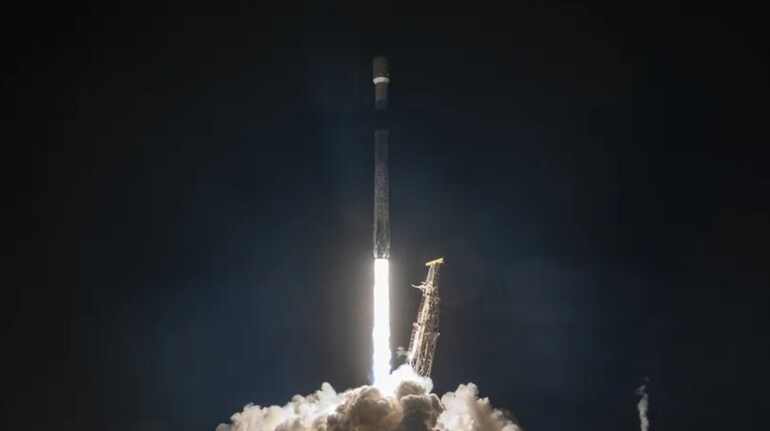

SpaceX successfully launched NASA’s Pandora satellite on January 11th. The Falcon Nine rocket lifted off from California’s Vandenberg Space Force Base. The mission carried Pandora and dozens of other small satellites into orbit. Pandora will study distant planets beyond our solar system. These planets are known as exoplanets by astronomers worldwide.
What Is NASA’s Pandora Space Mission?
Pandora is a small scientific satellite built by NASA. It will observe exoplanet atmospheres using advanced space instruments. The satellite studies planets as they pass across their host stars. This method is called the transit observation technique. Pandora measures both visible and infrared light from distant worlds.
When and Where the Launch Happened?
The launch occurred on 11th January, in California. SpaceX used a Falcon Nine reusable rocket for the mission. The rocket lifted off from Vandenberg Space Force Base. Clear skies helped ensure a smooth and safe launch. The satellite entered a sun-synchronous orbit around Earth.
How will Pandora study Alien Atmospheres?
Pandora watches stars as planets pass in front of them. Starlight filters through the planet’s atmosphere during each transit. Different gases absorb different wavelengths of light. Pandora records these changes using sensitive space instruments. Scientists analyse the data to identify atmospheric chemicals.
What Makes Pandora Different from Other Telescopes?
Pandora focuses on long-term observation of selected exoplanets. Larger telescopes often observe many targets for short periods. Pandora studies fewer planets with greater detail and precision. This improves atmospheric data quality significantly. The mission complements powerful telescopes like James Webb.
Who Benefits from This Space Mission?
Astronomers gain deeper insights into distant planetary systems. Students learn more about space science through real missions. Researchers improve techniques for studying alien atmospheres. The public enjoys exciting discoveries from beyond our solar system. Future missions benefit from Pandora’s scientific findings.
A New Chapter in Space Exploration
Pandora marks another step in humanity’s cosmic journey. Small satellites can deliver powerful scientific results. Space missions continue to inspire global curiosity. The search for life beyond Earth continues. Pandora now watches distant worlds silently from orbit.
Discover the latest Business News, Sensex, and Nifty updates. Obtain Personal Finance insights, tax queries, and expert opinions on Moneycontrol or download the Moneycontrol App to stay updated!
Find the best of Al News in one place, specially curated for you every weekend.
Stay on top of the latest tech trends and biggest startup news.