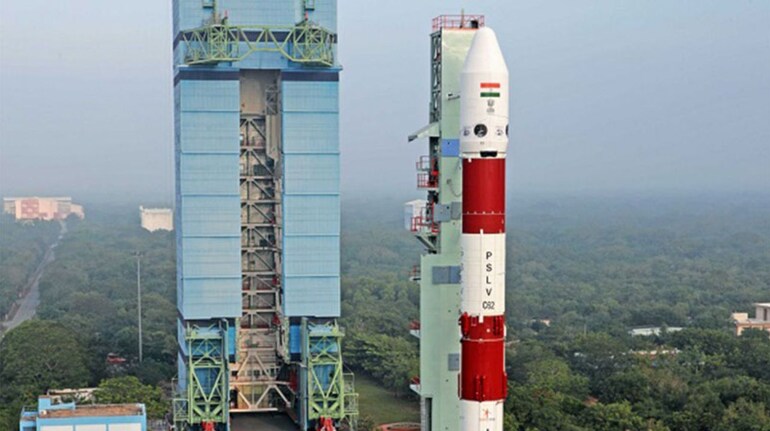

India will begin 2026 with a significant space launch as the Indian Space Research Organisation prepares to fly the PSLV-C62 mission carrying a powerful Earth observation satellite designed to strengthen surveillance and research capabilities.
The launch is scheduled for Monday, 12 January, at 10.17 am from the first launchpad at the Sriharikota spaceport on India’s eastern coast. The Polar Satellite Launch Vehicle will place EOS-N1, codenamed Anvesha, into orbit along with several domestic and international secondary payloads.
What the PSLV-C62 mission will deliver
EOS-N1 is an advanced hyperspectral imaging satellite built primarily for the Defence Research and Development Organisation. The spacecraft can observe Earth across hundreds of wavelengths, allowing precise identification of materials and activities on the ground. Officials say this capability makes the satellite a critical asset for national security monitoring.
Beyond defence use, EOS-N1 will support agriculture planning, urban development mapping, and environmental monitoring across diverse landscapes. Its sensors can analyse crops, water bodies, forests, and expanding cities with improved accuracy. The satellite will act as another long-term observational platform supporting civilian and strategic objectives simultaneously.
Why secondary satellites matter this time
Alongside EOS-N1, the PSLV will deploy 18 secondary satellites from India and abroad. One of the key payloads is Europe’s Kestrel Initial Demonstrator, carried in collaboration with a Spanish startup. The mission will test experimental capsule re-entry with a planned splashdown in the South Pacific Ocean.
Several Indian universities and startups are also participating through cubesat missions. These include satellites developed by OrbitAID Aerospace, Dhruva Space, Space Kidz India, and multiple academic institutions. The mission reflects growing private sector involvement within India’s expanding space ecosystem.
OrbitAID’s AayulSAT will attempt India’s first on-orbit satellite refuelling demonstration. The technology aims to extend satellite lifespans while addressing sustainability and space debris concerns.
What comes next for PSLV programme
The PSLV-C62 launch is being closely watched following the failure of PSLV-C61 in 05/2025. That mission ended prematurely after a pressure drop in the rocket’s third stage. Although initial stages performed normally, the satellite failed to reach its intended orbit.
Discover the latest Business News, Sensex, and Nifty updates. Obtain Personal Finance insights, tax queries, and expert opinions on Moneycontrol or download the Moneycontrol App to stay updated!
Find the best of Al News in one place, specially curated for you every weekend.
Stay on top of the latest tech trends and biggest startup news.