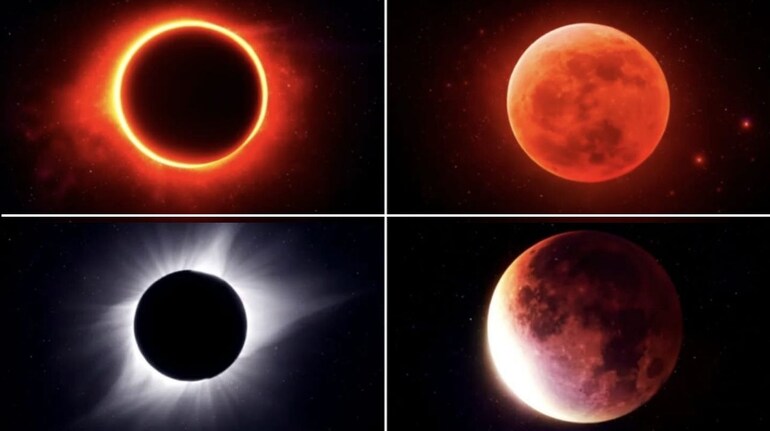

The cosmos is preparing a show that promises to mesmerise skywatchers worldwide in 2026. Four extraordinary eclipses are set to grace our skies, each more dramatic than the last. From the fiery Ring of Fire to a haunting Blood Moon, and a rare total solar eclipse, the heavens are pulling out all the stops.
The Annular Solar Eclipse: “Ring of Fire"
This sky event took place on 17th February 2026. It was the biggest event of the year. A glowing "fiery ring" visible along its path was seen in this day event. The event was most visible in Antarctica created an ethereal halo in the sky.
The Total Lunar Eclipse: Blood Moon
On March 3, 2026, skywatchers will witness a total lunar eclipse. Here the Moon will turn in a deep crimson in what is popularly called a "Blood Moon". The Moon’s eerie red glow is caused by Earth’s atmosphere filtering sunlight.
The sunlight will bend around our planet and cast a haunting hue onto the lunar surface. It will be mostly visible large parts of North and South America. The perfect time to see this event at 6:04 a.m. EST.
🚨: Four powerful eclipses are coming in 2026.From the fiery Ring of Fire eclipse to a deep red Blood Moon and a rare total solar eclipse, the sky has some unforgettable moments ahead. Bookmark this and mark your calendar so you don’t miss them. pic.twitter.com/BNuC23MVOe — All day Astronomy (@forallcurious) February 24, 2026
Total Solar Eclipse: Day Turns to Twilight
The year’s most dramatic solar event will occur on 12 August 2026. Here a total solar eclipse plunges parts of Earth into brief darkness. The Sun is completely obscured will cross Greenland, Iceland and northern Spain.
The partial view will be available across Europe, parts of Canada and the northern United States. Expect the eclipse between 05:00 a.m. and 09:15 a.m. EST, with maximum totality midway through.
Partial Eclipse: Shadows in Motion
The final celestial event is a partial lunar eclipse on 27–28 August 2026. This eclipse will be visible across North and South America, Europe, Africa and parts of Asia, but nowhere will see it totally. Partial phases will occur during late night to early morning hours, roughly 9:22 p.m. EST–3:03 a.m. EST.
A Year of Wonders
One eclipse may be over, but three more are still ahead. From deep red moon to total solar darkness, 2026 is shaping up as a cosmic festival for skywatchers as well as scientists. Astronomers emphasise safety for solar observations.
Discover the latest Business News, Sensex, and Nifty updates. Obtain Personal Finance insights, tax queries, and expert opinions on Moneycontrol or download the Moneycontrol App to stay updated!
Find the best of Al News in one place, specially curated for you every weekend.
Stay on top of the latest tech trends and biggest startup news.