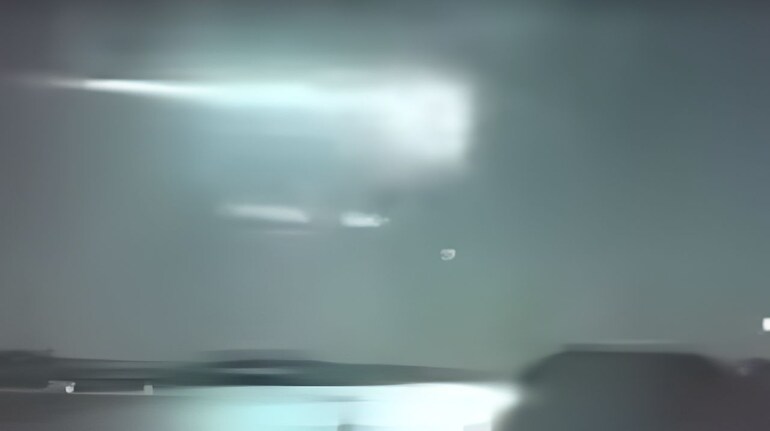

A rare green fireball like flashed across the night sky near Wellington, New Zealand, on 30th January. The luminous object, visible for several seconds, lit up the skies near Lower Hutt, creating a spectacle captured on video by multiple observers.
Early reports indicate that this dazzling phenomenon was likely a meteor, a fragment of space rock entering Earth’s atmosphere and burning up due to friction. The green glow, observers noted, made the meteor appear almost otherworldly as it raced across the horizon.
Where Green Fireball seen?
The fireball appeared mainly over Wellington, New Zealand especially Lower Hutt. Reports also came from Manawatū‑Whanganui earlier the same evening. This suggests both multiple meteors entered Earth’s atmosphere simultaneously. Or one meteor traveled across several regions during its descent. Witnesses from different locations reported similar green streaks across the sky.
Who found this fireball?
Experts believe it was most likely a meteor, not space debris. University of Auckland physics professor Richard Easther confirmed it looked natural. He identified it as a bolide, a very bright meteor visible widely. Bolides sometimes break apart while burning, producing sparks and fragments mid-flight.
Look up 👀 a meteorite lights up Wellington’s sky, caught live on the PredictWind webcam at Heretaunga Boating Club on 30 Jan 2026 ☄️https://t.co/n9K961KWjcBit more than wind chop on the cam this time…#predictwindcam#predictwind — PredictWind (@PredictWind) January 30, 2026
Does This Happen Often?
Skywatchers in Wellington were stunned Friday night by a bright green fireball. Fireballs like this are rare, though meteors enter the atmosphere daily. Most are small and burn unnoticed, creating no visible glow. Only large meteoroids produce bright, colourful trails like the one observed.
Experts call very bright meteors bolides, often visible over wide areas. Seeing a green fireball is unusual and draws attention from astronomers. Similar events are reported a few times each year globally.
Science Behind the Space Debris
The fireball is caused by space debris entering Earth’s atmosphere at high speed. Friction with the air heats the meteoroid, causing it to glow and burn. The bright green colour comes from elements such as magnesium and nickel. These elements emit green light when superheated, producing the vivid hue. Chemical composition determines colour: different metals produce red, blue, or yellow glows.
Is This Safe or Dangerous?
Fortunately, the green fireball was completely safe for observers on the ground. Most meteoroids disintegrate entirely during atmospheric entry, never reaching Earth. Even if fragments survive, they usually fall in remote or uninhabited areas. Scientists monitor meteor activity to track any rare potential impact hazards. For skywatchers, fireballs are a safe and spectacular natural phenomenon.
Discover the latest Business News, Sensex, and Nifty updates. Obtain Personal Finance insights, tax queries, and expert opinions on Moneycontrol or download the Moneycontrol App to stay updated!
Find the best of Al News in one place, specially curated for you every weekend.
Stay on top of the latest tech trends and biggest startup news.