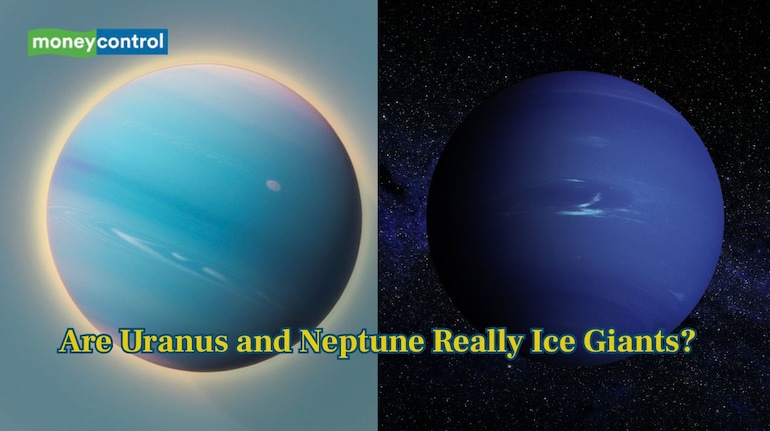
Uranus and Neptune may not be classic ice giants. New research challenges long standing views of their internal composition. The scientists observed that these distant planets could be far rockier inside. The findings reshape understanding of the solar system’s outer worlds.
What Have Scientists Discovered About These Distant Planets?
Researchers tested new models of Uranus and Neptune interiors. These models matched observations without requiring ice dominated interiors. A rock appeared as a major component in many successful simulations.
Ice like water ammonia methane may form smaller fractions. Materials inside are likely hot dense fluids not solid ice. This contradicts traditional textbook descriptions of these planets.
Where And By Whom Was This Research Conducted?
The research was conducted by planetary scientists in Europe. A study from the University of Zurich (UZH) and the National Centre of Competence in Research (NCCR) PlanetS is challenging the understanding of these interior regions of these planets.
Scientists used advanced computer simulations and observational constraints. They analysed gravity data magnetic fields masses and radii. The study avoided assumptions used in earlier interior models. This allowed a broader range of planetary compositions to emerge.
Why Are Scientists Questioning The Ice Giant Label?
The term ice giant implies large amounts of frozen material. Inside these planets temperatures reach thousands of degrees. Under such conditions water and methane cannot remain solid.
They instead exist as supercritical or ionic fluids. Therefore the word ice may be physically misleading. Scientists argue the label oversimplifies complex planetary interiors.
Why Do These Findings Matter?
Uranus sized planets are common around other stars. Understanding their composition helps interpret exoplanet observations accurately. Misclassification can distort theories of planet formation and evolution.
The study suggests planetary diversity is greater than assumed. It also affects how scientists compare Solar System planets. Correct models improve predictions of magnetic and thermal behaviour.
What Do Scientists Plan To Do Next?
Scientists call for dedicated missions to Uranus and Neptune. Orbiters could measure gravity fields and magnetic structures precisely. Atmospheric probes could reveal composition and internal heat flow. Better data would confirm whether these planets are rocky mixed. Future missions may finally resolve the ice giant debate.
Discover the latest Business News, Sensex, and Nifty updates. Obtain Personal Finance insights, tax queries, and expert opinions on Moneycontrol or download the Moneycontrol App to stay updated!
Find the best of Al News in one place, specially curated for you every weekend.
Stay on top of the latest tech trends and biggest startup news.