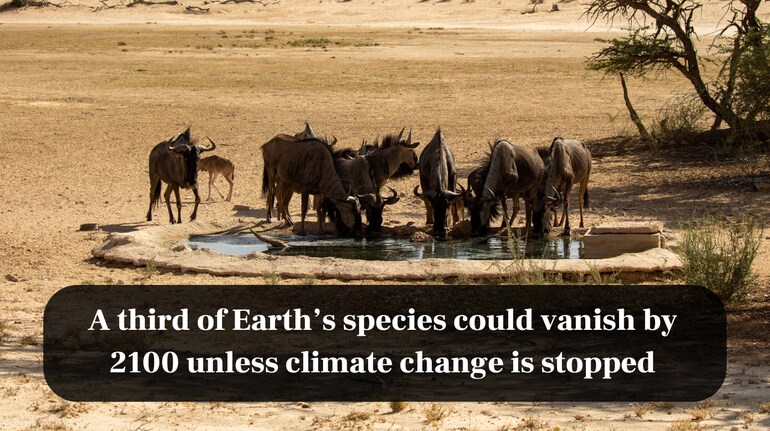
A recent study warns that nearly one-third of all species could face extinction by the end of this century if greenhouse gas emissions continue unchecked. Published in the journal Science.org on December 5, the research examines over 30 years of biodiversity and climate change data, analyzing 450 studies to understand how rising temperatures threaten species worldwide.
The study emphasizes that exceeding the Paris Agreement's goal of limiting global warming to 1.5 degrees Celsius (2.7 degrees Fahrenheit) above pre-industrial levels would sharply accelerate extinction rates. Earth has already warmed by 1 degree Celsius (1.8 degrees Fahrenheit) since the Industrial Revolution, causing significant disruptions to ecosystems. Species reliant on specific habitats, such as amphibians, mountain and island dwellers, and those in South America, Australia, and New Zealand, are most vulnerable. Amphibians, in particular, are highly sensitive to shifting rainfall patterns and drought, making them the most endangered group.
Warming-induced changes in temperature and precipitation alter habitats and disrupt species interactions, with some species unable to adapt or migrate to more suitable environments. For instance, monarch butterflies now struggle with mismatched migration schedules and blooming patterns of the plants they pollinate. While some species may adjust, others face steep population declines and possible extinction.
If emissions align with the Paris Agreement, 1 in 50 species—approximately 180,000—could still be at risk by 2100. However, under current international commitments, which predict a temperature rise of 2.7 degrees Celsius (4.9 degrees Fahrenheit), the risk increases to 1 in 20 species. More extreme warming scenarios show catastrophic outcomes: at 4.3 degrees Celsius (7.7 degrees Fahrenheit), 14.9% of species face extinction, escalating to 29.7% under 5.4 degrees Celsius (9.7 degrees Fahrenheit).
The study underscores the importance of limiting emissions to reduce these risks and calls for targeted conservation efforts in the most vulnerable ecosystems.
Discover the latest Business News, Sensex, and Nifty updates. Obtain Personal Finance insights, tax queries, and expert opinions on Moneycontrol or download the Moneycontrol App to stay updated!
Find the best of Al News in one place, specially curated for you every weekend.
Stay on top of the latest tech trends and biggest startup news.