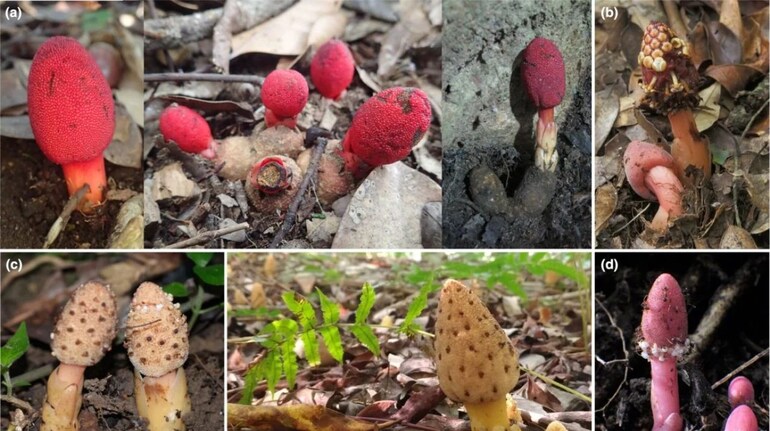
A plant that looks like a mushroom is baffling scientists. It is not a fungus, but a flowering plant called "Balanophora". The plant grows in subtropical forests in Taiwan, Japan and Okinawa. It is rare, often found at the base of mossy trees. Its unusual appearance and biology make it one of Earth’s strangest plants.
What Did Researchers Discovered?
Scientists found Balanophora lacks chlorophyll and true roots. It cannot photosynthesise or take nutrients from soil like normal plants. Instead, it parasitises the roots of specific host trees. Some populations can produce seeds without fertilisation. Scientists found it retains a small set of plastid genes in unique ways.
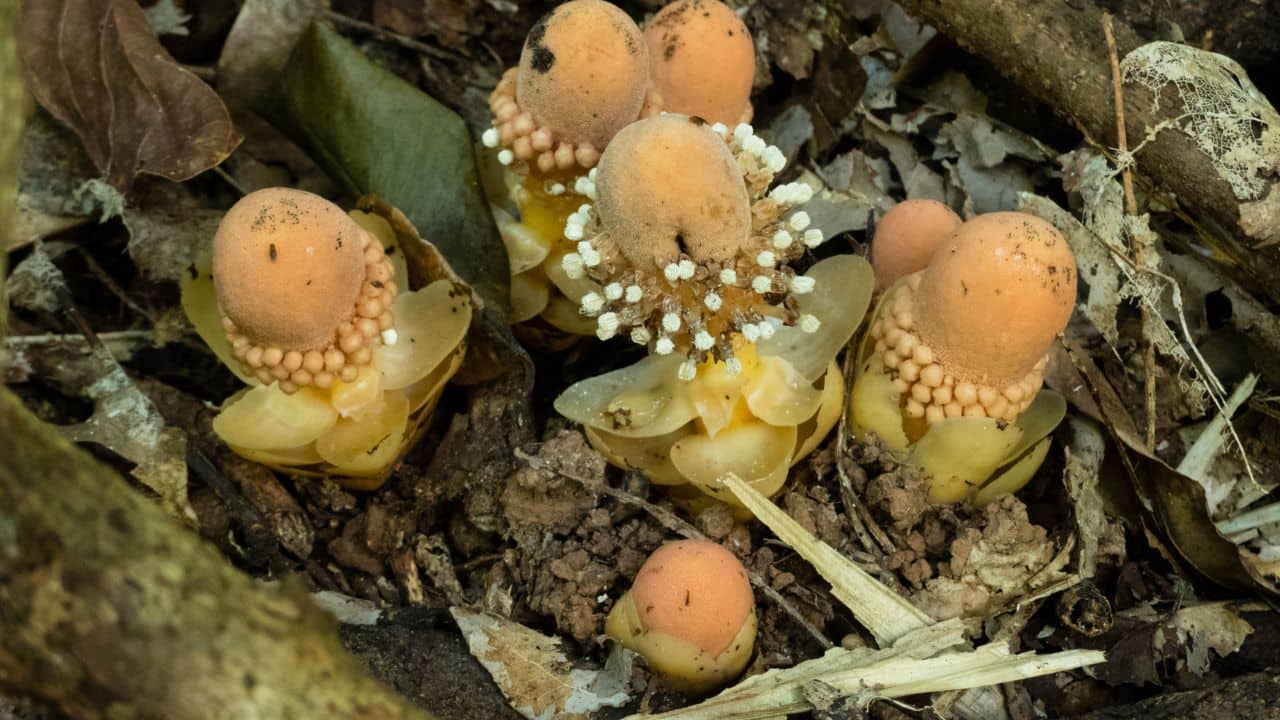 Balanophora fungosa on Ishigaki Island in southern Okinawa (Image: Petra Svetlikova)
Where did this Study happen?
The study involved researchers from Okinawa Institute of Science and Technology, Kobe University and University of Taipei. They collected samples from forests in Taiwan, Japan and Okinawa.
The team used genetic and anatomical analyses. Their findings were published in the journal New Phytologist.
What Makes This Plant Evolutionarily Unique?
Balanophora has an evolutionary history dating back about 100 million years. It is one of the oldest parasitic flowering plant lineages. Its unusual traits show how plants can survive without photosynthesis. Reproduction without fertilisation is rare among plants. Its survival strategy combines parasitism and seed cloning.
Why Does This Discovery Matter?
The plant shows how parasitic plants adapt to extreme ecological niches. It provides insight into plastid retention and genome reduction. Understanding its biology helps scientists study plant evolution and survival strategies. Its study may also reveal ways plants interact with host species.
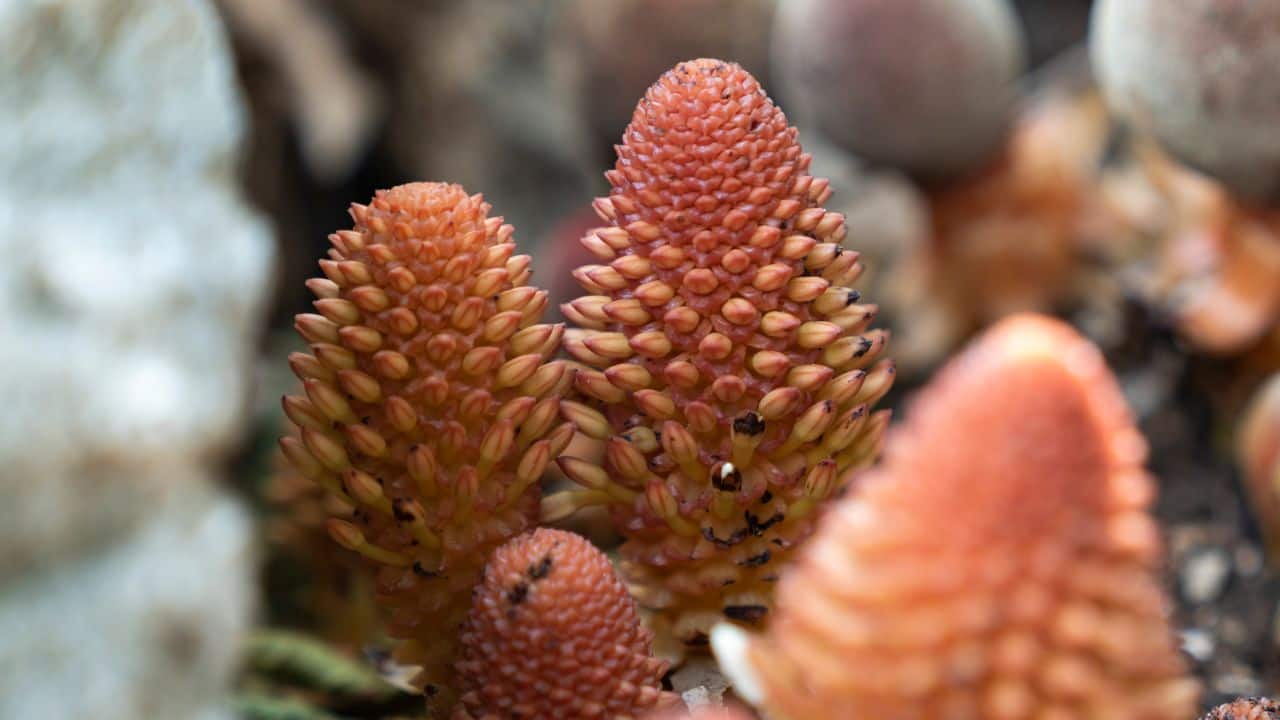 Balanophora depends on very few host trees. (Image: Canva)
How will Scientists Protect This Rare Plant?
Balanophora depends on very few host trees. Habitat loss and human collection threaten its survival. Conservation efforts need to protect forests where it grows.
Future research will track genetic diversity and reproductive patterns. Preserving this unusual plant is critical for biodiversity and science.
Discover the latest Business News, Sensex, and Nifty updates. Obtain Personal Finance insights, tax queries, and expert opinions on Moneycontrol or download the Moneycontrol App to stay updated!
Find the best of Al News in one place, specially curated for you every weekend.
Stay on top of the latest tech trends and biggest startup news.