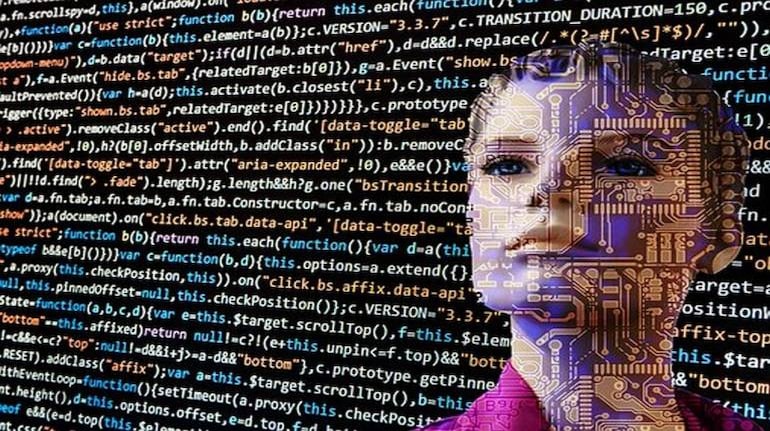
Artificial intelligence (AI) and its applications have taken the world by storm. From China's robot waiters to Elon Musk's flying Tesla, the hype is undying around this technology, which uses algorithms to mimic human intelligence.
With the potential to eliminate inefficiencies evolving from human error, AI has the ability to add around $13 trillion in economic output by 2030, or 1.2 percent of the global GDP a year, as per a report by Mckinsey.
The application of AI ranges across a large spectrum which the report has categorised across five areas: computer vision, natural language, virtual assistants, robotic process automation, and advanced machine learning. Mckinsey believes that around 70 percent of all companies will be adopting at least one type of technology powered by AI by 2030, and less than half of the large companies may adopt all five. In fact, companies like Amazon, Apple and Microsoft are already using support virtual-assistants, who are getting trained for interaction with humans by learning from data.
When an inanimate object mimics the visual-perception and decision-making skills of human with astounding accuracy, it is bound to raise concerns that can range from the obsolescence of automation to reinforcing the digital divide and stereotypes. The report also pointed out that it may also widen gaps between countries, companies and individual employees.
The report stated that there is expected to be a 10 percent decline in jobs that require low digital skills by 2030. Moreover, workers in this category may experience stagnation and a cut in wages. On the other hand, the report estimated that jobs which require digital skills will rise from some 40 percent to more than 50 percent as a share of total employment. In the future, this impact could grow many-fold.
Employees, who are trained to acquire digital skills that are hard to automate, are believed to have an upper-hand in the coming years. Therefore, countries, companies and individuals who adopt and deploy this technology earlier will have the first-mover advantage in beating the competition, leading to higher incomes. This will clearly lead to a performance gap, as per the report.
India, as the report points out, has a relatively primitive digital infrastructure despite being home to around 1.7 million graduates with science, technology, engineering and math degrees (STEM) — more than the total of all STEM graduates produced by all G-7 countries. But India isn’t a frontrunner in deploying the talent if we compare it to China. Its national strategy to invest heavily on AI is expected to shift the job demand market.
Most developed countries have established themselves in the technology, which could deliver additional economic benefits of up to 25 percent, cites the report. Developing economies might end up with an upside of only around 12 percent, with any delay in adoption likely to create a lag in potential returns.
But this type of technology comes with both technological and ethical hurdles, reported Verge. The technological problem stands in the fact that machines can’t replace emotions like empathy. The ethical issue arises from the assumption that they can make decisions for humans. Studies point out that AI has the ability to reinforce social prejudices and stereotypes by learning from the environment’s biases. Some people believe that machines would reinforce these biases.
The United Nations also pointed out in its report that leading voice assistants are female, both in name and in sound of voice. This is related to that fact that only 15 percent women assume top positions at tech companies, Mckinsey notes. Since moral codes might come from the tech creators, all genders need to learn technical skills. While the future seems to be powered by AI, several technical and ethical questions that may arise need to be dealt with for the fruitful implementation of this technology.


Discover the latest Business News, Sensex, and Nifty updates. Obtain Personal Finance insights, tax queries, and expert opinions on Moneycontrol or download the Moneycontrol App to stay updated!
Find the best of Al News in one place, specially curated for you every weekend.
Stay on top of the latest tech trends and biggest startup news.