Moneycontrol PRO
HomeNewsWorldModerna eyes COVID booster by August, not clear yet if Omicron-specific needed

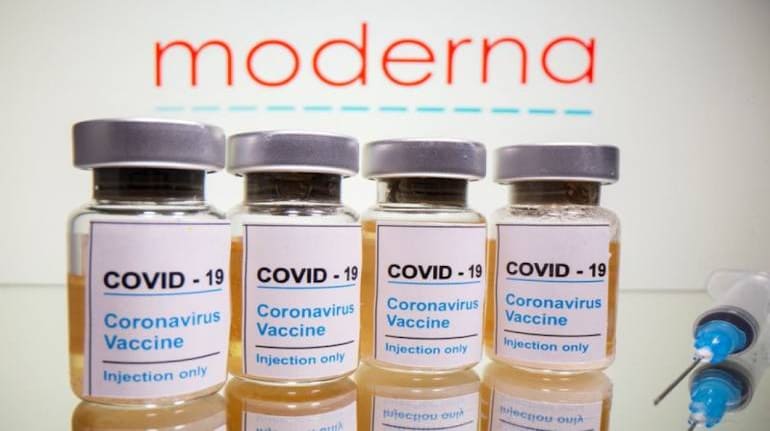
Moderna eyes COVID booster by August, not clear yet if Omicron-specific needed

Last month Moderna began clinical trials for a booster dose specifically designed to target Omicron but initial results from studies in monkeys show the Omicron-specific shot may not offer stronger protection than a new dose of the existing vaccine.

February 17, 2022 / 06:32 IST
Data suggests reported cases of rare heart inflammation are relatively higher after Moderna's vaccine compared with the Pfizer/BioNTech shots, Canadian health officials said last week.

An Omicron-specific booster could be ready by August, the CEO of U.S. biotech firm Moderna told Reuters, but the firm is still gathering clinical data to determine whether that vaccine would offer better protection than a new dose of the existing jab.

Last month Moderna began clinical trials for a booster dose specifically designed to target Omicron but initial results from studies in monkeys show the Omicron-specific shot may not offer stronger protection than a new dose of the existing vaccine.

Moderna chief executive Stephane Bancel said in an interview the company aimed to have a booster ready by August 2022, before next autumn when he said more vulnerable people may need it.

Moderna's vaccines use mRNA technology to provoke an immune response, similar to the shot developed by Pfizer/BioNTech.

"We believe a booster will be needed. I don't know yet if it is going to be the existing vaccine, Omicron-only, or bivalent: Omicron and existing vaccine, two mRNA in one dose."

COVID-19 Vaccine

Frequently Asked Questions

View more
How does a vaccine work?

A vaccine works by mimicking a natural infection. A vaccine not only induces immune response to protect people from any future COVID-19 infection, but also helps quickly build herd immunity to put an end to the pandemic. Herd immunity occurs when a sufficient percentage of a population becomes immune to a disease, making the spread of disease from person to person unlikely. The good news is that SARS-CoV-2 virus has been fairly stable, which increases the viability of a vaccine.

How many types of vaccines are there?

There are broadly four types of vaccine — one, a vaccine based on the whole virus (this could be either inactivated, or an attenuated [weakened] virus vaccine); two, a non-replicating viral vector vaccine that uses a benign virus as vector that carries the antigen of SARS-CoV; three, nucleic-acid vaccines that have genetic material like DNA and RNA of antigens like spike protein given to a person, helping human cells decode genetic material and produce the vaccine; and four, protein subunit vaccine wherein the recombinant proteins of SARS-COV-2 along with an adjuvant (booster) is given as a vaccine.

What does it take to develop a vaccine of this kind?

Vaccine development is a long, complex process. Unlike drugs that are given to people with a diseased, vaccines are given to healthy people and also vulnerable sections such as children, pregnant women and the elderly. So rigorous tests are compulsory. History says that the fastest time it took to develop a vaccine is five years, but it usually takes double or sometimes triple that time.

View more
Show

He said a decision would be made in the coming months when clinical data becomes available.

Bancel also confirmed that under the best-case scenario Moderna would have ready by August 2023 a so-called pan-vaccine which would protect simultaneously against COVID-19, flu and other respiratory diseases.

He added that pricing for this vaccine under development would be "very similar" to that applied to the current vaccine.

Moderna charges different prices for different regions of the world with a range between $15 and $37, according to UNICEF, a United Nations agency involved in the distribution of vaccines to poorer nations.

 BOOSTING SALES IN EUROPE
Separately, Moderna announced plans to expand its commercial network in Europe in a bid to increase sales on the continent. "Moderna plans to establish a commercial presence in Belgium, Denmark, Norway, the Netherlands, Poland and Sweden to support the delivery of mRNA vaccines and therapeutics locally," the company said in a statement. These new European subsidiaries will be added to commercial offices in Italy, France, Germany, Spain, Switzerland and Britain. Moderna is also boosting its commercial presence in Asia. In Europe, Moderna produces its vaccines through manufacturing partnerships which include Lonza in Switzerland and the Netherlands, ROVI in Spain and Recipharm in France. The company shipped last year more than 800 million COVID-19 shots globally and has deals with EU countries for the supply of up to 460 million doses. Besides vaccines, Moderna is also developing mRNA drugs against a range of conditions including cancer, cardiovascular and rare genetic diseases.
Reuters
first published: Feb 17, 2022 06:32 am

Discover the latest Business News, Sensex, and Nifty updates. Obtain Personal Finance insights, tax queries, and expert opinions on Moneycontrol or download the Moneycontrol App to stay updated!

Subscribe to Tech Newsletters

  • On Saturdays

    Find the best of Al News in one place, specially curated for you every weekend.

  • Daily-Weekdays

    Stay on top of the latest tech trends and biggest startup news.

Advisory Alert: It has come to our attention that certain individuals are representing themselves as affiliates of Moneycontrol and soliciting funds on the false promise of assured returns on their investments. We wish to reiterate that Moneycontrol does not solicit funds from investors and neither does it promise any assured returns. In case you are approached by anyone making such claims, please write to us at grievanceofficer@nw18.com or call on 02268882347