Indian busker Varun Dagar, who has performed regularly at Delhi's Connaught Place stated in an Instagram post recently that he had been abused by Delhi Police officials and parking managers while performing on the street.
He further claimed that a policeman dragged him by the hair. It is not yet confirmed as to when the incident took place.
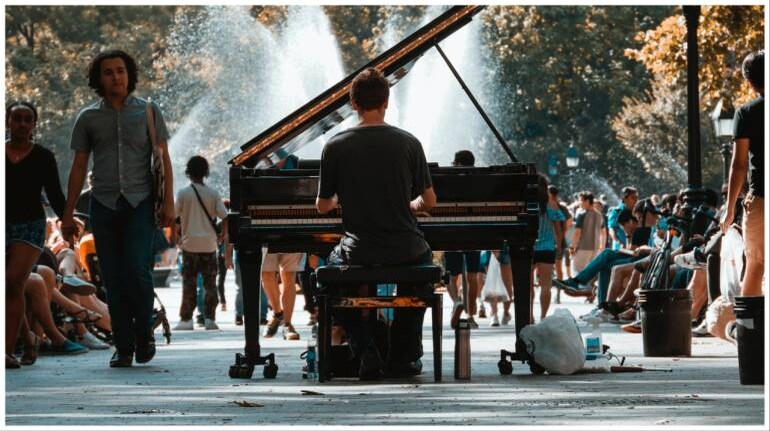
Here are a few things to know about buskers:Who is a busker?Buskers are street performers who perform in public places for gratitude. They are mainly rewarded with money in most cases and in others, they are offered food, drinks and other gifts. The term busking was first noted in English language around the mid-1860s in Great Britain.
History of buskersThe history of busking dates back to the medieval ages when local merchants would invite buskers to their storefronts, public squares and plazas to attract new businesses. The American tradition has its roots in the several circuses that would travel from one coast to another.
What do Buskers do?Buskers can be solo guitar players with hats at their feet for tips. They can dance, juggle or even tell fortunes. Some also do magic and snake charms. In short, there is no end to the activities performed by buskers.
Busking's New York City connectionBuskers and the city of New York in the United States have had a mixed relationship for several decades. On January 1 1936, New York City Mayor Fiorella La Guardia banned street performance by cancelling its licensing, stating that street performances were for beggars and it should not be tolerated by anyone in the city.
However, as the days passed views about street performance among the public started to change and a pivotal moment for buskers came courtesy the Beatnik Riot on April 9, 1961 when performers protested the denial of a street performing permit by gathering at the Washington Street Park.
The protesters sang the national anthem and argued that New York City Department of Parks and Recreation Commissioner Newbold Morris did not have the right to determine who can and cannot play in the park. The protest led to police officials pushing around the musicians and arresting many protestors.
Then, in 1970, the ban on street performance was lifted under Mayor Lindsey's administration. Ban on performing in subways, however, still persisted but was adhered to by performers. The subway ban was officially lifted in 1985.
Also read: Anand Mahindra lauds Delhi busker Varun Dagar, asks him to ‘dance on’Discover the latest Business News, Sensex, and Nifty updates. Obtain Personal Finance insights, tax queries, and expert opinions on Moneycontrol or download the Moneycontrol App to stay updated!
Find the best of Al News in one place, specially curated for you every weekend.
Stay on top of the latest tech trends and biggest startup news.