Confirmation of the first monkeypox case in India has triggered concerns of widespread transmission and subsequent challenges to the public health system. Experts have called for preparations with smallpox vaccines.
Most experts, while calling it the sexually transmitted disease (STD) of the 21st century, stressed that as the disease spreads through close contact, it may be easy to contain compared to COVID-19, which spreads through aerosols. However, they cautioned that the country needs to remain alert.
Also read: First suspected monkeypox case reported in Kerala; here’s all you should know about the outbreak
As per the last update shared by the World Health Organization, 9,300 cases and one death due to the disease have been confirmed from 63 countries this year. The health agency, however, is yet to decide if monkeypox constitutes a Public Health Emergency of International Concern — the highest alarm that it can sound.
In India, the disease was confirmed in a 35-year-old man on July 14. He had returned from the United Arab Emirates to Kollam in Kerala earlier this week.
The patient had typical symptoms, including skin lesions, which are characteristic of the disease, said scientists at the National Institute of Virology-Indian Council of Medical Research (NIV-ICMR), where his sample was sent for testing.
About 11 people, including the patients’ kin and co-passengers who have been in close contact with him, have been put under observation.
Following the identification of the first case in the country, the Union health ministry rushed a multi-disciplinary team to Kerala on Thursday and issued a letter to all states to step up surveillance against the disease.
Dr Haroon Hussain Syed, a microbiology consultant with diagnostic centre Ampath in Hyderabad, explained that monkeypox is a viral zoonotic disease that occurs primarily in the tropical rainforest areas of Central and West Africa and occasionally spreads to other regions.
The virus is transmitted to humans through close contact with an infected person or animal, or with material contaminated with the virus, he said, adding that contamination is also possible due to close contact with lesions, body fluids, respiratory droplets and contaminated materials such as bedding.
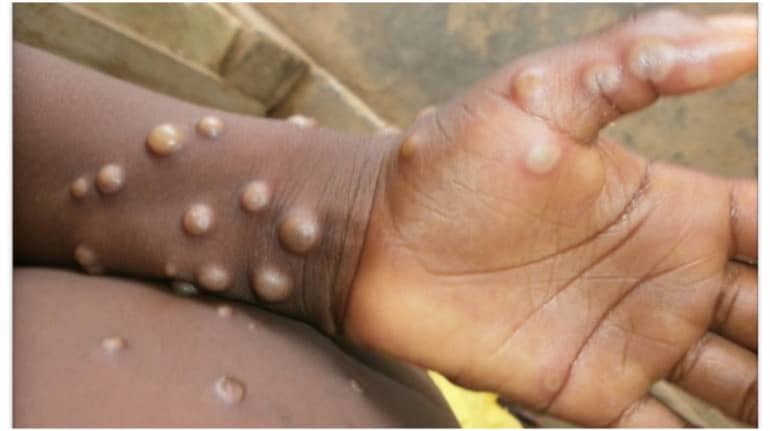
Detection of viral DNA through a polymerase chain reaction (PCR) is the preferred laboratory test for monkeypox, which typically presents clinically with fever, rash and swollen lymph nodes and may lead to a range of medical complications.
Also read: Health ministry raises alarm on monkeypox as Kerala reports first suspected case
“Monkeypox is usually a self-limiting disease, with the symptoms lasting from 2 to 4 weeks. But severe cases can also occur,” he said.
The West African strain of the virus, which is believed to be in circulation now, has a case fatality ratio of 1 percent, unlike the Congo strain, which kills about 10 percent of those infected.
Surveillance and rapid identification of new cases is critical for outbreak containment, according to Syed.
Most of the diseases detected in the current outbreak have been linked with homosexual men or women in close contact with these men.
STD of the century?Infectious disease specialist Dr Ishwar Gilada called monkeypox the STD of the 21st century, adding that like Human Immunodeficiency Virus (HIV) it may take a long time to become a full-fledged pandemic.
“Let us not hound patients and let us prevent stigma and discrimination from the very beginning,” said Gilada.
‘No parallel with the COVID-19 pandemic’Virologist Dr Shahid Jameel, who is associated with the University of Oxford and Ashoka University, underlined that as human-to-human transmission of monkeypox requires close contact, it should be fairly easy to limit its spread.
Kerala seems to be doing it right by following strict contact tracing, he said, adding that there is no need to be worried at this time but it is crucial to stay alert.
However, according to Jameel, if the disease spreads into another state with a poor health system and awareness, it may not be detected in time and can spread.
Epidemiologist Dr Naman Shah, too, said that as the disease is easy to track and trace overall, it should not pose a big challenge as long as contacts can be identified.
“Internationally the primary challenge has been due to anonymous sex partners,” he said.
Do smallpox vaccines help?Gilada stressed that India should prioritise production of the smallpox vaccine, which has dual utility in Monkeypox, both for prevention as well as treatment.
Also read: Spotlight on high fertility states as India’s population projected to surge ahead of China
“It will be helpful to other nations too, as India is a vaccine powerhouse. It's high time that the WHO declares this an STD and a global public health emergency,” he added.
Dr Jayesh Timane, who is with the Nangia Specialty Hospital in Nagpur, also pointed out that the smallpox vaccine offers protection against the disease but expressed worry that it has long been discontinued in India and only a handful of companies make the vaccine worldwide.
Challenges aheadDr Monalisa Sahu, an infectious diseases consultant with Yashoda Hospitals in Hyderabad, highlighted that a key concern is the lack of facilities to test the disease in different parts of the country.
As of now, a test to detect monkeypox can only be carried out at a few centres, such as NIV, Pune.
Though the disease, so far, does not have any definitive treatment, another challenge is limited availability of investigational drugs, including Tecovirimat, Brincidofovir, Cidofovir, Ribavirin and Adefovir with partial efficacy, said Sahu.
Timane highlighted that because of the similarity of the rash, the disease might be confused with smallpox or chickenpox. Also, it can present with minimal symptoms, posing a diagnostic difficulty.
“Contact tracing of patients is difficult and there is no straightforward treatment for the disease,” he said.

Discover the latest Business News, Sensex, and Nifty updates. Obtain Personal Finance insights, tax queries, and expert opinions on Moneycontrol or download the Moneycontrol App to stay updated!
Find the best of Al News in one place, specially curated for you every weekend.
Stay on top of the latest tech trends and biggest startup news.