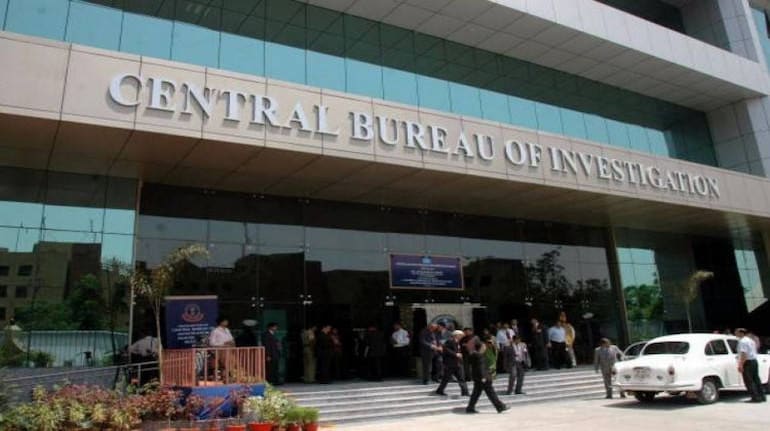
On February 26 Delhi’s Deputy Chief Minister Manish Sisodia was arrested by the Central Bureau of Investigation (CBI) in connection with an alleged scam related to the excise policy. On February 27, a CBI court extended Sisodia's custody by five days.
Sisodia, who also holds the education portfolio in the Delhi government, is one of the 15 accused named by CBI in its First Information Report (FIR) registered on August 17, 2022.
The agency initiated the probe following a recommendation from Lieutenant Governor of Delhi VK Saxena, who alleged irregularities in the formulation and implementation of the now-withdrawn excise policy.
Sisodia has been charged with offences punishable under Section 120-B (punishment of criminal conspiracy) and 477A (falsification of accounts) of Indian Penal Code 1860 provisions of Section 7 of the Prevention of Corruption Act, 1988 that include taking undue advantage to influence a public servant by corrupt or illegal means or by the exercise of personal influence.
Moneycontrol explains if politicians are public servants and how they are arrested for corruption.
Who is a public servant?Public Servant is defined in both the Indian Penal Code, 1860 and the Prevention of Corruption Act, 1988. The Indian Penal Code defines “public servant” broadly as a person who is a government employee, officer in the military, navy or air force; police, judges, an officer of the Court of Justice and any local authority established by a central or state Act.
The Prevention of Corruption Act expands the definition to include office bearers of cooperative societies that receive governmental aid, university employees, bank employees and employees of public service commissions.
Is a minister a public servant?The Supreme Court in 1979 held, “It is thus incontrovertible, that a person who holds public office is a public servant as they draw their salary from the government treasury as they serve the public”.
The court held that the salary of a minister is different from that of salaries given to constitutional functionaries such as the President and the Speaker.
How is prosecution initiated against a public servant?A prosecution can be initiated against a public servant by investigating agencies such as CBI and Anti-Corruption Bureau only after obtaining a sanction from the central or state government as contemplated under the Criminal Procedure Code, 1973 and the Prevention of Corruption Act.
The need for obtaining a sanction has been explained by the Supreme Court as a procedure that seeks to protect an officer from unnecessary harassment, hence prohibiting the courts from taking cognisance of such offence till consent is obtained.

The court observed, “Public servants have been treated as a special category in order to protect them from malicious or vexatious prosecution. At the same time, the shield cannot protect corrupt officers and the provisions must be construed in such a manner as to advance the cause of honesty, justice and good governance.”
For instance, on February 22, the Union Ministry of Home Affairs conveyed to Delhi’s Lt Governor’s office granting of sanction to prosecute Sisodia under Section 17 (powers to police for investigating a public servant) of the Prevention of Corruption Act.
Who can investigate corruption by public servants?The Central Vigilance Commission (CVC), CBI and the state Anti-Corruption Bureau (ACB) are the three main authorities that can investigate charges against a public servant. Other authorities such as Enforcement Directorate (ED) and Financial Intelligence Unit (FIU) investigate cases relating to money laundering by public servants.
While the CBI investigates corruption cases under the Prevention of Corruption Act and IPC pertaining to the Union government and Union Territories, the State ACB investigates cases within the states. States can sometimes refer cases to the CBI if they feel the need for it.
All the cases investigated by CBI are put to trial in special CBI courts. A CBI court can also grant remand or bail to a person who is being investigated by the agency.
How long can a minister be kept in custody?A minister can be kept in custody till either the agency informs the trial court that they no longer require the custody or till they are granted bail by the court.
AAP leader Satyender Jain has been in judicial custody since May 30, 2022, after the Enforcement Directorate (ED) arrested him on money laundering charges. Jain’s bail plea is pending with the Delhi High Court.
Similarly, the Bombay High Court in December 2022 granted conditional bail to former Maharashtra Minister Anil Deshmukh after he spent nearly 13 months in custody for alleged money laundering charges.
Discover the latest Business News, Sensex, and Nifty updates. Obtain Personal Finance insights, tax queries, and expert opinions on Moneycontrol or download the Moneycontrol App to stay updated!
Find the best of Al News in one place, specially curated for you every weekend.
Stay on top of the latest tech trends and biggest startup news.