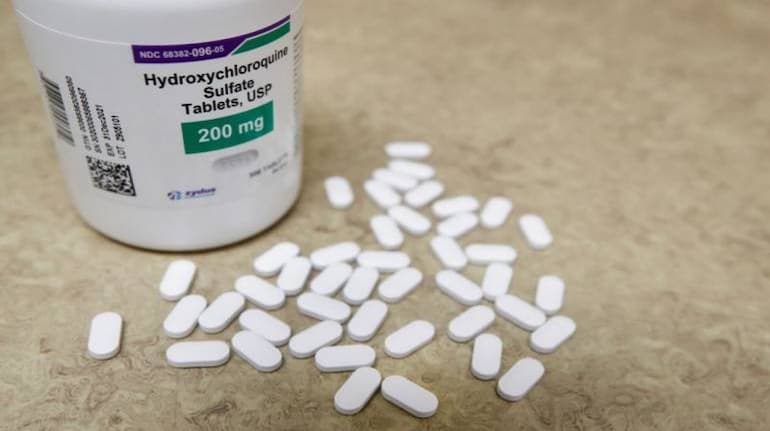
The National Institutes of Health (NIH), the US medical research agency on June 20 decided to halt clinical trial of hydroxychloroquine (HCQ). NIH said HCQ study had shown that it did not provide any benefit in treatment of patients with COVID-19, the disease caused by the novel coronavirus. The agency’s decision was based on recommendation from the Data and Safety Monitoring Board.
NIH’s decision comes just three days after the World Health Organisation (WHO) announced that the HCQ arm of the Solidarity Trial, to find an effective COVID-19 treatment, was being stopped. WHO said that usage of HCQ does not result in the reduction in mortality rate of hospitalised COVID-19 patients when compared to standard care.
WHO further said that the trial's Executive Group and principal investigators made the decision based on evidence from the solidarity trial, the recovery trial from the United Kingdom and a Cochrane review of other evidence on HCQ.
Two days before WHO announced its decision to end HCQ trials, the US Food and Drug Administration (USFDA) withdrew emergency use authorizations (EUA) for Chloroquine Phosphate (CQ) and Hydroxychloroquine Sulfate, as the agency no longer believed these drugs may be effective in treating COVID-19 and side-effects could outweigh any potential benefit.
To be sure, WHO's decision does not apply to the use or evaluation of hydroxychloroquine in pre or post-exposure prophylaxis in patients exposed to COVID-19. India is widely using HCQ as prophylactic.
Chloroquine (CQ), the age-old drug, and its derivative hydroxychloroquine are used in treatment of malaria and lupus. HCQ became popular after United States President Donald Trump hailed the medications as magic bullets for treating COVID-19. On March 28, USFDA granted EUA to CQ and HCQ, despite serious differences within the medical community about using the drug without data.
Follow our LIVE blog for the latest updates of the novel coronavirus pandemic
India needs to reassess HCQ use
India has been using the drug for both, for treatment of COVID-19 patients and as prophylactic in high-risk groups such as healthcare and other frontline workers to prevent the spread of infection.
The government protocol from June 13 says that the drug should be used as early as possible in the disease course to achieve meaningful effect and should be avoided in patients with severe disease.
It is time for the Indian government to reassess the use of HCQ in treating COVID-19 patients in the light of fresh evidence.
Also read: Hydroxychloroquine no better than placebo, new study finds
There are many experts who are questioning the use of HCQ as prophylactic. The randomised clinical trial (RCT) conducted by the University of Minnesota determined that HCQ was not able to prevent the development of COVID-19 any better than a placebo. RCT is considered to be the gold standard. The trial results were published in the New England Journal of Medicine.
Click here for Moneycontrol’s full coverage of the novel coronavirus pandemic

Discover the latest Business News, Sensex, and Nifty updates. Obtain Personal Finance insights, tax queries, and expert opinions on Moneycontrol or download the Moneycontrol App to stay updated!
Find the best of Al News in one place, specially curated for you every weekend.
Stay on top of the latest tech trends and biggest startup news.