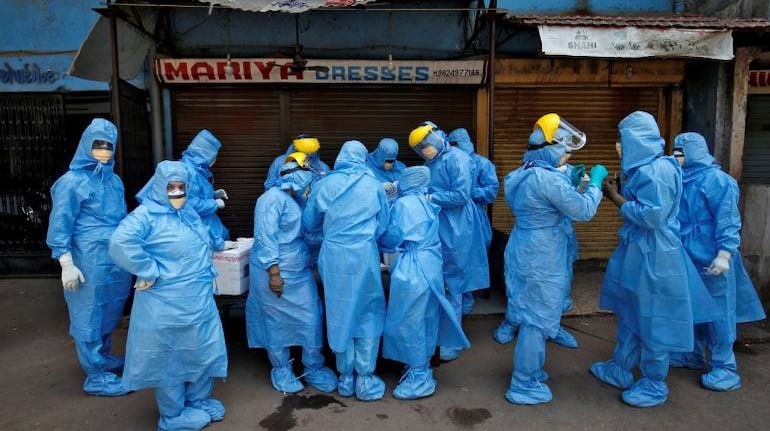
There’s a lot of breathless talk about heroes nowadays. Doctors, healthcare workers and others are being hailed with metaphors and more. They’re on the front lines, selflessly pushing back the advance of the novel coronavirus. They’re battling a devious foe, saving lives even as they put their own at risk.
What does it say about a society that’s quick to anoint heroes and applaud their efforts? For the ancient Greeks, to whom we owe the concept, many heroes were demi-gods. Achilles’ mother, for example, was the sea nymph Thetis, a goddess of the ocean. Theseus was the son of turbulent sea-god Poseidon. Hercules’s father was Zeus, lord of Olympus, who also birthed Perseus. Notably, Hector, the tragic Trojan hero with only too human parents, met his end facing Achilles on the plains of Ilium.
In this way, heroes were both human and not. Elevated above lesser mortals, they were both admired and feared. In times of trouble, they could be counted upon to do the right thing, straining every sinew to restore balance.
In his The Hero’s Journey, Joseph Campbell drew upon mythologies from all over the world to create an allegorical odyssey. In sum, “a hero ventures forth from the world of common day into a region of supernatural wonder; fabulous forces are there encountered and a decisive victory is won; the hero comes back from this mysterious adventure with the power to bestow boons on his fellow man.” He provided a link of sorts between mythic heroes and those of our time and in doing so, inspired generations of scriptwriters who crafted movies from the same template.
Heroes came down to earth, as it were, becoming sports stars, dashing spies, intrepid scientists, wonder women, and more. There were sullen Byronic heroes, unwilling anti-heroes, and everyman heroes who simply happened to be in the right place at the right time. Oral tales of heroic exploits gave way to stories in print and on film. Novelist Lee Child put it well when he wrote that the definition of the hero “became detached from classical notions of protracted journeys and struggles, and it became a word bestowed upon anyone who did any brave and good thing – an honour always in the gift of the establishment or its mouthpieces.”
For there to be a hero, there needs to be a villain; often, one who looms as large in the imagination. Darth Vader, Moriarty, and Hannibal Lecter are only a few fictional favourites, but there are also plenty without human shape, such as asteroids hurtling towards Earth or, of course, the novel coronavirus. Sometimes, a bird strike can create a hero, such as when Captain Sullenberger coolly landed Flight 1549 on the Hudson River. At other times, external or internal villains are built up to serve as a focal point for the faithful.
Professors Scott T. Allison and George R. Goethals, who have written extensively on perceptions of heroism, assert that there are several reasons why we need heroes. Among these are the fulfilment of Jungian archetypes, the belief that we live in a world where justice will prevail, and the demonstration of problem-solving abilities, especially of a scientific nature.In their book, Heroes: What They Do and Why We Need Them, they write that the human condition“constantly presents us with challenges, choices, and obstacles,” and thus “human beings create heroes and villains to both energize and guide their thinking and behaviour.”
It’s in their capacity to serve as role models that today’s heroes provide an unmatched function. In the fields of medicine, sports or elsewhere, their charisma, confidence and competence inspire many. Role models also impart and endorse prevailing moral values, especially to the young, be they of selflessness or sacrifice.
The flip side of this is that heroes generally validate a majority worldview. One man’s meat is another’s poison, and one society’s hero is another’s arch-enemy. Thus, the enthusiastic celebration of hero figures is a form of national self-assertion. The dangers of this are obvious, and blind hero-worship can lead us down dark paths. In Philip Roth’s alternative history novel, The Plot Against America, aviation pioneer Charles Lindbergh is enthusiastically elected President, after which his anti-Semitic views and actions unleash waves of intolerance and suffering.
Heroes also allow the rest of us to avoid responsibility. It’s easier to sit back and watch others do what needs to be done. In a deeper sense, when rugged individualism is cheered, structures that promote privilege remain ignored.
The ancient Greeks may have given the world the concept of the hero, but they also encouraged an active, engaged citizenship. While it’s fitting to acclaim the efforts of those in hospitals and others working to contain the spread of the pandemic, it’s also timely to collectively raise voices and demand that they be provided with the protective gear and resources required to do their jobs safely and well. We should be the heroes they need.
Sanjay Sipahimalani is a Mumbai-based writer and reviewer.Discover the latest Business News, Sensex, and Nifty updates. Obtain Personal Finance insights, tax queries, and expert opinions on Moneycontrol or download the Moneycontrol App to stay updated!
Find the best of Al News in one place, specially curated for you every weekend.
Stay on top of the latest tech trends and biggest startup news.