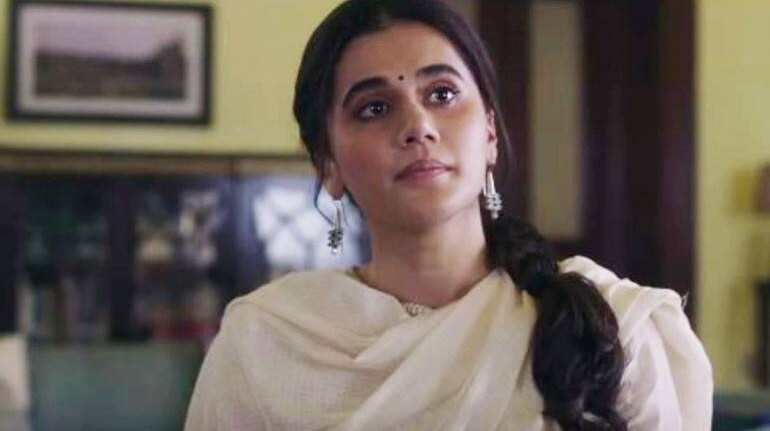
The feminist in me was longing to watch the much-applauded film Thappad and its powerful statement on unfair marital norms. But despite the COVID-19 scare, a dull Holi and near-empty cinema halls, it turned out to be an unexpectedly dramatic experience.
“Thappad bas itni si baat nahi (A slap is not a small thing).” The film is more than a stinging slap that leaves you reeling. It is an impactful social drama that tugs at heartstrings: “College mein kai dreams they. Kabhi best housewife banne ka dream nahi tha (I had many dreams in college. Being the best housewife was not one of them).” A bold film that lifts the lid off silent, crushed and repressed female dreams in a thought-provoking and inspiring way.
Indeed, Thappad is a slap on outdated patriarchy and casual sexism; on deep-rooted socio-cultural norms and Bollywood stereotypes. It is a film both for women as well as for all men to think deep and hard about inherent biases in society.
A sensitive theme handled brilliantly by Anubhav Sinha (it’s all the more special because the director is a man!), the film begins with a seemingly perfect relationship. Amrita is the devoted, “ideal” wife doing her “duty” by her husband and in-laws, keeping everyone happy. Until one day when her smart, go-getter husband Vikram, on the cusp of a big promotion at his work, throws a party at home.
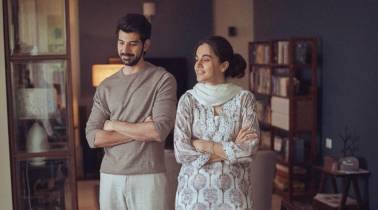
Her world comes crashing down when things go ugly and he misdirects his rage over a sudden unexpected turn of events, delivering a sharp, stinging slap on his wife’s face in full public view. If the hurt and humiliation were not enough, his action is brushed off as “ek thappad hi toh tha (it was just one slap)”. Amrita decides to stand up for her shattered pride and rights, re-evaluates her relationship and decides to walk out of her marriage.
The film questions the very premise of Indian marriages, the patriarchal system they propagate with unfair gender equations, and the compromises made by women to keep the marriage and family going. Taapsee Pannu is simply dynamite as Amrita. She aces her portrayal of a “dutiful” married woman who stands up for herself and questions a “mere” slap. She probes the fundamental need for love and respect that every wife deserves.
“Shaadi mein hum ek ho jaate hain, barabar nahin hote (marriage makes us one but not equal)” – this is the poignant truth the film brings out. In an interview after the release of the film, Taapsee said she began to see women’s sacrifices being normalised everywhere. The woman always ensures her husband eats before her; his needs always come first, and it’s something we have imbibed since childhood, Taapsee points out.
And yet, despite being the “backbone” and “pillar of the house”, why is the woman’s need for love, equality and respect sidelined and ignored? Why must it always be the woman to compromise, sacrifice and tolerate patriarchy in order to maintain peace and harmony at home?
The scene in the film that moved me to tears is when an emotionally shattered Amrita justifies her legal case against her husband, “It’s just a slap but he cannot slap me. It’s just this small thing and just this small petition.” In one scene she expresses a gamut of raw emotions: Her anger, pain, disgust, shock and remorse in a superbly restrained portrayal.
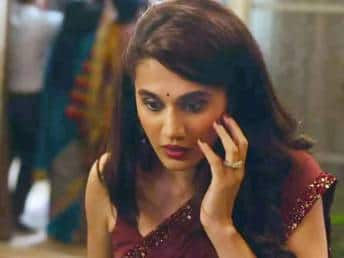
That one fateful slap shakes her beliefs to the core, provokes her to stand up and say no to domestic violence, to stand up for her rights and question the “ghar zyada zaroori hai (family and home are more important)” and “log kya kahenge (what will people say)” hackneyed socio-cultural norms.
The film brings to the fore the uncomfortable reality that even intelligent, economically independent and successful women are not liberated from sexism at home and at work. “One slap taught me to see all those things that I was blind to earlier,” says Amrita.
Feminism is often accused by detractors for being an anti-men movement. The truth, though is that feminism is anti-patriarchy and anti-sexism, as all those who aspire to social justice should be. A feminist’s ideal world is where the needs of women are on par and equal with her male partner and counterparts – be they emotional or physical, personal or professional. These lyrics from the film sum it up: “Tera bhi ek aasma ho / Aur mera bhi ek aasma ho (May you have your own sky, and may I have my own)!”
Anita Panda is a freelance writer, poet, spiritualist, yoga enthusiast and traveller. First published in eShe magazine

Discover the latest Business News, Sensex, and Nifty updates. Obtain Personal Finance insights, tax queries, and expert opinions on Moneycontrol or download the Moneycontrol App to stay updated!
Find the best of Al News in one place, specially curated for you every weekend.
Stay on top of the latest tech trends and biggest startup news.