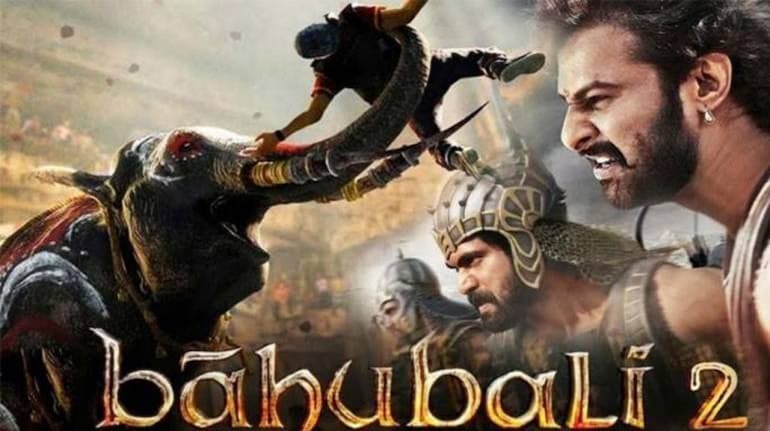
What made Baahubali an epic film franchise? Was it the story or the big star cast? These factors did come into play to make the movie successful at the box office but there was one more factor that had a huge role in making the film the magnum opus it became - the dazzling visual effects.
What earlier was considered as a cost-saving mechanism, the same VFX technology is now being used to improve the movie watching experience. Visual effects have become indispensable to the production cycle of feature films over the past several years and the Bollywood space is witnessing certain projects that are pushing VFX to the forefront of movie making including films like Krrish, Robot, Dhoom 3, Fan, among others.
But does this mean that Indian films can match up to Hollywood standards in terms of visual effects? The answer is no. In comparison to the West, India still has a long way to go. And one of the reasons for this is budget constraints.
Visual effects in Indian films is an exception and not a norm, he added.
In conversation with Moneycontrol, Nishant Fadia, CFO at Prime Focus, said: “There are limitations but Budget is the larger restraint. Also, Indian film industry is star-driven and the actors take the lion’s share of the budget and very little is left for visual effects.”
Prime Focus that provides 'integrated' media services is also working on the sequel of Robot, 2.0 starring Rajinikanth and Akshay Kumar which will hit the the theatres on April 27 this year.
According to a FICCI-KPMG 2017 report, visual effects so far have mostly accounted for less than 10 percent of the total production budgets in India. Throwing more light on the budget disparity for visual effects, Fadia says, “In Hollywood 40-50 percent of the budget is spent on vfx and in India on a visual effects heavy movie also only 12-15 percent is spent. We have so many other considerations.”
But is the industry seeing a change when it comes to adoption of technology like VFX?A few years ago, producers would rather spend on foreign locations or expensive sets than on visual effects. Also, India has seen only handful of films, such as Krrish and Robot, produced in genres such as disaster and science fiction, unlike the West.
However, this could change in the coming years as Indian studios have started to adopt a harmonic blend of skills and expertise from developed VFX markets in other countries.
“Adoption of technology is much faster and quicker of new film makers. It is a systematic change and it will take time,” said Fadia.
In 2016, VFX redefined story telling on the big screen with the release of Fan, MS Dhoni, Sultan, Shivaay and Mohenjo Daro, all of which had VFX heavy content.
But it is not just Bollywood that is working hard in the visual effects area. Baahubali has brought VFX to the vanguard in the regional language films. South Indian cinema is also competing neck and neck with Bollywood in terms of the use of visual effects in films.
Growth of the visual effects industryThe VFX and post production industry grew around 19 per cent in 2016, propelled by a 27 per cent growth in the VFX industry.
There has been high demand for VFX in India from hordes of films across different genres. With the improving standards of VFX in domestic productions, the Indian VFX industry is on its way to becoming a force to be reckoned with.
The VFX revenue from domestic projects is projected to grow at a CAGR of more than 31 per cent during 2016-2021.
In addition, the success of few visual effects heavy film is tilting the trend in favour of the VFX industry.
Discover the latest Business News, Sensex, and Nifty updates. Obtain Personal Finance insights, tax queries, and expert opinions on Moneycontrol or download the Moneycontrol App to stay updated!
Find the best of Al News in one place, specially curated for you every weekend.
Stay on top of the latest tech trends and biggest startup news.