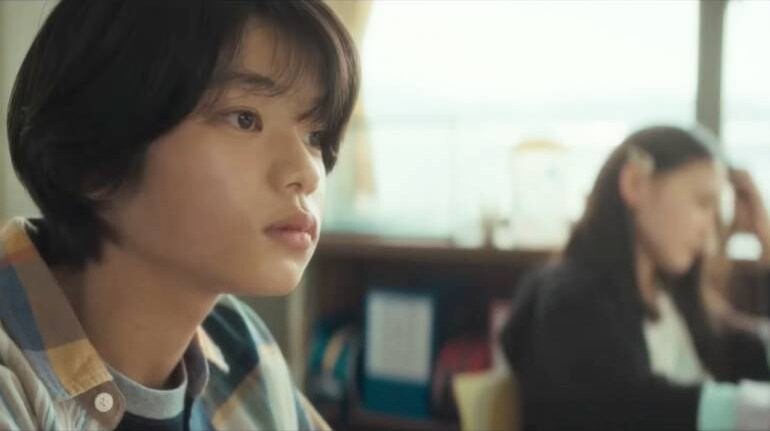
“Happiness is something anyone can have,” an ageing, grieving mother tells a young boy, in a scene from Hirokazu Kore-eda’s Monster. It’s a quietly explosive scene, where two strangers become unlikely confidantes over secrets that have tied them in knots. The sequence is telling, particularly for the way it is arrived at. We open up, not necessarily to the people we feel comforted by but also to them who seem distant enough to not judge, or investigate, the film says. Kore-ada’s Japan-set film returns him to the roots of adolescence he has become a master at observing. Told in three acts that retrace the same events from three different perspectives, Monster is occasionally convoluted, tantalisingly knotty as an emotional thriller but ultimately life-affirming as an allegory for getting over a distrust of your own timid self.
Monster opens with this spectacular scene of a building on fire in the middle of a sleepy town. Minato (Kurokawa Soya) looks over the flames from his balcony. This fire becomes the fulcrum of a film, symbolising a night in the life of its many characters when something akin to momentous came to pass. ‘The Big Crunch’ is coming, two kids repeatedly tell each other over the course of the narrative. After Minato jumps out of his mom Saori’s (Ando Sakura) car, his grumpiness is tracked back to an eccentric, but misunderstood teacher in Mr Hori (Nagayama Eita). The school becomes the pivot for intercutting lines of interpretation and miscommunication. We see overlapping events from the perspective of Saori, Mr Hori and eventually, the maligned, Minato.
The title of the film is a bit of a banana skin because it appeals to the audience to constantly dread the worst. Could young, affable children be up to something sinister? For the longest time, Monster doesn’t so much hide its cards as it piles them one over the other while withholding key pieces of information. This missing information translates to both confusion and judgement, as endearing but heavy-handed adults fill in the gaps with angst and condescension. Each arc, as it proceeds, allays a doubt while teasing a fresh wound until the film softens an impending sense of tragedy with the life-affirming twist of hope and innocence.
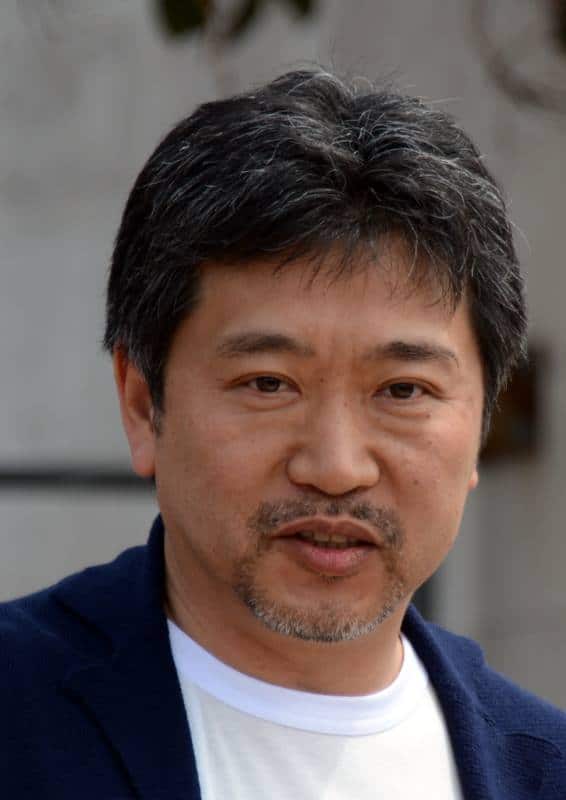 Hirokazu Kore-eda at Festival de Cannes in May 2015 (Photo by JJ Georges via Wikimedia Commons 3.0)
Kore-ada is a master of observing delinquency, with this soft-bristled approach to filmmaking that finds just the right amount of humanity and vulnerability in a shape-shifting space. Much like Shoplifters, there is yet another skewed dynamic to gather from, in this meeting point of young confusion and adult supervision. Do the adults really know as much as they claim to know? For much of the terrifically shot and beautifully scored Monster, the children feel like puzzling, messy totems of mystery. Occasionally, they can feel annoyingly unclear, the kind of rough stream of communication that only really time and maybe mistakes can help bridge. Not before a human being knows his own self, can he truly speak to someone else’s idea of him. To which effect, the overbearing adults, their own devastating secrets notwithstanding, merely come across as interpreters reading from a point of no return. Their inflexibility is often depicted in contradiction to children with ample room to grow.
At the heart of Kore-ada’s film there is this tender, but undefined relationship between two misunderstood young boys. Both echo contrasting styles of parenthood. While Minato’s single mother is caring, Yori’s (Hiiragi Hinata) father is an abusive pest. These styles, however, have differing effects on the kids. Kind of like the pyre at the centre of a city that everyone views differently. The bully, after all, isn’t always raised in an abusive household. The fire doesn’t necessarily start at the bottom of an oven. Sometimes people aren’t who they seem to be. At other times, they are maybe trying to find themselves first.
Monsters is fairly twisty for what is essentially the coming-of-age tale of a boy who must learn to disengage from a sense of self that others have imposed on him. What people think of us often feeds who we become to them. It takes courage, foresight and maybe a little recklessness to break free of that spiral. Two boys, both misunderstood by the adults around them, find sustenance in a delicate friendship that though mystical to grumpy, suspecting onlookers, isn’t that complicated at all. In the film, Kore-ada uses accidents, natural calamities and the hint of a stormy disaster to allegorise prejudice. Not every flood results in a drowning, but not every fire is an unintentional accident. There is no whole in this wild, at times painfully fragmented world of sight and perspective. What we fill the unheard and the unseen part with, is probably who we get to be.
Japanese director Hirokazu Kore-eda’s Monster releases in Indian theatres on February 9, 2024.Discover the latest Business News, Sensex, and Nifty updates. Obtain Personal Finance insights, tax queries, and expert opinions on Moneycontrol or download the Moneycontrol App to stay updated!
Find the best of Al News in one place, specially curated for you every weekend.
Stay on top of the latest tech trends and biggest startup news.