






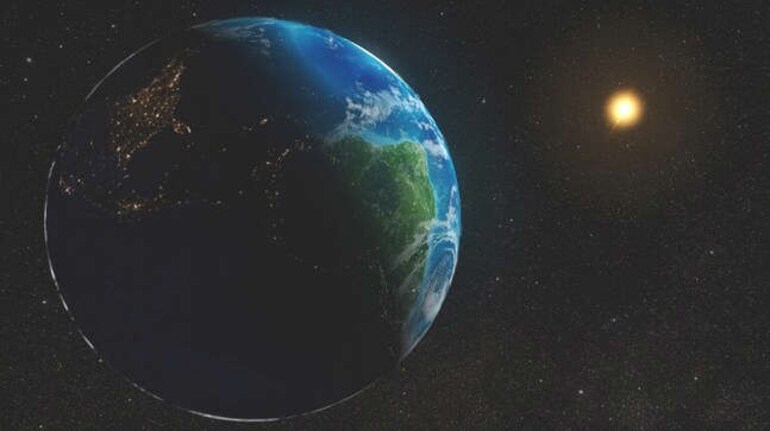
July 4 saw Earth get as far away from the sun as possible — reaching what astronomers call aphelion at 12.30 pm.
At aphelion, Earth was 152.1 million kilometers away from the Sun, said geophysicist Chris Vaughan who oversees Space.com's Night Sky calendar.
The day also saw Earth be 1.67 per cent farther from the Sun than the mean Earth-Sun separation, also known as an astronomical unit, the publication stated explaining that 1 astronomical unit is equivalent to 149.6 million km.
Happy Aphelion Day! Today, on July 4th, the Earth is at it's farthest point from the Sun for the year. You are currently 94,509,598 miles from Old Sol. We are actually about 3 million miles closer to the Sun in the Winter! If ya didn't know, now ya know... pic.twitter.com/guWvOFn0de— Tony Pann (@TonyPannWBAL) July 4, 2022
Earth's orbit is not a circle which is why aphelion occurs, the publication stated. According to EarthSky, the Earth's orbital path changes from being almost circular to elliptical every 1 lakh years. It's also the reason why perihelion occurs when the Earth is the closest to the Sun.
FUN FACT We're at our farthest point from the sun in our orbit - called aphelion! This goes to show that our seasons are determined by the Earth's tilt - not its distance from the sun. pic.twitter.com/7YXJQUncYp — Chris Michaels (@WSLS_Michaels) July 4, 2022
While the perihelion happens about two weeks after the December solstice, the aphelion occurs two weeks after the June solstice, when it's summer in the Northern Hemisphere.
Discover the latest Business News, Sensex, and Nifty updates. Obtain Personal Finance insights, tax queries, and expert opinions on Moneycontrol or download the Moneycontrol App to stay updated!
Find the best of Al News in one place, specially curated for you every weekend.
Stay on top of the latest tech trends and biggest startup news.