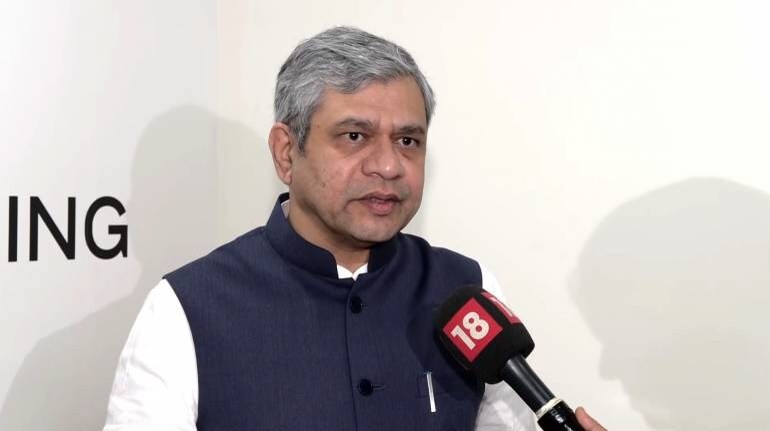
The next version of India's semiconductor programme will focus significantly more on the chip design ecosystem and aim to support the end-to-end production of at least 10 chipsets domestically, including design, fabrication and packaging, Union Minister Ashwini Vaishnaw said on March 9.
"Now, we need to put significantly more focus on the semiconductor design ecosystem in the second version of the semiconductor (programme). The second version of semicon will basically focus on getting at least 10 chipsets which are full solutions and taking those solutions down the value chain of fab and ATMP," minister for electronics and information technology Vaishnaw told Moneycontrol in an exclusive interview in Bengaluru.
"More funds will be required for a long term program like this and we will also work with the semicon industry with the semiconductor industry participants to see, based on our current experience, what else we need to do to significantly improve the ecosystem," he added.
The Union Cabinet recently approved three projects under the scheme worth Rs 1.26 lakh crore of investments, while one such plant by US semiconductor major Micron was given the greenlight last year.
The four projects are cumulatively expected to drain Rs 59,000 crore from the Rs 76,000 crore chip incentive scheme announced by the government in 2021.
Also Read | India aims to have 3 or 4 semiconductor fabs in next 5 years: Ashwini Vaishnaw
"We will also focus on the other key parts of the ecosystem which is the equipment which go into manufacturing of semiconductors and the design of cleanrooms of a semiconductor facility. I met with three companies who are very big leaders in this and they are all willing to be a part of the India semiconductor mission," Vaishnaw said today.
"Third will be a large focus on getting all the other 16,000 gases and chemicals needed in a fab. Many of the companies have started setting up their plants now already but we have to how do we scale up that to a larger level," he added.
The recently approved proposals under the scheme include India’s first semiconductor fabrication plant or fab to be set up by Tata Electronics and Taiwan’s Powerchip Semiconductor Manufacturing Corp. (PSMC) in Gujarat’s Dholera at a projected cost of Rs 91,000 crore.
This fab will mostly produce 28 nanometre (nm) chips, apart from 50 nm, 55 nm and 90 nm ones, and have 16,000 suppliers.
These will be power management chips for electric vehicles (EV), telecom, defence, automotive, consumer electronics, display, power electronics, etc. Power management chips are high voltage, high current applications.
Further, Tata Semiconductor Assembly and Test Pvt Ltd (TSAT) will set up a semiconductor unit in Morigaon, Assam. This unit will be set up with an investment of Rs 27,000 crore and have the capacity to produce 48 million chips on a daily basis.
TSAT semiconductor is developing indigenous advanced semiconductor packaging technologies, including flip chip and ISIP (integrated system in package) technologies.
The application of these chips will be in automotive, electric vehicles, consumer electronics, telecom, mobile phones, etc.




Discover the latest Business News, Sensex, and Nifty updates. Obtain Personal Finance insights, tax queries, and expert opinions on Moneycontrol or download the Moneycontrol App to stay updated!
Find the best of Al News in one place, specially curated for you every weekend.
Stay on top of the latest tech trends and biggest startup news.