-
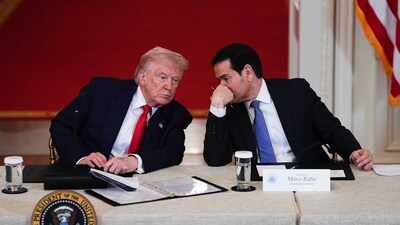
Trump’s plan for Cuba would make the US the island’s patron
Trump wants to use American economic pressure to make the island nation financially dependent on Washington. The US would essentially take the place of its onetime rival, the Soviet Union, which kept Cuba afloat before it collapsed in 1991.
-

'Bringing home the gold': US Interior Secretary confirms arrival of $100 million of gold from Venezuela
Burgum said given that US President Donald Trump had promised a golden age of abundance, the first critical mineral coming from Venezuela will be solid gold bars.
-
U.S.-Iran War Intensifies; Trump Reveals Next Step, What Will Be His Next Target?
U.S. President Donald Trump spoke at the White House with the Inter Miami soccer team, outlining his foreign policy priorities. He said the United States aims to finish the conflict in Iran first before addressing Cuba, asserting that Cuba “wants to make a deal so badly.” Trump described Iran’s military as severely weakened, claiming that U.S. forces have destroyed a large portion of Tehran’s missiles, drones, navy, air force, and air defenses, with rapid retaliatory strikes neutralizing missile launchers within minutes. He said Iran had attempted to negotiate a deal but “a bit late,” emphasizing that the U.S. now seeks to fight harder. Trump also urged Iranian diplomats worldwide to request asylum and participate in shaping a “new and better Iran.” Regarding Venezuela, he praised acting President Delcy Rodríguez and said the situation had stabilized, noting that U.S.-imported Venezuelan oil was being refined and revenues returned. The Iranian mission to the UN declined to comment on these statements.
-
US says Venezuela to protect mining firms as diplomatic ties restored
Venezuela is rich in minerals such as gold and diamonds, as well as bauxite, coltan and other rare materials used to make computers and mobile phones.
-
Why are Chinese arms under scrutiny after reported failures in Pakistan, Venezuela and Iran?
Chinese weapons systems faced scrutiny after reported failures in Pakistan, Venezuela and Iran, where air defences were allegedly breached by US and Indian strikes, raising questions over performance, integration and battlefield reliability.
-
US loosens Venezuela oil ban to Cuba as crisis alarms Caribbean
Addressing the summit, Rubio staunchly defended the deadly operation that seized Maduro, saying that Venezuela has made "substantial" progress since then.
-
Venezuela takes to UN to secure its former President Maduro’s release after US raid: 'Illegal military action'
Despite the sharp criticism, the minister indicated that Caracas is not closing the door on diplomacy. "We have chosen to open a diplomatic channel to resolve our differences with that country," he said, highlighting a dual approach of protest and engagement.
-
ONGC Videsh hopeful of resuming Venezuela operations as US moves to ease sanctions, liberalise crude trade
For the coming fiscal, ONGC is targeting production of 42.5 million tonnes of oil equivalent and has charted out a Rs 32,000-33,000 crore capex plan
-
Judge orders US to take steps to return some deported migrants
The migrants will be taken into custody when admitted into the US, the judge noted, but he wrote that this would at least put them in a better position to press their legal claims.
-
US Energy Secretary Chris Wright visits Venezuela to assess oil sector and boost foreign investment
US Energy Secretary Chris Wright arrived in Caracas to assess Venezuela’s struggling oil industry and meet acting President Delcy Rodríguez, as Washington lifts sanctions and aims to attract foreign investment to rebuild the sector.
-
US issues licence for oil companies to operate in Venezuela
The licence issued by the US Treasury Department Thursday covers a variety of activities that could expedite the movement of Venezuelan crude, including exporting, selling, storing and refining that oil, as long as the work is performed by a US entity
-
Venezuela opens oil industry to greater private investment
Venezuela has the world's largest proven reserves of oil but output has fallen from over three million barrels per day in the early 2000s to around 1.2 million today.
-
Trump says Venezuela airspace to reopen after Rodriguez call
Trump also said that major US oil companies are going to the South American country to scout out projects
-
Venezuela's acting president says US unfreezing sanctioned funds
Venezuela sits on about a fifth of the world's oil reserves and was once a major crude supplier to the US, with multiple American firms operating in the country until 2007.
-
India holding discussions with US, Venezuela over $600 million OVL’s stuck dividends
Back in 2024, ONGC Videsh has sought a ‘specific license’ to operate in Venezuela from the US Department of Treasury.
-
Did US use a 'secret weapon' in Venezuela? What Trump meant by ‘Discombobulator’ and what we know so far
Donald Trump first raised eyebrows during an interview with the New York Post, suggesting that a classified system was used during the raid.
-
US pushes for quickest fixes to boost Venezuela oil output
The go-fast approach is designed to fulfill the Trump administration’s goal of swiftly increasing crude flows
-
US invites dozens of military chiefs to Americas defence summit
The unusual event underscores the priority that President Donald Trump’s foreign policy places on the Americas, weeks after he ordered a military raid on Venezuela
-
Venezuela moves to liberalize oil sector, in boost for Trump
The draft bill, seen by AFP, ends decades of state control over Venezuela's biggest industry by allowing "private companies domiciled in the Bolivarian Republic of Venezuela" to engage independently in oil exploration and extraction.
-
Inside the covert operation that captured Maduro
A secret CIA role in Venezuela points to a sharper, risk-heavy turn in US intelligence strategy, and a renewed focus on Latin America under President Trump’s second term.
-
Venezuela says $300-mn US oil sale used to prop up currency
Washington began clamping down on those sales in December by seizing tankers carrying sanctioned Venezuelan crude.
-
Venezuela calls for 'symbolic' social media action after Trump post
Since the U.S. attack on Caracas on January 3, when it captured President Nicolas Maduro, the Trump administration has said it plans to "run" Venezuela and that it is cooperating with Maduro's vice-president and interim successor, Delcy Rodriguez.
-
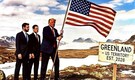
Trump shares AI map claiming Canada, Greenland and Venezuela as US territory: Why it's so controversial
The map appears to have been created by artificial intelligence and comes amid heated tensions with European allies over Trump’s renewed push to acquire Greenland.
-
'I’m alive': Footage of Machado’s daring escape from Venezuela released | Watch
Machado left Venezuela in early December after almost a year in hiding so she could accept her Nobel Peace Prize in Norway.
-
Venezuela's Machado sees eventual elections but cautions about complex path ahead
Despite signs of the Trump administration deepening ties with Maduro's government, Machado gave a mostly upbeat assessment