-
Quote of the day Albert Einstein, "Try not to become a man of success, but rather try to become a man of value."
Albert Einstein’s quote urges people to focus on being valuable rather than just successful, emphasising character, contribution, and meaningful impact over wealth or fame.
-

A ‘Historic First’ in Physics: Tokyo scientists unlock a new way to study atoms using lasers
Scientists have achieved a historic first using lasers to study electron behaviour, revealing new insights into how light interacts with matter at the quantum level.
-
Quote of the day by Stephan Hawkings: "The universe doesn't allow perfection. Without imperfection, neither you nor..."
Stephen Hawking once argued that perfection does not exist in the universe. Surprisingly, he said our very existence depends on imperfection. What did he mean, and how do flaws shape the cosmos?
-
Quote of the day by Albert Einstein: "Logic takes you from A to Z; imagination will get you..."
Albert Einstein’s famous quote about logic and imagination still sparks debate today. Why did the legendary physicist believe creativity mattered more than reasoning in discovery? His words reveal a deeper insight.
-
Quote of the Day by Marie Curie: "Life is not easy for any of us. But what of that? We must have perseverance and above all confidence in ourselves. We must believe..."
Marie Curie’s famous quote about perseverance still inspires people worldwide. Her extraordinary journey through science and struggle reveals a powerful lesson about confidence, purpose, and determination that continues guiding generations today.
-
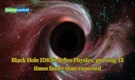
Astronomers stunned as black hole "ID830" grows 13 times faster than expected cosmic speed limit, defying physics
Astronomers have discovered a black hole in the early universe, ID830, growing thirteen times faster than physics allows, defying cosmic rules and challenging long-held theories of black hole evolution.
-
National Science Day 2026: Date, theme and significance of the day that changed Indian science
National Science Day 2026 marks the Raman Effect anniversary with a youth-focused innovation theme. But how did a simple light experiment reshape modern science and inspire India’s future ambitions?
-
What this IIT Physicist found about the universe has amazed scientists- Here's what Muhammad Ghulam Khuwajah Khan proposed!
A physicist proposes that the universe might not be empty but act like a viscous fluid, resisting expansion. This bold idea could explain fluctuations in cosmic growth and challenge traditional dark energy models.
-
Scientists in China found a new way to control light — Could this be the future of wireless?
Scientists have generated ultra-stable, donut-shaped light structures called skyrmions. These innovative beams can carry data at terahertz frequencies, promising faster, more reliable wireless communication in the future.
-
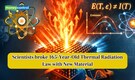
Scientists break 165-year-old Kirchhoff’s thermal radiation law with engineered metamaterial
A Penn State team has shattered Kirchhoff’s 165-year-old law of thermal radiation. Their engineered metamaterial emits more heat in one direction than it absorbs, opening doors for next-generation energy, sensors and heat management.
-
A Harvard scientist claims to have found the exact location of heaven, but can humans reach it?
A former Harvard professor links modern cosmology with scripture, suggesting heaven may exist beyond the universe’s Cosmic Horizon, a place humans can never reach, raising fresh questions about science, faith, and space.
-
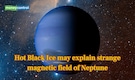
Hot black ice might solve Neptune’s longstanding magnetic mystery; Here's what study says
Scientists suggest superionic “hot black ice” deep inside Neptune may explain its tilted, offset and chaotic magnetic field, offering insights into ice giant interiors and planetary physics.
-
From fiction to reality: Chinese scientist creates real-life Harry Potter–like invisibility cloak
A Chinese scientist’s viral demonstration shows how simple optics can make body parts vanish, sparking global debate over whether real-world invisibility is science, illusion, or something in between.
-
Indian scientists develop "PhotonSync" for long-distance Quantum communication
Indian scientists develop PhotonSync, turning ordinary telecom fibre into a phase-coherent quantum channel. It stabilises photons, enabling long-distance secure quantum communication and marking a breakthrough in India’s quantum research.
-
Electricity Through Air? Finland scientists made electricity that flows in air without wires
Scientists in Finland transmitted electricity through air using sound waves, lasers, and radio frequencies, creating “acoustic wires” that could revolutionize homes, industry and IoT devices without plugs or traditional cables.
-
Study suggests that ghost particles maybe interacting with dark matter
Scientists have found hints that ghostly neutrinos may interact with dark matter. The unexpected link could help explain mysterious differences between cosmic theories and real observations.
-
How could the universe accelerate without dark energy? Here is what study says
Scientists propose a new gravity theory using Friedmann equations. Their model explains the universe’s accelerating expansion naturally, challenging dark energy and offering fresh insights into cosmic evolution.
-
Birmingham’s sky suddenly turned "Pink" — Here’s the real reason
Birmingham residents were stunned as the night sky turned bright pink during a winter storm, caused by stadium floodlights reflecting off snow and clouds, not auroras or any cosmic phenomenon.
-
Why Venezuela’s tallest waterfall seems to disappear mid-air? Mystery explained
Venezuela’s Angel Falls, the world’s tallest waterfall, appears to vanish mid-air as wind, air resistance and evaporation break the falling water into mist before it ever reaches the ground.
-
What is happening inside Earth’s core? A rare “superionic” state of matter explained
Scientists have discovered that Earth’s inner core may not be fully solid. A rare “superionic” state of matter could explain strange seismic signals and reshape our understanding of the planet’s hidden heart.
-
Scientists detect ghost particles transforming from Carbon into Nitrogen
Scientists have directly observed solar neutrinos transforming carbon into nitrogen underground, confirming long-predicted particle physics and offering new insight into processes powering the Sun.
-
Ramanujan’s 100-year-old pi formula reveals a hidden Universe in modern physics
Why did Ramanujan’s formulae stay relevant for a century? His set of 17 expressions offered huge speed. They gave long digit chains with fewer steps taken.
-
How Ramanujan’s 'Pi' formulae unlock the secrets of modern physics
IISc researchers connect Ramanujan’s century-old pi formulae with modern physics, uncovering surprising mathematical structures.
-
Scientists revisit old theory: Are tiny ancient black holes passing through our bodies unseen?
A provocative theory is gaining new support today. Scientists suggest atom-sized black holes may move through Earth. These primordial black holes likely formed after the Big Bang.
-
Fibre-optic breakthrough brings 'quantum internet' vision nearer reality
A new molecular qubit works with standard fibre-optic networks, advancing efforts to build a quantum internet offering ultra-secure communications and faster global data transfer.