-
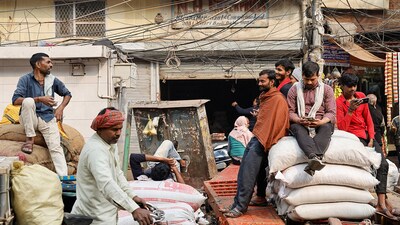
OPINION | Supreme Court’s 9-judge constitutional bench will demarcate the boundary for labour rights
On March 17, a constitutional bench will begin hearing a reference related to the scope and correctness of a 1978 judgement. At its core is this question: what is the statutory meaning of “industry”? The answer will influence labour relations
-

OPINION | 'The intention underlying withholding or withdrawing life-sustaining treatment is only to ease suffering and protect dignity': Dr Dhvani Mehta
Harish Rana was moved to palliative care on March 16, following a far-reaching Supreme Court verdict. His lawyer explains why it’s inappropriate to label it passive euthanasia
-
OPINION | Uniform Civil Code: Constitutional vision, Supreme Court observations, and the current debate
On several occasions, the Court has drawn attention to the constitutional vision embodied in Article 44 and the importance of moving towards a common civil framework for all citizens
-
The Kerala Story director Sudipto Sen on his upcoming film Charak and why he didn't direct The Kerala Story 2, "My films are based on common people, not for law"
Sudipto Sen explains why he stepped away from directing The Kerala Story 2, citing lack of research on new regional stories. He is now focused on Charak, a film exploring controversial tantric rituals.
-
Raaj Shaandilyaa terminates contract with Ektaa Kapoor’s Balaji Motion Pictures amid Bhagam Bhag 2 legal raw
Director Raaj Shaandilyaa has terminated his contract with Ektaa Kapoor’s Balaji Motion Pictures, sparking a legal dispute that has placed the much anticipated film Bhagam Bhag 2 under uncertainty.
-
OPINION | The Golaknath case and the evolution of the Basic Structure doctrine
On 27th February 1967, a majority in a 11-judge bench of the Supreme Court declared that Parliament could amend Fundamental Rights. The verdict’s significance lay in the role it played in the evolution of the Basic Structure doctrine of the Court, unarguably the most consequential ruling thus far
-
OPINION | Surge in PILs raises concerns over misuse and judicial efficiency in India
As diverse PIL filings surge across courts, concerns grow over misuse, judicial backlog and the dilution of a remedy originally designed to protect the marginalised
-
OPINION | Collegium System: Power, process and persistent questions of accountability
The collegium has its roots in constitutional debates on judicial appointments. Over time, it gained significant authority. Concerns about transparency, representation and accountability continue to surround its functioning
-
OPINION | KT Thomas, the judge opposed to capital punishment
Conferred recently with the Padma Vibhushan, his work encapsulated a balance between thoroughness and deep sensitivity
-
Struggling to repay a personal loan? Five smart moves to prevent legal escalation
Missing EMIs is frightening, but panic usually makes things worse. A few early, practical moves can limit damage and keep the situation from spiralling.
-
OPINION | Judging Caste: What the Supreme Court’s report reveals
A new report produced by the apex court on the evolution of jurisprudence on caste shows that even within a rule-based framework, social conditioning makes its presence felt
-
OPINION | Supreme Court in 2025: A significant year for the Indian judiciary
In 2025, the Supreme Court of India marked its 75th anniversary with key judgments, controversies, and reflections on its role, while navigating internal challenges and judicial reforms Shishir Tripathi
-
OPINION | The Fallibility of the Supreme Court: Reflections on judicial decision making
Former Chief Justice B. N. Kripal’s *Supreme But Not Infallible* highlights the Supreme Court’s fallibility, emphasising its power to review judgments and correct errors to uphold justice and constitutional values
-
OPINION | Supreme Court to reconsider plea for reviving NJAC system
Reform of the Collegium system should prioritise efficiency, transparency, and accountability, avoiding power struggles and ensuring judicial independence in appointments
-
OPINION | Supreme Court clarifies roles of Governor and President in dealing with Bills but doesn't resolve the matter entirely
The Supreme Court held it cannot impose timelines on Governors or the President for Bill assent but may issue a limited mandamus against prolonged inaction, balancing separation of powers with ensuring constitutional functioning
-
OPINION | Evaluating the 130th Amendment Bill: Legal perspectives
Researchers from Charkha prepared a detailed report analysing the Constitution (130th Amendment) Bill, assessing its legal validity, alignment with constitutional principles, and offering recommendations to prevent misuse
-
OPINION | Supreme Court’s Karur Judgement: Questions of jurisdiction, neutrality and federal trust
Two aspects of the interim order have triggered debate. One, the decision to transfer the case to CBI when jurisprudence has set a high bar to do so. Two, the decision to appoint two IPS officers to the supervisory committee who may be of Tamil Nadu cadre but not natives of the state
-
Zetwerk files lawsuit against its former exec’s new firm Ayr Energy in Texas court
Zetwerk estimate losing nearly $77 million in potential orders and allege that Ayr’s revenues from the disputed business could exceed $250 million.
-
OPINION | Justice Surya Kant’s tenure begins amid reform imperatives
Justice Surya Kant, brings decades of distinguished service, marked by landmark rulings on free speech, privacy, and human rights, and faces crucial judicial reform challenges ahead. He takes oath as the next CJI on November 24
-
OPINION | What is the real issue ‘My Lords’?
Despite explicit court orders, Bar Council resolutions, and even petitions seeking to ban such colonial honorifics, their persistence raises a deeper question: is this merely a colonial relic that refuses to fade, or an institutional compulsion the judiciary itself continues to uphold?
-
OPINION | The Constitution Made Accessible: A new scholarly analysis in Hindi
‘Hum Bharat Ke Log: Bhartiya Samvidhan Par Nau Nibandh’ (We, the People of India: Nine Essays on the Indian Constitution), represents a significant step towards making serious constitutional scholarship available in Hindi. The paucity of scholarship in Indian languages represents a drawback in making the foundational document more accessible
-
OPINION | Are all land-losers entitled to the same treatment?
Two High Courts have reached opposite conclusions on the issue of taxing compensation received by people whose land is acquired under different statutes. It’s now the legislature’s duty to clarify the position and mitigate the feeling of being hard done-by
-
OPINION | Manual Scavenging: When the Supreme Court saw its own order being violated at its own gate
Laws, judgments, and penalties can only go so far unless accompanied by a strong administrative will to eradicate this inhuman practice once and for all. The sight of a worker entering a sewer outside the Supreme Court is not just a failure of governance; it is a collective failure of conscience
-
OPINION | Trillions are stuck in disputes at commercial tribunals but reform agenda ignores it
Litigation amounting to nearly 7.5% of GDP is stuck at the level of tribunals, locking in capital. It’s not the stuff of headlines but it’s a big contributor to regulatory cholesterol. Reform attempts should not ignore blockages in the plumbing
-
OPINION | India’s Secular Dilemma: Balancing faith and the State
In India, religion is not limited to personal belief; it is deeply woven into the social fabric and continuously shapes citizen–state interactions. In such a context, maintaining a strict and absolute separation between state and religion becomes exceedingly difficult