






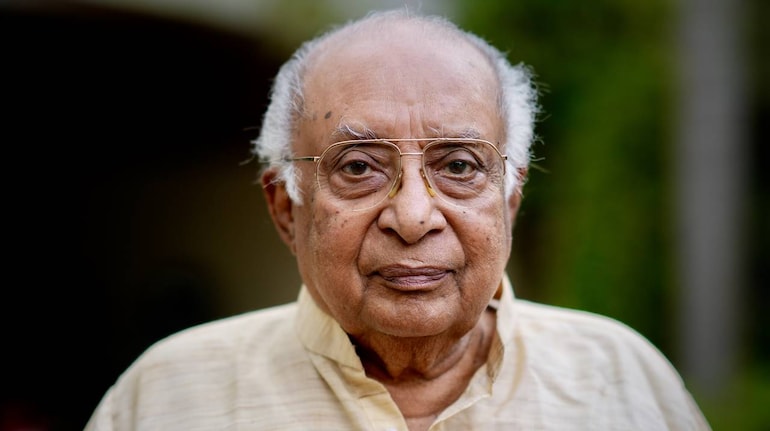
In the afterword to Honeybees of Solomon, the autobiography of former Supreme Court judge Justice KT Thomas, former Chief Justice of India YV Chandrachud reflects on the nature of Justice Thomas’s judicial journey. He writes that the judgments discussed in the book suggest that whenever Justice Thomas sought guidance to discern the just from the unjust, the Almighty appeared to send him “honeybees”, the quiet messengers of wisdom, imparting to his judicial task a distinctly divine orientation.
Justice KT Thomas was recently conferred the Padma Vibhushan, India’s second-highest civilian award. Indeed, his judicial career bears testimony to moments where, beyond legal acumen, the pursuit of justice seemed to call for a higher moral and almost divine guidance.
Dissent in the Rajiv Gandhi case
In this regard, the case of former Prime Minister Rajiv Gandhi's assassination is worth mentioning. In May 1991, amid the Lok Sabha elections, Rajiv Gandhi was assassinated. The trial court convicted 26 accused and awarded them the death penalty. As appeals from TADA courts lay directly before the Supreme Court, a three-judge Bench comprising Justice Thomas, Justice DP Wadhwa and Justice S Rajendra Babu Quadri heard the case.
Justice Thomas differed from his colleagues on two crucial issues. First, he could not reconcile with the TADA provision that made confessions to police officers admissible in evidence, an exception to the general criminal law where such confessions are strictly prohibited. This fundamental disagreement found expression in separate judgments.
Second, and more notably, Justice Thomas dissented on the award of the death penalty to Nalini. He held that she was a vulnerable participant, drawn into the conspiracy through emotional manipulation, sustained indoctrination, and personal dependence, without playing any dominant role. Taking into account her circumstances and the fact that she was the mother of an infant born in captivity, Justice Thomas concluded that her case did not fall within the “rarest of rare” category and commuted her sentence to life imprisonment.
His view, however, did not prevail. By a majority, the Bench confirmed Nalini’s death sentence, which was later commuted by the President of India. Nonetheless, the episode underscores Justice Thomas’s readiness, grounded in both legal principle and judicial conscience, to stand apart in extending mercy even in a case involving the assassination of a former Prime Minister.
Contribution to procedural law
Another notable judgment delivered by Justice KT Thomas arose in a dowry death case, significant for the manner in which the Supreme Court substantially widened the scope of Section 157 of the Indian Evidence Act.
Justice Thomas wrote in his autobiography: “As per that section, any former statement made by a witness relating to a fact deposed to by him, “at or about the time when the fact took place, ' can also be used to corroborate the testimony of that witness. We pointed out that the words could be interpreted narrowly or broadly. We adopted the broader view that if such a statement was made within a reasonable proximity of time, it could be used to corroborate his own testimony. We found support for the said interpretation from the observations made by Justice Vivian Bose in a judgment of 1952. Justice Vivian Bose was a stalwart in the field of criminal law during the infantile period of our constitutional history. He too had given a wider interpretation to the section 157 of the Evidence Act.”
In Justice KT Thomas’s judicial career, several cases which at first glance might not appear to involve major political, social, economic, or constitutional questions resulted in judgments of enduring significance, particularly in the development of procedural law, such as the dowry death case discussed above.
Grounded and rational
Justice Thomas’s autobiography offers revealing insights into his personality through a telling episode from his early days on the Supreme Court.
Owing to delays in allotment, he stayed at Kerala House for nearly two months. At the time of his elevation to the apex court, only two bungalows were vacant; one was occupied by a judge senior to him, and the remaining one at 15 Tughlaq Road was shunned as a “haunted” house, burdened by superstition and neglect. Unfazed by such beliefs, Justice Thomas chose it nonetheless, seeing not an ominous past but the possibility of renewal.
With quiet rationality and courage, he requested its allotment, confident that with care it could be restored to a dignified home. He stayed there comfortably for four years, and since then, the bungalow has been occupied by many judges of the Supreme Court.
Opposed to capital punishment
Justice Thomas has consistently expressed strong views against capital punishment. In a 2011 interview with Firstpost, when asked whether he subscribed to the view that the death sentence amounted to “judicial murder,” he responded in the affirmative, stating: “Yes, I do. Other murders are committed without the protection of law, but this is committed with the protection of law. That is why I call it judicial murder.”
In the same 2011 interview, expressing his views on the collegium system, he remarked: “At the time when the collegium was formed, following a Supreme Court decision, it was considered to be an improvement over the earlier system in which the executive had a prominent role. But now, in retrospect, I feel that this system is not good.”
Justice Thomas was awarded the Padma Bhushan in 2007 in recognition of his distinguished service. Born in 1937 in Kerala’s Kottayam district, he enrolled as an advocate at the Kerala High Court in 1960. He entered judicial service in 1977 as a District and Sessions Judge.
In 1985, he was appointed an Additional Judge of the Kerala High Court and was confirmed as a permanent judge the following year. He was elevated to the Supreme Court of India in 1996, where he served with distinction until his retirement in 2002. After his retirement, Justice Thomas chose not to accept an appointment to the National Human Rights Commission after his retirement.
(Views are personal and do not represent the stand of this publication.)
Discover the latest Business News, Sensex, and Nifty updates. Obtain Personal Finance insights, tax queries, and expert opinions on Moneycontrol or download the Moneycontrol App to stay updated!
Find the best of Al News in one place, specially curated for you every weekend.
Stay on top of the latest tech trends and biggest startup news.




