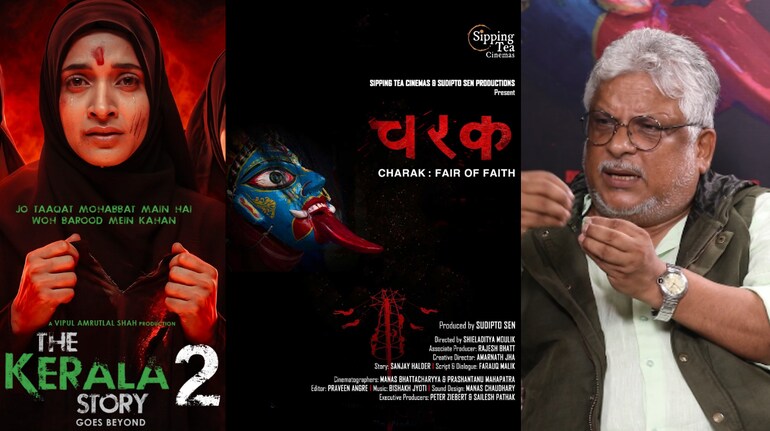

Filmmaker Sudipto Sen, known for directing The Kerala Story and producing the upcoming film Charak, recently spoke at length about his filmmaking philosophy, censorship, and the global film industry in an interview with Moneycontrol. During the conversation, Sen also addressed why he chose not to direct The Kerala Story 2, despite helming the first film.
The filmmaker explained that the sequel was designed differently from the original, which made him step away from the director’s chair.
“I wanted to do Kerala Story 2. But a decision was made at the producer's level that in Kerala Story 2, not only Kerala, but the outside story will be told.”
According to Sen, the sequel would include multiple regional narratives beyond Kerala.
“In Kerala Story 2, there is a story of Kerala and 2-3 stories of Madhya Pradesh, Gujarat, Rajasthan and Gujarat.”
He emphasized that the first film required years of research and preparation, which gave him the confidence to stand firmly behind its narrative.
“When we made Kerala Story 1, it took me 10 years of hard work. I am an expert. You cannot defeat me in any logic. I have the proof of everything.”
Sen further revealed the extent of documentation presented during the film’s censorship and legal scrutiny.
“Because we had given a 200-page document on the censor board. We had given a 3-hour testimonial. There were references of 3000 girls. I was equipped.”
He maintained that he still stands by the film completely.
“I am still standing behind every frame, every word, every dialogue. I will not move.”
However, when it came to new stories from other states, Sen felt he did not have sufficient research to tell them responsibly.
“But when the story of a girl from Rajasthan was told, I had no knowledge about it. I had not done any research. I did not know the truth of it.”
Because of this, he chose not to direct the sequel.
“I am not doing half-heartedly. That is why I said that I cannot make a film by reading it on Whatsapp and dying in a newspaper.”
Instead, Sen decided to focus on his new project Charak, which draws inspiration from traditions and practices surrounding the centuries-old Charak festival.
“Because Charak, where I was born, from that time, Charak has a history of more than 1000 years.”
The filmmaker explained that while the festival is associated with fairs, music and cultural celebrations, it also historically involved controversial practices.
“But along with that, this colour, music, dance, there was another aspect. That is Tantric practice. Tantric practice, Aghori practice. In which up to cannibalism was there.”
Watch Full Video Interview here:
He added that many such practices were eventually banned by the government.
“So, in course of time, these Tantric practices, Aghori practices, were banned by the government.”
However, Sen believes that legal bans alone cannot change societal mindset.
“But until there is a change in our thinking, until there is a change in your heart, what can the law do? The law will not do it.”
According to him, the purpose of Charak is to spark discussion and awareness among audiences.
“So, my film is not based on the law. It is made for common people like us.”
The filmmaker has indicated that Charak continues his approach of exploring difficult social themes through cinema — a style that has made his work widely debated and discussed across the country.
Discover the latest Business News, Sensex, and Nifty updates. Obtain Personal Finance insights, tax queries, and expert opinions on Moneycontrol or download the Moneycontrol App to stay updated!
Find the best of Al News in one place, specially curated for you every weekend.
Stay on top of the latest tech trends and biggest startup news.