-
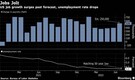
US job growth misses expectations as 2025 marks weakest hiring year since Covid
US job growth slowed sharply in December, with just 50,000 jobs added, capping the weakest hiring year since the pandemic and fuelling concerns over labour market fragility and future interest rate cuts.
-

Farm productivity is the panacea for rural labour, income woes
Rural India needs to boost incomes and for that it needs to give employment beyond farms
-
11 large states see a drop in people employed in manufacturing sector
Around 40% of states saw a rise in primary sector employment in urban areas, government data shows
-
US weekly jobless claims increase more than expected
The Fed last week left its benchmark overnight interest rate unchanged in the current 5.25%-5.50% range, where it has been since July.
-
What the BJP and other political parties need to take away from the India Skills Report
The BJP-ruled states in the North like UP, Bihar, Madhya Pradesh and Haryana have done very well on the tests – but that doesn’t mean that the jobs are being created there
-
US labor market resilience keeps economy afloat as year ends
U.S. weekly jobless claims inched up, indicating a modest recovery as the year concludes. Recent positive data, including retail sales, suggests economic momentum.
-
Manufacturing, labour sectors key to India retaining its world-beating growth: S&P Global
The data, research, and analytics firm expects India to grow at 6.7 percent on an average per year for eight years starting 2023-24 and retain the tag of the world's fastest growing large economy in. Meanwhile, the government and the RBI see India's GDP growing by 6.5 percent in 2023-24
-
US jobless claims fall again as labor market continues to flash strength
US applications for jobless claims fell by 9,000 to 228,000 for the week ending July 15, from 237,000 previous week, the Labor Department said.
-
If the economy is so bad, why is the labour market so good?
A crisis in worker morale could help explain some of the apparent paradoxes in the data
-
Urban unemployment down, but a lot of unpaid helpers
PLFS survey shows that while urban unemployment is lower compared to pre-pandemic times, the quality of jobs is worse
-
Young Indian women are being let down in labour market. What governments must do
Create more formal sector jobs in labour-intensive industries, improve skills for women with secondary and primary school level education, and bolster social sector spending that creates frontline and community mobilisation work in nutrition, education and health
-
US Fed: Signs of disinflation, but labour market still tight
An improving global outlook means that the growth premium enjoyed by the Indian market will reduce
-
US retail sales fall after hefty gains; labour market still tight
Economists also noted that goods prices tumbled in November, which could have weighed on retail sales last month. The discounts by retailers were also probably a drag on the dollar value of sales
-
‘Sizzling’ US jobs data make case for bigger Fed rate increases
US employers added 528,000 jobs last month, more than all estimates, the unemployment rate fell to a five-decade low of 3.5%, and wage growth accelerated
-
US labour market defies recession fears as job growth surges in July
The labour market has now recouped all the jobs lost during the Covid-19 pandemic, though government employment remains about 597,000 jobs in the hole. Overall employment is now 32,000 jobs higher than in February 2020
-
EPFO Payroll: April records 9.23 lakh fresh additions to formal work
The new payroll additions recorded in April, the first month of FY23, is almost 45,000 less than the new additions in March, when the pension fund had added 968,163 new subscribers. But net payroll additions have gone up.
-
Startups | Everyone wants to work for big, boring companies again
Tech startups have drawn all the young, hot talent for more than a decade. Now the pendulum is swinging in the other direction
-
Why are so many Indians not looking for work?
Bangladesh, which is poorer than India and also mostly rural, has a much higher female labour force participation rate
-
India added 8.8 million jobs in April: CMIE report
Within industry, 3 million jobs were generated in manufacturing, while construction added nearly 4 million opportunities. Employment in the agricultural sector fell by 5.2 million, CMIE data showed.
-
How to improve female participation in labour force at the grassroots
As India plans for rapid economic recovery, the governments and policymakers need to ensure women are not left behind. Gram sabhas can be effectively used to push for equal wages for women at the local level
-
The e-Shram portal for unorganised workers is only a first step
The portal can become the means of ensuring targeted welfare schemes aimed at the informal sector, which can help increase consumption demand
-
Construction tech startup Bandhoo raises $1.1 million from Unitus Ventures
Since February 2020 onwards, the Bandhoo has about 6,500 SME construction contractors and more than 35,000 construction workers on board. Bandhoo had given service to over 10,000 people with jobs and more than 500 tenders for SME contractors across more than a dozen cities in India.
-
India’s new labour codes need to be implemented immediately
The protracted delay in implementing the new labour laws is having an impact on the pace of the industrial recovery
-
Competing thoughts on the economy of competition
Governments are clamping down on oligopolies in a bid to infuse competition. But is competition always better?
-
Who bears the cost of a lockdown?
Government data show it’s not just the unemployment rate that went up, the labour force participation ratio also fell during the lockdown