-
Jan Vishwas law will ease compliance burden on businesses: India Inc
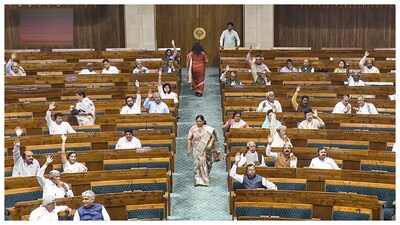
Parliament on Thursday passed the Jan Vishwas (Amendment of Provisions) Bill, 2026, to amend 784 provisions in 79 central laws for decriminalising and rationalising minor offences to further improve the business environment and check harassment of people.
-

Jan Vishwas Bill: Commerce ministry asks departments to review pending cases, withdraw non-critical offences
As part of the general drive to reduce load on the courts, he said, the government has advised all departments to review pending cases and withdraw the prosecution wherever possible.
-
Jan Vishwas Bill introduced in Lok Sabha; illegal occupants of govt premises to pay 40 times fee
Jan Vishwas (Amendment of Provisions) Bill, 2026, was introduced by Minister of State for Commerce and Industry Jitin Prasada in the Lok Sabha on Friday.
-
Jan Vishwas Bill-3 will decriminalise at least 275 more business offences: Piyush Goyal
The recently enacted labour codes will provide substantial benefits to unorganised workers and gig workers, said Union minister for commerce and industry Piyush Goyal. He said these workers previously had to navigate numerous forms, inspections and complex regulations, whereas the new framework simplifies processes and ensures access to proper facilities, social security and better working conditions.
-
DPIIT working on Jan Vishwas 2.0, to decriminalise minor offences, boost ‘Make in India’ initiative
The Department for Promotion of Industry and Internal Trade (DPIIT) is working on about 100 rules and laws of various government departments to bring Jan Vishwas 2.0 bill to achieve greater ease of doing business
-
Exclusive: Govt likely to decriminalise provisions in 5 Acts administered by RBI
Decriminalising these provisions will help the government to replace many offences that involve imprisonment with just a monetary penalty to boost its ease-of-doing-business initiatives.
-
Decriminalise more provisions in tax laws in Budget 2024, say lawyers and CAs
Right now, criminal prosecution in income tax law gets triggered even for trivial human errors such as delays in deposit of withholding taxes, they say. These and similar other provisions do not help build an environment of trust between the taxpayer and the authorities, experts say.
-
Union Budget@10: Has Modi government delivered on Ease of Doing Business promise?
The government has struck down more than 2,000 British-era laws, ended more than 40,000 compliances, and introduced showpiece legislations like IBC and GST but the effective implementation of several laws remains less than satisfactory.
-
Dhankhar urges Global South to follow India in shedding exploitative colonial laws
Vice President Dhankhar said "By very nature, these laws were aimed to be harsh and exploitative for the local population. Time has come (for the global South) to follow India’s example and emulate the same.”
-
New criminal law bills will bid adieu to the colonial mindset: Sr Adv Sanjay Jain
Jain suggested further simplification of the tax regime, further digitisation of government services, and creating channels for regular feedback from the business community to reduce the compliance burden.
-
Exclusive | Ease of doing business likely on govt's focus in Union Budget
Budget 2024-25: The government’s priority will be to work on labour laws and decriminalise certain key provisions in the laws. This is a key area because India has one of the largest workforces in the world
-
Click Here For Justice: Use of technology has put India in a commanding position, says Maharashtra AG Birendra Saraf
The advocate general said that the ongoing e-courts project will lead to citizens having access to the courts at their fingertips.
-
Bullish on India: India is moving towards an era of trust and transparency, ASG Venkatraman
Venkatraman said that laws passed by a country should lead to peace and harmony for its citizens, and growth and development for its businesses.
-
Jan Vishwas bill: Decriminalize business to unshackle growth
India’s entrepreneurs can deliver the millions of well-paying jobs that she needs. They don’t require government subsidies, but the freedom and trust that start with ending excessive criminalisation.
-
Ease of doing business is fine, but is drug safety at risk?
What has been glaringly missing in the wake of the deaths of children in Africa is a major announcement by the government of India spelling out how it is going to overhaul the entire drug regulatory mechanism
-
Jan Vishwas bill will reduce compliance & judicial burden, bolster ease of doing business, say experts
The bill seeks to decriminalise 183 provisions in 42 different laws, replacing imprisonment with a monetary penalty. This should go a long way in decluttering the courts and expedite resolution.
-
Monsoon session starts today: Five key legislations to watch out for
The Personal Data Protection Bill, Ordinance on Delhi services, Jan Vishwas (Amendment of Provisions) Bill, and the Forest (Conservation) Amendment Bill, 2023, and the Amendment to Mines and Minerals (Development and Regulation) Act are the five.
-
Jan Vishwas Bill will pave way for decriminalisation of more offences: TeamLease RegTech's Rishi Agrawal
The Jan Vishwas Bill, which seeks decriminalisation of 187 provisions of 42 different laws, was introduced in Lok Sabha in December 2022
-
Govt repealed 2,000 colonial-era laws, got rid of 40,000 compliances: PM Modi
-
Decriminalise Wisely: Exorbitant fines in lieu of prison terms in Jan Vishwas Bill benefits only super-rich offenders