-
Veteran Hamas leader behind Oct 7 attack eliminated in Gaza strike, says IDF
Hakham Muhammad Issa Al-Issa, a founding member of Hamas and a key figure in its military wing, was killed Friday in an airstrike in Gaza City’s Sabra neighbourhood.
-

Netanyahu ensures security after Assad's fall, UN wishes best possible future for Syria | N18G
Israeli Prime Minister Benjamin Netanyahu stated that Israel is taking necessary security measures in response to the changes in Syria following the fall of President Bashar al-Assad. Israel sees both opportunities and risks in the upheaval, with concerns about rising Islamist rebel forces, including those with Al-Qaeda links. Netanyahu instructed the Israel Defense Forces (IDF) to secure strategic areas, including the Syrian Hermon summit. The collapse of Assad's regime has led to Hamas's increasing isolation, potentially opening doors for a hostage deal, though it remains uncertain. Israel informed the U.N. Security Council about its temporary measures along the Syrian border, emphasizing that its actions focus solely on security, not intervening in Syria's civil conflict. The U.K. and the U.N. also expressed concerns about Syria’s future, while U.N. refugee chief Filippo Grandi called for patience as millions of refugees assess the safety of returning to Syria after 13 years of civil war.
-
IDF Releases Footage Of Sinwar’s Wife With $32,000 Hermès Birkin Bag, Triggers Outrage
The Israeli military released footage showing Hamas leader Yahya Sinwar and his family hours before the October 7 attack on Israel. The video, recorded on October 6 in Khan Younis, depicts Sinwar, along with his children and wife, moving through a tunnel with supplies. Israeli officials reported Sinwar's DNA was found near the site where six Israeli hostages were discovered dead. During a briefing, the IDF presented another video showing Sinwar's last moments before being killed by tank shelling. Sinwar was 61 and a key figure behind the October 7 attack, which resulted in significant casualties. The conflict continues, with hostages and heavy Palestinian casualties reported.
-
Israel loses 8 soldiers in south Lebanon combat, PM Netanyahu sends condolences
"The IDF (Israeli army) announced that seven more soldiers have fallen," the Israeli military said in a statement after announcing the death of the first soldier earlier today.
-
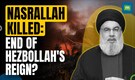
IDF confirms death of Hezbollah leader Hassan Nasrallah: 'He will no longer terrorize the world'
In a significant turn of events, Hassan Nasrallah, the long-time leader of Hezbollah, has been confirmed killed in targeted Israeli airstrikes on the group's central headquarters in Beirut. The strikes, authorized by Prime Minister Benjamin Netanyahu, aimed at high-ranking Hezbollah commanders actively planning attacks against Israel. This video explores the implications of Nasrallah's death, the impact on Hezbollah, and the ongoing conflict in the region. Join us for an in-depth analysis of this escalating situation and what it means for the future of Lebanon and Israel.
-
Watch: From strategic planning to aerial refuelling; this is how Israel struck Hezbollah
On Sunday, the Israeli Air Force launched a major operation against Hezbollah in Lebanon, targeting rocket launchers and military assets to thwart a planned attack. The IDF highlighted the mission's protective aim.
-
Who was Mohammed Deif, the architect of Hamas Oct 7 attack?
Mohammed Deif, 58, evaded capture for decades within Hamas. He was killed in an Israeli airstrike on July 13 in Khan Yunis. The Israeli military confirmed the strike, but Hamas has yet to comment.
-
Israel-Hamas war: Half of armed group's battalions in Rafah defeated, full takeover in weeks, says IDF
IDF claims to gain full control of Rafah in two weeks. They also revealed that the houses and tunnels in Rafah had new kinds of defenses and boobytraps, with some houses having video surveillance in each room of the given house to facilitate ambushes. So far, the IDF has killed 550 'terrorists' and destroyed about 200 tunnel shafts, claiming to have destroyed the last major rocket inventory
-
Hezbollah Commander killed in IDF strike as attack drones injure 3 in northern Israel
Tensions escalate as a Hezbollah commander is killed in an IDF strike, while three people sustain minor injuries in a drone attack on northern Israel. The Israeli military and Hezbollah exchanged fire after the terror group launched two explosive-laden drones near Beit Hillel. Hezbollah claimed to have targeted an Iron Dome battery, echoing similar claims in recent months, which the IDF dismisses as empty boasts. Meanwhile, questions arise as to why sirens did not sound to warn forces. Stay updated on the unfolding situation as the IDF investigates this latest incident.
-
Israel Defence Forces Lose 24 Soldiers In One Day: What Led to the Biggest Military Setback?
24 soldiers of the Israeli army were killed in the biggest single-day losses since the start of the Israel-Hamas war in Gaza. That includes 21 reservists who died in an explosion. At least 217 soldiers have been killed since the ground offensive began in October 2023, according to Israel's military. But what led to this? Watch for more.
-
IDFs yet to make a mark even two years on: Report
IDFs, which are investment vehicles for facilitating the flow of long-term debt to the infrastructure sector, are "yet to come of age and make a significant impact in the infrastructure financing space", Icra ratings said.
-
RBI permits IDFs to issue less than 5-year tenure bonds
The Reserve Bank today allowed Infrastructure Debt Fund (IDF) to raise resources through bonds and commercial papers of less than five-year maturity.
-
Infra sector needs Rs 30 trln; novel bonds the key: CRISIL
Infra sector needs Rs 30 lakh crore and banks Rs 5 lakh crore for their capital requirements till 2019, says a CRISIL report.
-
Infra, banking need Rs 10.4 trillion bond funding: CRISIL
India's infrastructure and banking sectors will require Rs 10.4 trillion from the bond market over the next 5 years: CRISIL.
-
Faltering road sector gets due attention: ICRA
According to Mr. Rohit Inamdar, Senior Vice-President, ICRA, "Around 18 projects which were awarded in FY12 could not achieve financial closure till March 2013 due to uncertainty on land acquisition and approvals as well as reluctance on the part of banks to fund what are perceived to be aggressively bid projects."
-
IDFs can extend schemes' tenure by up to 2-yr: Sebi
Infrastructure Debt Funds (IDFs) can now extend the tenure of their schemes by up to two years with the consent of two-third investors, with market regulator Sebi notifying the changes in its IDF regulations.
-
Govt guarantee, 20-yr period spice up IIFCL bond issue
SK Goel, CMD, IIFCL, explains to CNBC-TV18 that the guarantee by the government and government agencies along with the special mandate to issue 20-year bonds will see increased investor interest in the issue.
-
Tight monetary policy among other things impact growth: FM
Attributing the economic slowdown to various factors, including Reserve Bank's tight monetary policy, the government today said that it has been taking steps to promote investment and growth.
-
Montek Singh says reforms on the anvil, infra in focus
As the government is getting aggressive on reforms, Planning Commission Deputy Chairman Montek Singh Ahluwalia has said the there are more to come. Stating that India is capable of high growth, Ahluwalia stresses that large infrastructure projects are one of the areas of focus.
-
IDF 2012: Intel wants you to call new CPUs ‘4th generation Intel Core', not 'Haswell'
Intel is focusing on branding its upcoming family of CPUs more as 4th generation Intel Core' processors than as Haswell processors before...
-
Locking horns over IDFs: Investors want higher returns
Banks argue that they have been bearing the riskier project implementation period at below 10% interest rates and they won't sell these loans to infrastructure debt funds or IDFs at higher coupons when the projects would have reached the safe stage of commercial viability, reports CNBC-TV18's Shruthi Rajkumar.
-
Govt may give nod for IDF to raise $2bn via ECBs
The government has been holding wide ranging consultations on setting up the infrastructure debt fund or IDF.
-
Infra debt fund: What are its fine contours?
Work is on in full steam to establish the infrastructure debt fund (IDF) notified in the budget. The fund is likely to be put in place in the next three months. CNBC-TV18’s Aakanksha Sethi reports on the contours of the fund.