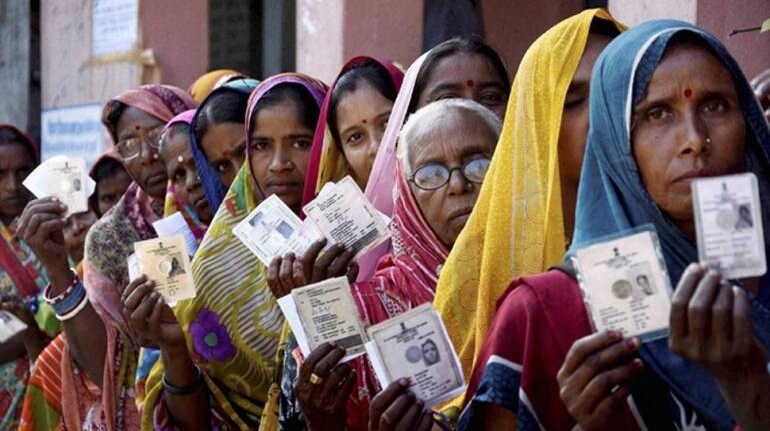
Chhattisgarh is the only state of the five going to polls this year which will elect its legislators in two phases. Of the 90 Assembly seats, 18 concentrated in the southern part of the state and considered Maoist-affected will vote on November 12 while the rest of the state will vote on November 20.
In a statement, Subrat Sahoo, chief electoral officer of the state, said over 31 lakh voters will take part in the first phase. Of these, 16 lakh are men, 15 lakh women and 89 third-gender voters.
The 18 seats are spread across eight districts, including Bastar, Dantewada, Sukma and Rajnandgaon— the last being Chief Minister Raman Singh’s constituency from where he has been elected twice and from where the Congress has fielded former prime minister Atal Bihari Vajpayee's niece Karuna Shukla. There are other heavyweights in the fray as well, including state cabinet ministers Kedar Kashyap and Mahesh Gagda, who will contest from Narayanpur— a BJP bastion since 2003— and Bijapur, respectively.
The voting pattern in these constituencies has been swinging at best. Of the 18 constituencies, 12 are reserved for Scheduled Tribes (ST) and one— Dongargarh— for Scheduled Caste (SC). While the battle for the ST constituencies is stiff, the sole SC constituency has remained a BJP bastion for the past 15 years.
Even in the 12 constituencies reserved for STs, seven are swing seats which voted for the BJP in 2008 but turned to Congress in 2013 (Congress won 12 of these 18 seats in the last Assembly polls). Interestingly, Kanker district in the southwest, which has four constituencies — all of them ST — voted en masse for the BJP in 2008 but only one seat, Antagarh, repeated the pattern in 2013, with all the other seats having been won by Congress. Incidentally, Antagarh was one of the reasons why Amit Jogi, Ajit Jogi’s son, was removed from the party after allegations of rigged bypoll for the seat in 2014.
Three of these seven seats registered NOTA as the third option, while the rest registered NOTA as its fourth. During the 2013 elections, more than one-third of Chhattisgarh’s 90 assembly seats saw NOTA taking the third place while 17 out of these seats polled more than 5,000 NOTA votes. In Bijapur, as many as 10.1 percent of voters chose NOTA over other candidates— it stood third in a battle between seven candidates. The case repeated itself in several regions of the tribal belt.
The overwhelming preference for NOTA votes in 2013, and entry of the Janata Congress Chhattisgarh (JCC) and Bahujan Samaj Party (BSP) alliance to the fold has led to speculation that these votes could be transferred to JCC-BSP, especially since the parties claim SC/ST to be their vote bank. According to psephologist Bhawesh Jha, more than affecting Congress, the JCC-BSP alliance will eat into BJP’s votes.
"I think a lot of people are forgetting the fact that BJP is going to be equally at loss because of the BSP-JCC alliance," psephologist Bhawesh Jha had told Moneycontrol. "Even if the BSP-JCC alliance bags two or three seats out of those 10, that would matter to the BJP, as it will for the alliance," he had said.
The BJP has three strongholds in south Chhattisgarh — Jagdalpur, Narayanpur and Dongargarh — the first of which is an ST seat. The saffron party has never lost an election in these three seats for the past 15 years. The Grand Old Party, on the other hand, has only one such stronghold in Konta, an ST seat in the state’s southernmost Sukma district. In 2013, Congress also lost a number of its senior leaders— including state chief Mahendra Karma — to a Maoist ambush months before the elections. This year, the party suffered a setback after its working president Ramdayal Uike, also an influential tribal leader, jumped the boat to join BJP.
The BJP has continued to average around 35-50 percent vote share in these districts while the Congress has hardly ventured beyond 40 percent vote share. In fact, in Konta, the Congress stronghold, BJP’s vote share in 2008 was slightly better at 31.12 percent than Congress’ 31.4 percent. On the other hand, in the three BJP fortresses, the party has maintained a considerable upper hand in terms of vote share.
For the BJP, however, the overall picture in terms of tribal votes had shifted alarmingly towards Congress during the last elections. In 2013, Congress had won eight out of the 11 ST seats in the region, going on to win 18 out of the 29 ST seats in the entire state. According to the Lokniti-CSDS data for the 2013 assembly elections, Congress had a 9 percent lead over BJP in terms of tribal votes.
Assembly Elections 2018: Read the latest news, views and analysis here
Discover the latest Business News, Sensex, and Nifty updates. Obtain Personal Finance insights, tax queries, and expert opinions on Moneycontrol or download the Moneycontrol App to stay updated!
Find the best of Al News in one place, specially curated for you every weekend.
Stay on top of the latest tech trends and biggest startup news.