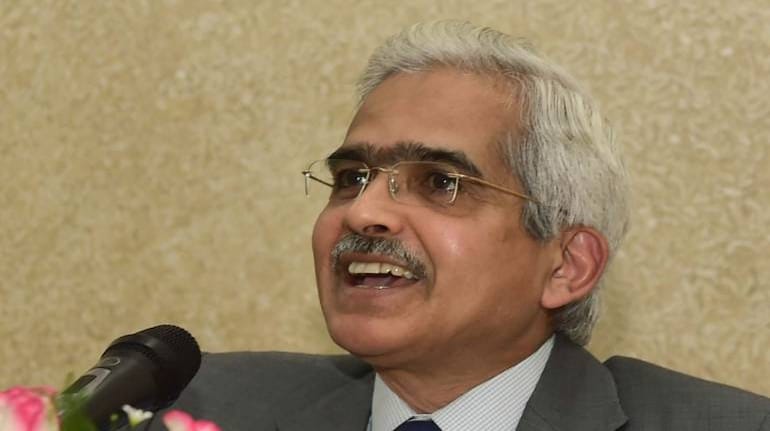
The Reserve Bank of India’s Monetary Policy Committee will be huddled in a meeting from today till the February 7, when they will announce their decision on the policy rate. This time, the committee will take into account the impact of the recent Union Budget.
The Budget has put money in the hands of small farmers and the ‘middle class’, boosting consumption. If the revised estimates turn out to be right, the rise in the fiscal deficit this year will be Rs 43,334 crore. In 2019-20, the rise in the deficit is budgeted at Rs 69,601 crore. The budget has been an expansionary one, given the boost to consumption and the increased stimulus. That should be a warning to the Reserve Bank of India that it should be wary of cutting rates. Moreover, several economists are sceptical of the government staying within the budget’s targeted fiscal deficit of 3.4 percent of GDP for 2019-20, with Fitch Ratings saying it is likely to be 3.6 percent.
But there is another question: will the government be able to achieve its fiscal deficit target for the current fiscal year — 2018-19? Revenue receipts in the last three months of the fiscal year are expected to be 37.2 percent of the entire year’s (2018-19) revenue receipts, if the revised estimates are correct. In other words, almost two-fifths of revenue receipts are expected to be received in the last quarter of the year.
But this is much higher than the proportion of actual receipts received in previous years. In 2017-18, 27.9 per cent of the annual receipts were received in the last three months. In 2016-17, 32 per cent of the annual receipts were received in the last three months. In 2015-16 it was 32.7 percent, but then, in 2015-16 and in the previous year, excise duties on petrol and diesel were raised multiple times. This year, the government has no such luxury and indeed the GST council has reduced tax rates on several goods. In short, the Centre’s revised estimates for revenue receipts are unlikely to be met.
That doesn’t necessarily mean the fiscal deficit will be more than 3.4 per cent of GDP this fiscal. The government may well slash expenditure, especially capex, in an effort to contain the deficit. But will the government be able to contain expenditure in an election year?
The minutes of the last monetary policy committee meeting showed that several members had raised concerns about the fiscal deficit. Urjit Patel had underlined the risks by saying, ‘the extant national fiscal stance continues to be more akin to a “shock amplifier” rather than a “shock absorber” for our macroeconomy.’ The last monetary policy statement had said, ‘fiscal discipline is critical to create space for and crowd in private investment activity.’ Is relaxing the fiscal deficit target from 3.1 percent of GDP in 2019-20 to 3.4 percent fiscal discipline?
But then, Patel is no longer on the committee and the odds are in favour of Shaktikanta Das toeing the government line. Ravindra Dholakia will be supportive, since he said at the last meeting ‘Fiscal slippage is possible but the extent of it may not warrant any panic because its impact on inflation may not be significant and will be felt, if at all, with a considerable lag.’ Pami Dua and Viral Acharya had mentioned the possibility of fiscal slippages at the Centre and the states. With the spate of farm loan waivers announced, fiscal risks to state budgets have increased.
Moreover, the final Budget for 2019-20 may well be even more populist when a new government takes office. In the circumstances, the central bank can hardly afford to lower its guard.
Economic Affairs Secretary Subhash Chandra Garg has said GDP growth in 2019-20 will be 7.5 percent. Since India will remain the fastest growing large economy in the world, where is the need for a monetary stimulus?

Discover the latest Business News, Sensex, and Nifty updates. Obtain Personal Finance insights, tax queries, and expert opinions on Moneycontrol or download the Moneycontrol App to stay updated!
Find the best of Al News in one place, specially curated for you every weekend.
Stay on top of the latest tech trends and biggest startup news.