In recent history, when there have been tremors in the banking system, money-market funds have shuddered. People who had thought you put a dollar in, get a dollar out find that’s not necessarily the case. If anyone is worried this time around — as would be natural — they can rest a bit easier.
In 2008, the Reserve Primary Fund, a money-market fund, “broke the buck,” or had its net asset value fall below $1 due to its holdings of $785 million in commercial paper issued by Lehman Brothers. When Lehman collapsed, investors raced to withdraw money from the fund, and the fund was caught selling investments into a spiraling market. Panic selling at other money-market funds ensued.
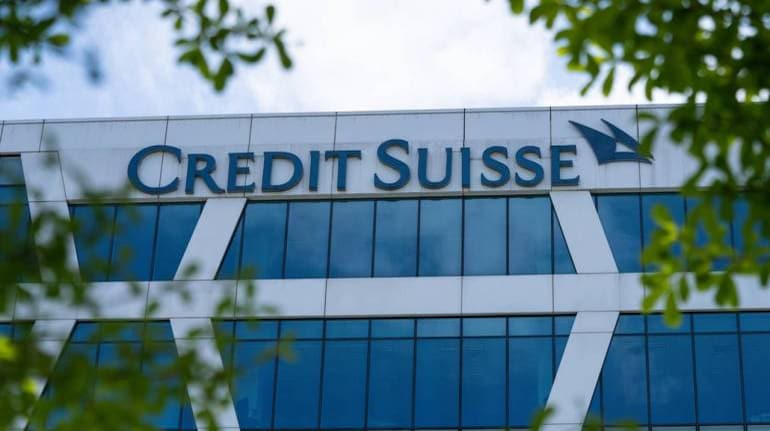
But we've come a long way. As investors second-guess the safety of just about everything after the failure of three regional US banks and the nosedive of Credit Suisse Group AG, there’s no reason to think money-market funds are poised for another reckoning.
First, the landscape has changed. Just before the Great Recession, prime money-market funds, or those that mostly invested in corporate debt such as the kind issued by Lehman, comprised almost 60 percent of total money fund assets, according to Crane Data. Now, the majority of money-market funds, or 76 percent, only hold Treasuries or government bonds — that’s it.
Moreover, money funds have fairly minimal exposure to corporate debt issued by banks. Based on Crane’s tally, money-market funds’ bank bonds could be categorized as either certificates of deposit, commercial paper or “other.” Added together, that makes up 11 percent of money fund assets overall — but that’s assuming all of those categories are bank debt; the actual percentage of bank corporate paper in money funds is likely much, much lower.
In fact, some US money-market funds don’t even buy the debt of US banks because their ratings often aren’t high enough. European banks may be excluded, too. Federated Hermes Inc, which is one of the biggest providers of money-market funds, said this week during a webinar that debt from Credit Suisse, Deutsche Bank AG and Commerzbank AG weren’t on “approved” lists of corporate paper — and hadn’t been for some time.
Lehman was held pretty widely across money-market funds — and in relatively big quantities. In contrast, Credit Suisse is (or was) a very narrow position. There were just a few money-market funds that held about $2.2 billion of the Swiss bank’s debt as of the end of February. But, Pete Crane, founder of Crane Data, says those holdings were mostly overnight loans backed by Treasury securities so it’s likely the funds just stopped buying them and no longer have any exposure.
Another thing that’s different this time around: the maturity of the debt held by most money-market funds. In the Lehman era, it was common for funds to hold debt that matured in six months or even a year. That’s changed. The average weighted maturity for a holding is now just two weeks, meaning everything is a lot more liquid and investors can more easily get their money back.
Yes, money funds struggled in March 2020 during the onset of the pandemic. Prime funds, which typically cater to institutional investors, suffered from outflows and the Federal Reserve stepped in as a backstop to calm investors.
But investors don’t seem to be heading for the exits now. Investors have deposited almost $124 billion so far this week, bringing assets industry-wide to a record $5.38 trillion.
Many are attracted to the funds’ yields, which have spiked from 0.02 percent last year to almost 4.5 percent on average.
The bigger threat to money-market funds may just be the Fed. Since money funds tend to hold mostly Treasuries, their yields follow whatever the Fed does. Amid the latest market tumult, bond traders are starting to abandon bets on additional rate hikes, instead pricing in cuts by the end of 2023. That’ll be a bigger hit to money funds than Credit Suisse.
Alexis Leondis is a Bloomberg Opinion columnist covering personal finance. Views are personal, and do not represent the stand of this publication.
Credit: Bloomberg
Discover the latest Business News, Sensex, and Nifty updates. Obtain Personal Finance insights, tax queries, and expert opinions on Moneycontrol or download the Moneycontrol App to stay updated!

Find the best of Al News in one place, specially curated for you every weekend.
Stay on top of the latest tech trends and biggest startup news.