It’s right for economic data to influence the Federal Reserve’s policy approach. Yet, there is an important distinction between being informed by the numbers and being held hostage by them — particularly for an institution whose tools operate on the economy with a lag. Indeed, the Fed’s often-repeated mantra of “ data dependency” risks causing another mistake.
Don’t get me wrong; high-frequency inputs are important in any assessment of economic conditions and policy responses. They give you a sense of how the economy is functioning. They should inform and influence how officials think but not in the absence of a strategic view of our economic prospects.
In today’s economy, an excessive focus on the numbers tips the balance of risks toward keeping interest rates too restrictive for too long, unduly increasing the probability of output loss, higher unemployment and financial instability.
The Fed’s current phase of undue data dependency originated with its analytical misreading of inflation as “transitory” back in 2021. By “looking through” multiple indicators of rising price pressures, officials fell behind in their inflation battle and were forced to aggressively raise interest rates. Repeated forecasting errors and poor communication added to the central bank’s woes.
Careful not to make another analytical mistake, policymakers pivoted from “looking through” data to making it their central focus — as is obvious from the number of times it comes up in officials’ remarks. Indeed, this dependency has become deterministic in the Fed’s decision making and communications, and has contributed to uneven signaling, reactive measures, sudden pivots and unnecessary market volatility.
One way to think about this problem is to use the analogy of driving a car by looking in the rear-view mirror rather than through the windshield. This type of driving works for straight roads. It is problematic in other situations. Similarly, the threat of policy mistakes is particularly high during economic turning points.
A straight road is what the Fed was mostly on as the consumer price index plummeted from a high of just over 9 percent in June 2022 to 3.1 percent in January. On the “last mile” of this road, however, policymakers face many more curves as demonstrated by recent updates on CPI and producer price inflation, which came in hotter than expected.
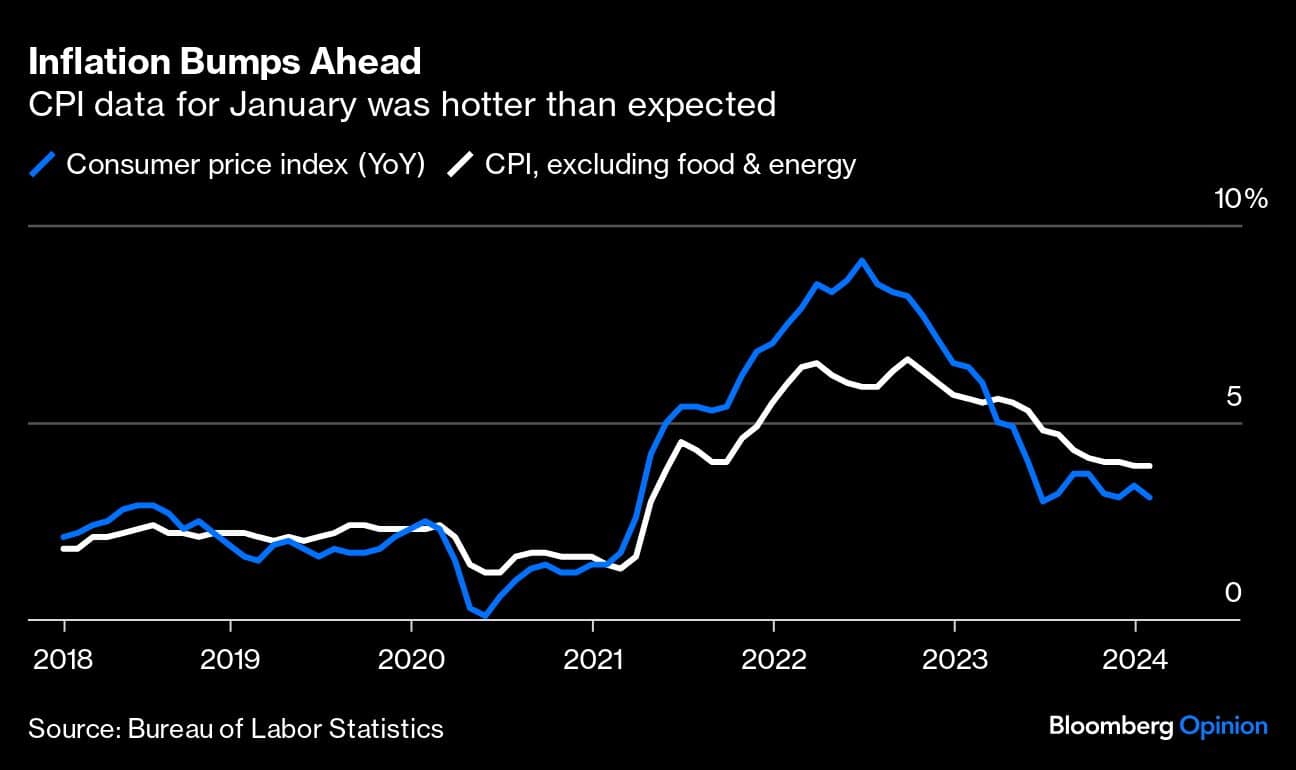
The Fed is highly unlikely to face a straight road from here given the current dynamics of inflation, including the time-variant tug of war between some outright goods deflation and high services inflation. There are also complications with defining some important determinants of its terminal fed funds rate, be they questions about the neutral rate, or r-star, or the appropriateness of a 2 percent inflation target for the US when the global economy, at the moment, is characterised by changing and insufficiently flexible supply.
The time has come to discard the excessive data dependency that risks making the Fed too backward looking in its thinking, overly reactive in policy implementation and too narrow in its discussions of economic and financial issues. Historic data should not be the sole determinant of policy making. This ongoing obsession with the numbers should give way to an approach that also incorporates strategic vision and forward-looking insights on where the economy is heading.
The extent to which the world’s most powerful central bank succeeds at this may well be the difference between the much-desired soft landing for the US economy and yet another Fed policy mistake that undermines economic well-being.
Mohamed A. El-Erian is a Bloomberg Opinion columnist covering Asian markets. Views are personal, and do not represent the stand of this publication.
Credit: Bloomberg
Discover the latest Business News, Sensex, and Nifty updates. Obtain Personal Finance insights, tax queries, and expert opinions on Moneycontrol or download the Moneycontrol App to stay updated!
Find the best of Al News in one place, specially curated for you every weekend.
Stay on top of the latest tech trends and biggest startup news.