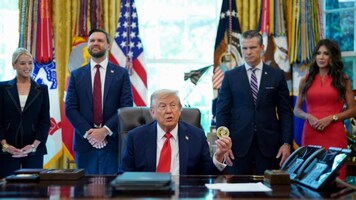
India and Pakistan's decision to end the four-day-long intense aerial warfare, which started on May 7, came after a day of hectic diplomatic moves by the United States, including a phone call between US vice-president JD Vance and Prime Minister Narendra Modi, CNN has reported.
Vance called Modi and told him of “alarming” intelligence suggesting a "dramatic escalation” over the weekend, the report cited Trump administration officials as saying. The officials didn’t spell out what the risk was, it said.
Vance “encouraged” Modi to “have his country communicate with Pakistan directly” and to consider options of de-escalation, it said.
In a surprise move on May 10 evening, US President Donald Trump announced a “ceasefire” between India and Pakistan. “After a long night of talks mediated by the United States, I am pleased to announce that India and Pakistan have agreed to a ‘full and immediate ceasefire’,” Trump wrote on his Truth Social account.
Secretary of State Marco Rubio, who spoke to external affairs minister S Jaishankar earlier in the day, confirmed the same shortly, adding both governments had agreed to begin “broader talks at a neutral venue”.
India, however, has not said anything about talks at a neutral venue. Foreign secretary Vikram Misri, while confirming the move to stop military action, said the DGMOs of the two countries would speak on May 12.
A few hours later, at around 11 pm, Misri again addressed the media, as Pakistan launched an intense round of shelling and sent swarms of drones from Srinagar in Jammu and Kashmir to Kutch in Gujarat, violating the ceasefire. He said India was responding appropriately to Pakistan’s violation.
The CNN report said a core group of US officials, including Vance and Rubio, spoke to both sides to prevent an escalation. The breakthrough came after Vance called Modi.
Moneycontrol couldn’t verify the report immediately.
Vance’s intervention came within days of him saying that the conflict was “none of our business”.
“You know, America can’t tell the Indians to lay down their arms. We can’t tell the Pakistanis to lay down their arms. And so, we’re going to continue to pursue this thing through diplomatic channels,” Vance had told Fox News two days earlier.
Before calling Modi, Vance briefed Trump, the report said. The US believed that the two neighbours were not taking and “it needed to get them back to the bargaining table”.
Vance also “outlined to Modi a potential off-ramp that the US understood the Pakistanis would be amenable to”, the report cited officials as saying, though they did not offer details.
Rubio and other state department officials followed up with a night of diplomacy, maintaining contact with counterparts in both countries, it said.
“There was a lot of effort going on to try and tamp down escalation earlier in the week, and it was clear at that point that the two sides weren’t talking,” the report quoted a US official as saying.
State Department spokesperson Tammy Bruce credited the truce to coordinated efforts by Vance and Rubio over the preceding 48 hours. “It was a beautiful partnership,” Bruce told NewsNation, praising the two for “implementing the insight and vision of President Trump”, the report said.
The officials said they did not help draft the agreement but played a central role in re-establishing dialogue between the two nations.
Misri made no mention of Washington’s role and said the agreement was reached “directly” between New Delhi and Islamabad.
India is yet to react to the report.
Discover the latest Business News, Sensex, and Nifty updates. Obtain Personal Finance insights, tax queries, and expert opinions on Moneycontrol or download the Moneycontrol App to stay updated!
Find the best of Al News in one place, specially curated for you every weekend.
Stay on top of the latest tech trends and biggest startup news.